
The Trump administration just put Democrats’ fraud problem on full public display.
Vice President JD Vance’s anti-fraud task force launched a new website — “The Fraud Ledger” — to showcase the staggering amounts of taxpayer theft uncovered since President Trump took office in January 2025.
The move represents an unprecedented effort to centralize fraud reporting across federal agencies and make the results accessible to the American public in real time. For years, government fraud detection efforts have been scattered across departments with little coordination or transparency. This new initiative changes that dynamic entirely.
The site tracks three key metrics: fraud uncovered, fraud stopped, and fraud enforced through indictments and settlements.
By creating a single dashboard that consolidates information from multiple federal agencies, the administration is making it impossible for bureaucrats to hide waste or for future officials to downplay the scope of the problem. The public-facing nature of the ledger also serves as a deterrent, putting potential fraudsters on notice that their activities are being actively monitored and publicized.
“PRESIDENT TRUMP IS WAGING AN ALL-OUT WAR ON FRAUD, SHUTTING DOWN BILLIONS OF DOLLARS IN TAXPAYER THEFT.”
White House spokeswoman Olivia Wales didn’t hold back when explaining the need for the public ledger.
“Democrats have refused to stop this epidemic of fraud,” Wales told The Daily Wire. “The Trump Administration is holding these criminals accountable and ensuring key federal programs remain viable for the Americans they were meant to support.”
Her comments underscore what many Republicans have argued for years: that lax oversight and weak enforcement under previous administrations created an environment where fraud could flourish unchecked. The political implications are significant, as the administration frames this not merely as a policy difference but as a fundamental failure of stewardship by their predecessors.
The numbers tell the story Democrats don’t want you to see.
Since January 2025, Vance’s task force has uncovered $229.9 billion in fraud. The team has stopped $56.4 billion in annual fraud and enforced $55.5 billion through indictments, settlements, and civil penalties.
To put these figures in perspective, the amount of fraud uncovered exceeds the annual GDP of many states and represents a substantial portion of federal discretionary spending. The enforcement actions alone could fund significant portions of programs conservatives have long championed, from border security to infrastructure improvements.
The Small Business Administration led the pack with a jaw-dropping $122.9 billion in uncovered fraud. Health and Human Services followed with $96.2 billion, and the Department of Labor came in at $7 billion.
These departments have historically been vulnerable to exploitation, particularly during emergency periods when oversight mechanisms are relaxed to expedite aid delivery. The concentration of fraud in agencies that administer critical safety net programs raises questions about how many legitimate recipients may have been crowded out by bad actors gaming the system.
Medicaid fraud deferrals topped the list of high-impact actions. The Center for Medicaid Services deferred over $2 billion from California and $500 million from Minnesota.
The targeting of blue states for major enforcement actions has not gone unnoticed by political observers, though administration officials maintain that the investigations are driven purely by data and evidence, not partisan considerations. Regardless of motivation, the scale of fraud identified in state-administered federal programs highlights longstanding concerns about accountability in cooperative federalism arrangements.
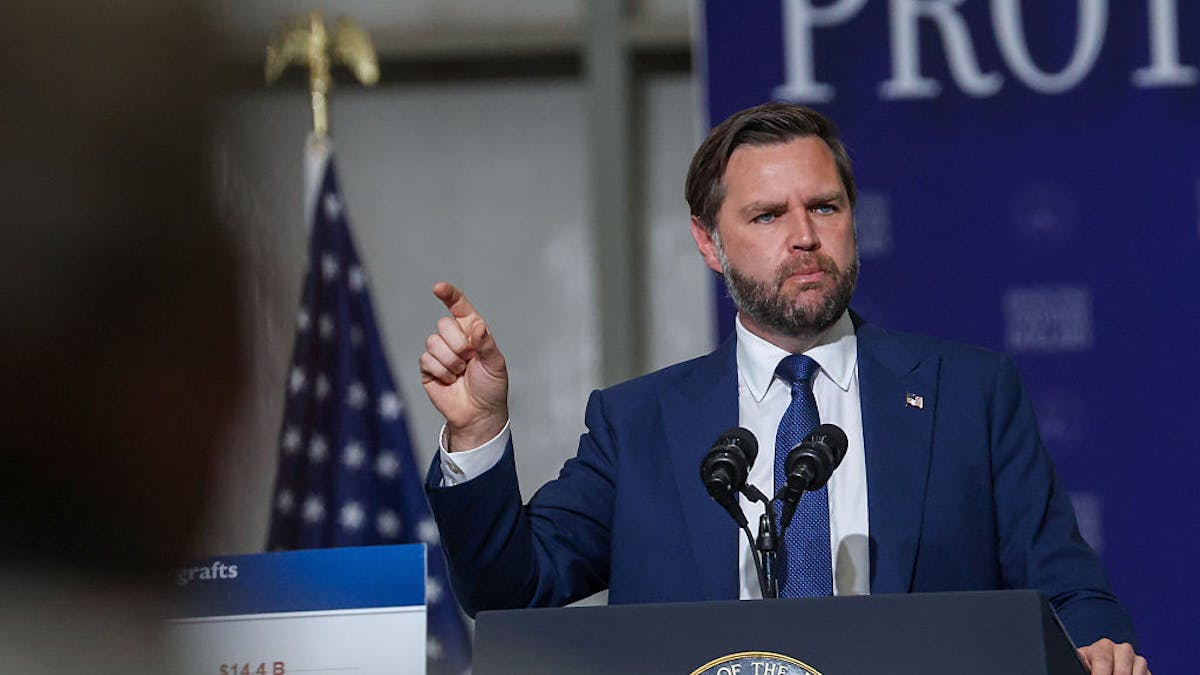
Vance announced the latest numbers Wednesday in Washington, calling on Congress to codify anti-fraud measures into law so future administrations can’t reverse course.
“The Vice President is taking a whole of government approach to fighting fraud,” a spokesman for Vance said. “That includes working with Congress to codify common sense anti-fraud measures to ensure that fraudsters and people who take advantage of the American people’s generosity are brought to justice for future generations, not just under the Trump Administration.”
The legislative push reflects an understanding that executive actions alone can be undone with the stroke of a pen by subsequent presidents. By embedding these reforms in statute, the administration aims to create lasting institutional change that survives beyond their time in office.
The website is designed to be a permanent public record of the fraud, waste, and corruption identified by the task force — a receipt book for what happens when someone finally decides to look.
Fraud uncovered refers to estimates of total fraud the agencies found using data and statistical methods. Fraud stopped measures real dollars per year that were saved due to the administration’s actions. Fraud enforcement tracks money tied to indictments, settlements, or civil penalties.
The distinction between these categories matters because it demonstrates not just the identification of problems but tangible results. Critics of government efficiency initiatives often point to reports that identify waste without producing recoveries. This framework attempts to show concrete outcomes at each stage of the enforcement pipeline.
The message is clear: the Trump administration is exposing what the last one ignored.