Patriots have spent almost two years asking a hard question: Can the U.S. Secret Service actually be trusted to protect the people we elect?
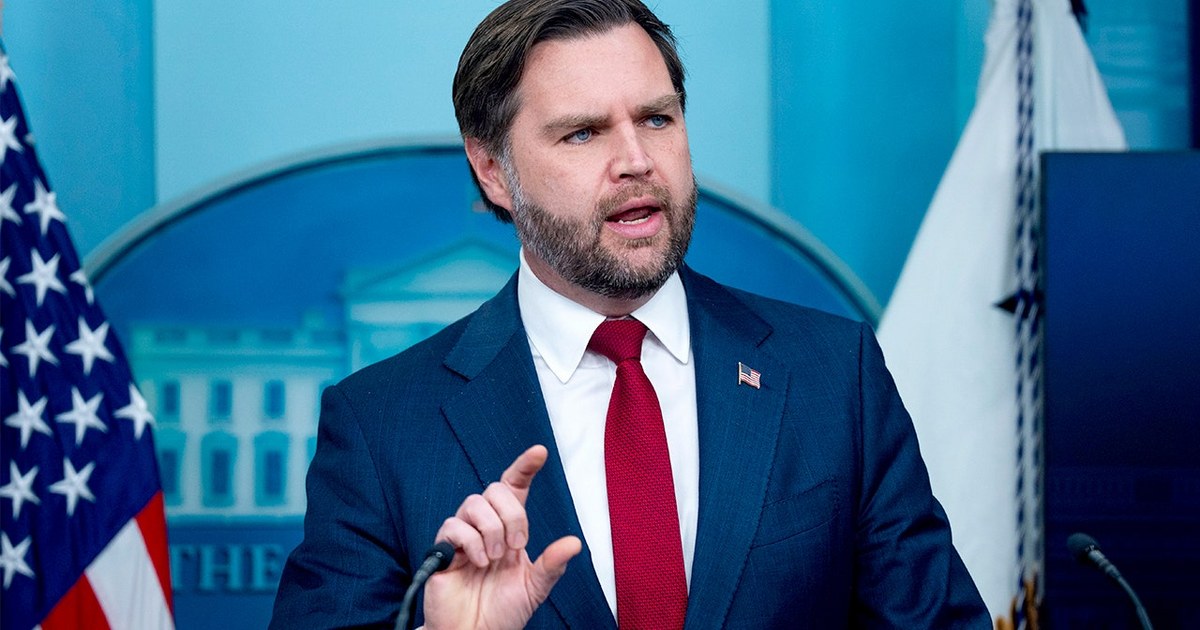
This week the question got worse. A U.S. Secret Service employee assigned to Vice President JD Vance’s protective detail was placed on administrative leave, his security clearance suspended, his access to agency facilities revoked, and a potential criminal inquiry opened — all because an undercover video from independent journalist James O’Keefe allegedly caught the agent leaking sensitive security details about the sitting Vice President to a hostile media outlet.
And this is not one isolated incident. It is the latest in a chain of Secret Service failures that stretches back to the summer of 2024 and shows no sign of ending. Patriots deserve to see the whole list in one place — because the pattern is the story.
Award-winning investigative journalist Susan Crabtree — the RealClearPolitics senior national correspondent whose Secret Service reporting won the 2024 Dao Award for investigative journalism and directly contributed to former Director Kimberly Cheatle’s resignation after Butler — summarized what the agency has become in a single line:
Secret Service plagued by arrests, criminal investigations https://twitter.com/susancrabtree/status/2081828928508051905
— Susan Crabtree (@susancrabtree) July 27, 2026
The Pattern of Failure — What Actually Happened
July 13, 2024 — Butler, Pennsylvania. A gunman climbed onto a rooftop within clear line-of-sight of President Trump’s campaign rally. He fired. A bullet clipped Trump’s ear. Corey Comperatore, a patriot in the crowd, lost his life shielding his family. Two others were wounded. The Secret Service failed at nearly every layer of its own doctrine — perimeter security, threat identification, and response time all collapsed. Then-Director Kimberly Cheatle resigned within two weeks, but not before delivering a congressional testimony so evasive that Republicans and Democrats both left visibly furious.
September 15, 2024 — Trump International Golf Club, West Palm Beach. Just two months after Butler, a second armed suspect was arrested lurking in the bushes at Trump’s Florida golf course with a rifle. The agent on perimeter duty spotted the rifle barrel poking through the shrubbery and fired. The would-be assassin fled. It was later revealed the suspect had been camping in the position for nearly twelve hours undetected. Two attempts. Two months. Same agency.
Kimberly Cheatle’s Congressional Testimony. Called before the House Oversight Committee to explain Butler, the outgoing Director refused to answer basic operational questions, cited “ongoing investigations” for even settled facts, and gave a performance so poor that Chairman James Comer publicly stated she was still hiding key details. Her resignation followed within days.
The Anthony Guglielmi Spin Operation. In the weeks after Butler, Secret Service Chief of Communications Anthony Guglielmi went on national television and blamed local law enforcement for the roof breach. That story fell apart within 48 hours as documents surfaced showing federal agents had explicit assignment to that exact rooftop. The agency’s first instinct was to deflect responsibility, not fix the failure.
July 2026 — The JD Vance Detail Leak. This week’s news. An agent on the Vice President’s protective detail allegedly caught on undercover video by James O’Keefe leaking sensitive travel and security details — details that appear to have flowed directly to MS Now (the rebranded MSNBC news operation), which then ran a piece using the leaked information. Administrative leave. Security clearance suspended. Potential criminal investigation. Agency-wide anti-espionage retraining now mandatory.
Deputy Director Matthew Quinn’s Response
To Deputy Director Matthew Quinn’s credit, the response to this week’s leak was fast and public. He put his name on a statement that did not soft-pedal the seriousness:
“The U.S. Secret Service has no tolerance for any behavior that could potentially compromise the safety, privacy or trust of our protectees. This incident is under investigation and the employee involved has been placed on administrative leave.”
Quinn also ordered every single Secret Service employee to retake the agency’s mandatory anti-espionage training. This is the kind of accountability patriots have been demanding since Butler — an agency willing to publicly identify a problem, act on it fast, and make institutional changes rather than bury the incident in bureaucratic review.
Whether that response scales to the entire pattern of failures listed above is the question the next few months will answer.
The MSNBC Connection
The single most under-reported piece of this week’s story is where the leaked information ended up. MS Now — the rebranded MSNBC news operation — ran a piece last week citing details about Vance’s protective detail. The source of those details now appears to have been the rogue Secret Service agent under criminal investigation.
Think about what that actually means. A federal law enforcement officer with an active security clearance handed operationally sensitive information about a sitting Vice President’s movements to a news network that has documented its hostility to the administration for a decade. The bulletin desk at MS Now knew — or should have known — that they were publishing intelligence sourced from a compromised federal agent. And they published it anyway.
In a serious country, this ends careers at MS Now as much as it does at the Secret Service. In a serious country, the network executives sign a congressional testimony subpoena and answer questions about their sourcing under oath. Whether Republicans on the relevant committees have the discipline to force that outcome is the next test.
The Marine Two Story The Leak Forced Off The Schedule
Here is the concrete, material consequence of the leak. According to Fox News’s reporting on the investigation, one day after MS Now ran its piece using the leaked security details, MS Now published a follow-up claiming Vance’s office had canceled a scheduled Marine Two helicopter flight for his son’s golf lesson.
The framing was designed to embarrass the Vice President — implying wasteful use of a taxpayer-funded helicopter for a private family activity. The Trump administration’s response cut through the framing immediately, on the record, to Fox News:
“Compared to a motorcade, it drastically decreased the burden on local law enforcement and eliminated the inconvenience of road closures and disruptions to motorists along the long driving route.”
In other words: Marine Two was the operationally safer, cheaper, less disruptive option. The alternative was locking down miles of Ohio roads to move a motorcade. But by the time that defense was in print, the network had already scored the headline it wanted. The leak worked exactly as designed. That is the reason the criminal referral matters. It is not a paperwork issue. Every one of these leaks translates directly into a manufactured media hit that damages the Vice President’s ability to do his job.
The James O’Keefe Angle
The specific evidence that appears to have broken this case open is undercover video from journalist James O’Keefe — the same reporter whose methodology the establishment press has spent a decade trying to discredit and whose track record on the substance keeps holding up. Federal officials keep resigning after his videos surface. Agencies keep confirming his sourcing. His methods are controversial with legacy media. The outcomes are not.
Undercover footage. A member of Vice President JD Vance’s Secret Service protective detail, on camera, discussing sensitive operational details. This is the video that just cost him his clearance. https://twitter.com/JamesOKeefeIII/status/2080302737611186664
— James O’Keefe (@JamesOKeefeIII) July 22, 2026
In this case, O’Keefe’s team captured the Vance-detail agent on camera. That is the specific piece of evidence that forced the Secret Service to act publicly and act fast. Independent journalism, working the way it is supposed to work, produced accountability that the internal system was not producing on its own.
What Patriots Should Watch Next
Three things worth tracking over the next few weeks:
The criminal referral. Deputy Director Quinn said a criminal inquiry is on the table. If that referral does not actually happen, or if the case gets buried at DOJ, patriots need to know why. The agent involved potentially compromised the safety of the sitting Vice President of the United States. This is a felony-shaped situation.
The MS Now sourcing. Does the network face any accountability for publishing material sourced from a compromised federal agent? Does Congress subpoena the editors? Does any elected Democrat criticize the practice publicly? The answers to those questions will tell patriots everything about whether the guardrails are actually working.
The next O’Keefe release. If the pattern holds, James O’Keefe’s team is already sitting on additional footage from the same operation. The Secret Service’s mandatory anti-espionage retraining order suggests the leadership knows there is more to come.
Why This List Matters
Every incident above — from Butler to the golf course to Cheatle’s testimony to this week’s Vance leak — carries the same central question: has the Secret Service actually fixed itself, or is the same institutional rot still there, protected by the same bureaucratic culture that failed at Butler?
The good news, if there is any, is that under Deputy Director Quinn the agency is at least responding faster and more publicly than it did under Cheatle. The bad news is that “faster than Cheatle” is a low bar, and the list of failures keeps growing.
Patriots watching this should ask hard questions of their elected representatives. Who is holding the follow-up hearings? Who is demanding the criminal referral goes through? Who is asking MS Now on the record what they knew about their source? Those questions have names attached. Patriots should learn them.
Follow @SecretService for the official record. Watch the next O’Keefe release. And ask your senators — publicly, by name — whether Congress will actually force this on the record before the news cycle moves on.