The United Arab Emirates threw its weight behind President Trump’s comprehensive peace framework for Gaza during a United Nations General Assembly address Monday — signaling growing Middle Eastern support for Trump’s diplomatic blueprint to end the conflict.
The UAE’s public endorsement at the UN’s most prominent global forum represents a significant diplomatic milestone for the Trump administration’s Middle East peace efforts. As one of the region’s most influential Arab states and a key U.S. strategic partner, the Emirates’ backing could prove instrumental in persuading other Gulf nations and Arab League members to rally behind the framework. The timing of the statement also comes at a critical juncture, as diplomatic efforts to stabilize Gaza and prevent wider regional escalation have taken on renewed urgency in recent weeks.
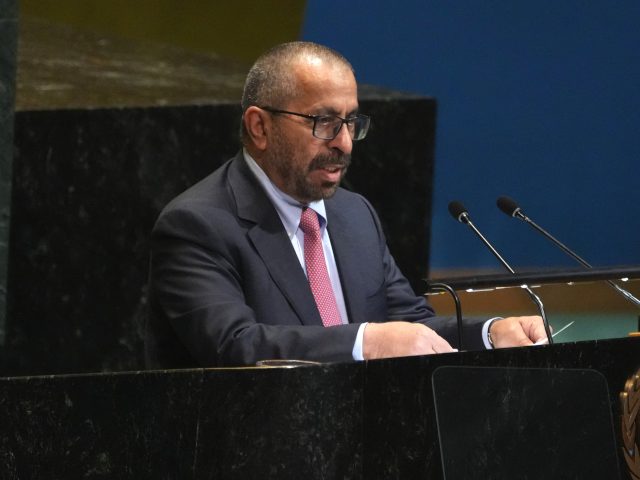
Khalifa Shaheen al-Marar, Minister of State for the UAE, told world leaders his nation was “among the first to support the framework established by the international community to end the horrific war.”
“WE HAVE STRESSED THE NEED TO FULLY IMPLEMENT THE COMPREHENSIVE PLAN OF PRESIDENT TRUMP TO END THE CONFLICT IN GAZA AND THE ASSOCIATED ROADMAP, INCLUDING THE WITHDRAWAL OF ISRAEL FROM THE GAZA STRIP, THE DISARMAMENT OF HAMAS, AND THE ADVANCEMENT OF A SERIOUS POLITICAL HORIZON, LEADING TO A JUST AND LASTING SETTLEMENT OF THE PALESTINIAN QUESTION BASED ON THE TWO STATE SOLUTION.”
The endorsement comes as Trump’s diplomatic team continues pressing for a lasting resolution to the Gaza War that erupted after Hamas terrorists launched the October 7, 2023 attack on Israel.
The Trump peace plan calls for three concrete steps: Israeli withdrawal from Gaza, Hamas disarmament, and advancement toward a two-state solution with a reformed Palestinian Authority governing a future Palestinian state.
These three pillars represent what U.S. officials have characterized as sequential confidence-building measures designed to address the core security concerns of both Israelis and Palestinians. The emphasis on Hamas disarmament reflects longstanding Israeli demands that any sustainable peace arrangement must prevent militant groups from maintaining military capabilities in Gaza. Meanwhile, the framework’s inclusion of a pathway to Palestinian statehood acknowledges the political aspirations that have driven the conflict for generations, though implementation details remain subjects of intensive ongoing negotiations.
Marar also used his speech to condemn Iran — calling out Tehran by name for occupying islands that belong to the UAE and threatening navigation through the strategic Strait of Hormuz.
The inclusion of sharp criticism toward Iran in the same speech endorsing the Gaza framework underscores the broader regional security calculations at play. The UAE has long viewed Iranian influence throughout the Middle East as a destabilizing force, and Tehran’s support for militant groups including Hamas fits into this larger pattern of concern for Emirati policymakers.
The minister touted the UAE as a “trusted international mediator” with proven diplomatic success in conflicts from Russia-Ukraine to the ongoing civil war in Sudan, which he called a “humanitarian catastrophe.”
The Emirates’ track record of quiet diplomacy and mediation has indeed grown significantly in recent years, positioning the nation as an increasingly important broker in regional and international disputes. This self-described mediator role gives additional weight to the UAE’s Gaza endorsement, as the country presents itself not merely as a partisan voice but as an experienced facilitator of conflict resolution.
Like other Arab leaders at this year’s General Assembly, Marar avoided naming Hamas or acknowledging the terror group’s October 7 massacre that triggered the war. He criticized Israel’s conduct but hinted the Palestinian Authority would need to meet “certain standards of peaceful and orderly conduct” to govern a future Palestinian state.
This careful diplomatic language reflects the delicate balancing act facing Arab governments as they navigate between domestic public opinion — often sympathetic to Palestinian suffering — and their strategic interests in regional stability and counterterrorism cooperation. The conditional language regarding Palestinian Authority governance suggests the UAE envisions a reformed Palestinian leadership structure as essential to any workable peace arrangement.
The UAE minister devoted much of his address to celebrating his nation’s economic model — built on artificial intelligence investment, emerging technologies, healthcare, education, and water security infrastructure for the Middle East and Africa.
“We will continue to strengthen the UAE’s role as a global hub, connecting markets and capital, opening ever broader horizons for growth,” Marar said.
He pledged the Emirates would “remain committed to the path of moderation, the rejection of violence and extremism, and the investment in people.”
The UAE’s backing gives Trump’s Gaza framework critical momentum as the administration seeks broader regional buy-in for a lasting peace agreement. The question now is whether other Arab states will follow the Emirates’ lead in publicly endorsing the framework, potentially creating the regional consensus necessary to transform diplomatic proposals into durable peace on the ground.