Donald Trump built an unlikely coalition in 2024 that delivered him a second term. Now, with him off the ballot, the 2026 midterms will test whether that coalition holds — and whether the GOP can deliver what those voters actually want.
What Trump’s swing voters demanded in 2024: order and economic relief. Mass deportations, draining the swamp, reductions in waste and fraud, election integrity — all polling between 65 and 75 percent favorable, according to Mark Mitchell, founder of Honest Polling.
“They basically want order and economic fairness,” Mitchell told the Daily Caller. “Almost 60 percent of people say they’re changing their eating habits because of grocery prices.”
“What they voted for: mass deportations, draining the swamp, reductions in waste, fraud, abuse and election integrity. All these things are between 65 and 75 percent favorable.”
Trump’s 2024 base included his familiar coalition — white voters without college degrees, rural voters, men, white evangelicals — but he also made real gains among low-propensity voters who usually sit out most cycles, as well as Hispanic and black voters, younger men, and non-college voters more broadly.
The GOP’s problem: domestic policy dominated Trump’s first year back in office — cleaning up the border crisis, keeping men out of women’s sports — but foreign policy has defined the second. With U.S. troops fighting in the Middle East and prices climbing from the conflict, Trump’s job approval hit the lowest point of his second term on August 4, at 39 percent, according to the RealClearPolitics average.
“I think [the coalition] wants 2024 Trump back,” Mitchell told the Caller.
Robert Cahaly, founder of Trafalgar Group, agrees that motivating the 2024 low-propensity voters will be the key challenge. “It will be hard to motivate the non-propensity voters who turned out in 2024, because that is always the case,” Cahaly said. “Trump will need to be heavily involved in the midterms if he wants to motivate those guys.”
Messaging on the administration’s domestic accomplishments has proven difficult. One official working on the 2026 midterms previously told the Caller it had been a challenge to keep the party on message in recent months. Another GOP operative was more blunt: while Republicans are well positioned nationally, their candidates are still being significantly out-raised at the individual level.
Trump world officials — including James Blair, pollster Tony Fabrizio, and Senate Leadership Fund executive director Alex Latcham — went to Capitol Hill in mid-August to advise Senate candidates to talk more about healthcare, according to Axios.
Republicans held a 46-point advantage when they emphasized “more transparency around insurers’ profits, claim denials and wait times for patient care while hitting Democrats for lining insurers’ pockets,” Axios reported.
“I think there is some headway for the Trump administration to make on [healthcare messaging], and having people talk about that, because it lets Republicans talk about healthcare,” Cahaly told the Caller. “They can say, ‘Hey, [Obama] created a whole system that just basically let insurance companies make a huge profit.'”
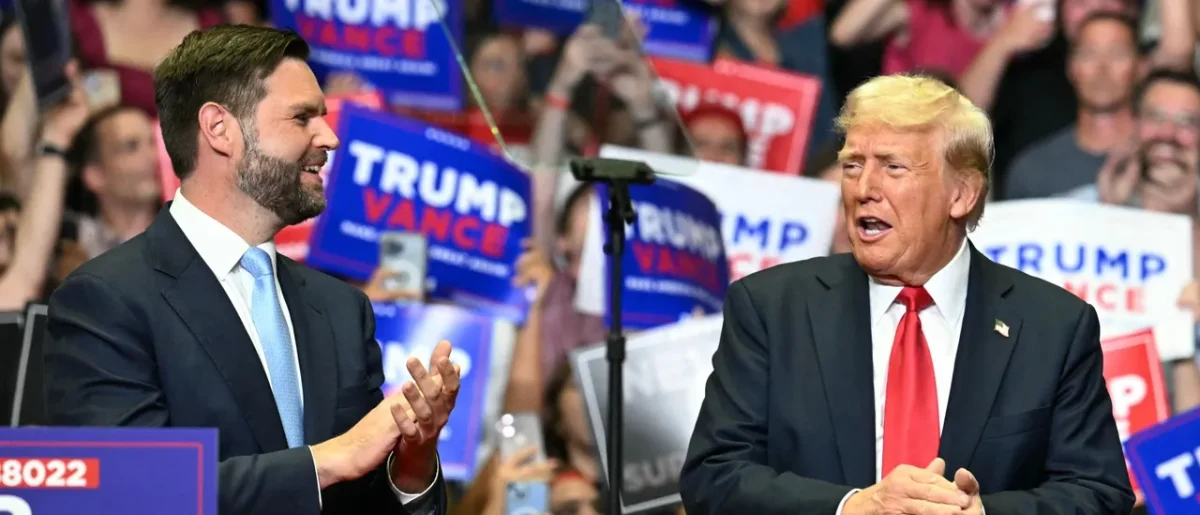
Congressional stock trading and cracking down on fraud were other strong messaging topics for the GOP, according to the polling Axios reported. Vice President JD Vance, who has become the administration’s top campaign surrogate, often leans on fraud messaging when making stops around the country.
Top Republicans are also trying to steer the party clear of a thornier issue: data centers. The National Republican Senatorial Committee issued a memo to AI companies warning that in Ohio, Democrats have hurt Republicans by making opposition to data centers a central part of their campaign.
“If [Sen. Jon Husted] loses and data centers get the blame, politicians across the country will take notice — and they will not go near the next one. This has become a sleeper issue for the entire election cycle,” the memo says, urging AI companies to do whatever they can to absorb the backlash.
“The data center issue is a problem,” Cahaly told the Caller, explaining that it is hard for the GOP to walk a fine line: it has to compete with China, but some communities don’t want a data center in their town. Others do — they want the jobs and development that come with them.
“Every single Republican, like it or not, whether they like Trump or not, is going to get beat up because of Trump. So if they’re going to get beat up because of Trump — then why not have the strength that Trump provides when he is on the ballot?”
For months, the right has broadcast its plan: put Trump on the ballot. Or at least make it seem that way, through endorsements and constant campaigning across the country.
As of August 5, Trump has made 332 total endorsements and 313 primary endorsements, according to Ballotpedia. His 2026 primary success rate is 96 percent.
Those endorsements haven’t been tested in the 2026 general election yet, but they were on a smaller scale in 2025: of the nine endorsements Trump made that November, four were successful. A White House official previously told the Caller that as Labor Day gets closer, expect to see the president on the campaign trail more.
“Here’s the thing: every single Republican, like it or not, whether they like Trump or not, is going to get beat up because of Trump,” Cahaly told the Caller. “So if they’re going to get beat up because of Trump — even if he never campaigns for them, or if he campaigns for them every day — then why not have the strength that Trump provides when he is on the ballot?”
Mitchell told the Caller that he doesn’t think the Trump endorsement will help GOP candidates, but he also doesn’t believe it will sink them either. “I don’t think he’s toxic yet,” he said.
For Mitchell, it boils down to one thing: “I really do think it’s the economy, stupid.”
The GOP is aware of this. Several GOP officials working on the 2026 midterms previously admitted to the Caller that they needed to fix their approach to provide a solution and empathy for those struggling amid the conflict with Iran.
“There’s only so much the Trump coalition can do to win these elections. These elections are won district by district and state by state, and they’d be better off to do to focus on the issues that move voters in their states,” Cahaly told the Caller.