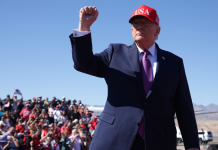
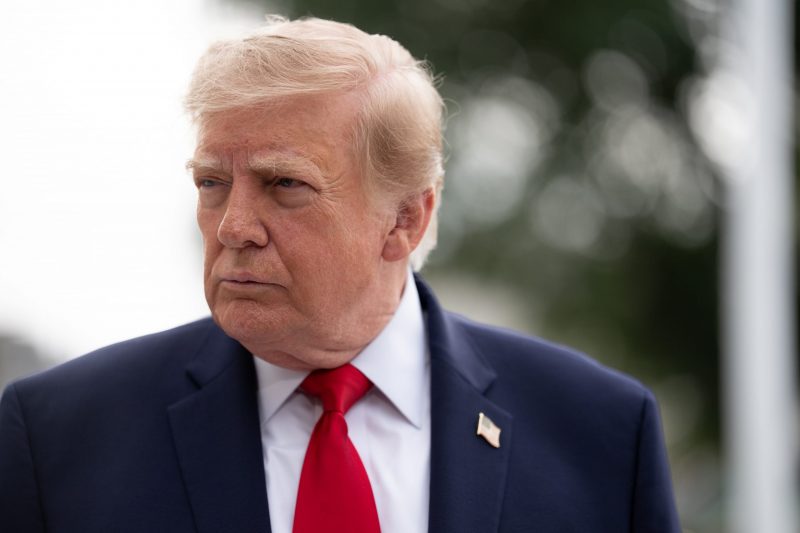
President Trump doubled down on his campaign to topple Cuba’s communist regime — but signaled he expects a diplomatic win, not a military one.
“I would say that Cuba and the U.S. will make a deal. I don’t think we’ll need the military. Cuba is failing very badly. We want to help Cuba. We want to open Cuba up to our people.”
Trump made the remarks Saturday after his fiery United Nations speech earlier this week sent the Cuban delegation storming out of the General Assembly hall. The dramatic walkout underscored the rising tensions between Washington and Havana, tensions that have been building throughout Trump’s term as his administration has taken an increasingly confrontational stance toward the island nation just 90 miles from the Florida coast.
The president told reporters that opening Cuba to American citizens would benefit “the great Cuban Americans that want to go back.” The Cuban-American community, concentrated heavily in South Florida, has long been a powerful political constituency advocating for regime change in Havana and maintaining pressure on the communist government that forced millions into exile over six decades.
Currently, Americans can only travel to Cuba under 12 specific license categories — tourism remains banned under long-standing U.S. economic sanctions enforced by the U.S. Embassy in Havana. These categories include family visits, educational activities, and professional research, but general tourism for leisure purposes has been prohibited for decades as part of the broader U.S. economic embargo against the island. The restrictions represent one of the most enduring elements of Cold War-era foreign policy still in effect today.
🚨 JUST NOW: President Trump says he does NOT expect military action or invasion of Cuba, amid sparse reports one is being prepared
“I’d say that Cuba and us will make a deal. I don’t think we’ll need the military. Cuba is failing very badly. We want to help Cuba. We want to… pic.twitter.com/TfsJWhHtKg
— Eric Daugherty (@EricLDaugh) September 26, 2026
Trump’s weekend optimism echoed the harder line he drew at the UN Tuesday, where he declared Cuba’s communist government on the brink of collapse. The president’s willingness to make such bold pronouncements on the world stage represents a sharp departure from the more measured diplomatic language typically employed in international forums, and signals his administration’s confidence that fundamental change in Cuba is not only possible but imminent.
“My administration is also seeking a fundamental change in the situation in Cuba, where the communist regime is under great pressure – the biggest pressure they’ve ever been under. It’s an absolutely failed state. It’s failing like never before, and it will fall.”
Trump confirmed that Secretary of State Marco Rubio — whose parents fled Cuba under Castro — is leading direct talks with Havana. Rubio’s personal background and decades-long focus on Cuba policy make him a natural choice to spearhead negotiations, though his hardline stance toward the regime also raises questions about what concessions, if any, the administration would be willing to offer in exchange for political reforms.
In recent months, Trump has sharpened his anti-communism rhetoric, targeting Cuba’s decades-long effort to spread Marxism inside the United States. This focus on ideological influence operations represents a broader theme in the administration’s foreign policy, linking domestic political concerns with international adversaries in ways that previous administrations typically avoided.
“The Cuban regime has also spent decades coordinating with the left-wing radicals and communist networks here in the United States. As our State Department has detailed, they’ve cultivated ties to subversive and radical groups such as the Communist Party USA, Antifa and the Dumocrat Socialists of America. Communism will never be coming to America, but freedom will be coming to Cuba.”
The State Department published a report in July documenting Cuba’s decades-long sponsorship of left-wing extremism on American soil. The report provided what the administration characterized as extensive evidence of Cuban intelligence services maintaining relationships with activist organizations across the United States, a claim that has generated significant debate among foreign policy analysts and civil liberties advocates.
Secretary Rubio said at the time: “For more than six decades, the Cuban regime has been the leading sponsor of radical leftism and Third Worldism in the United States.” His statement reflected the administration’s view that Cuba has consistently worked to undermine American institutions and values through support for movements seeking to fundamentally transform U.S. society along Marxist lines.
Trump now holds the leverage — and he knows it. Cuba’s regime is weaker than ever, and the president is betting on a deal before any shots are fired. The question facing both Washington and Havana is whether the Cuban government will negotiate from its position of weakness, or whether nationalist pride will prevent the kind of transformative agreement the Trump administration is seeking.