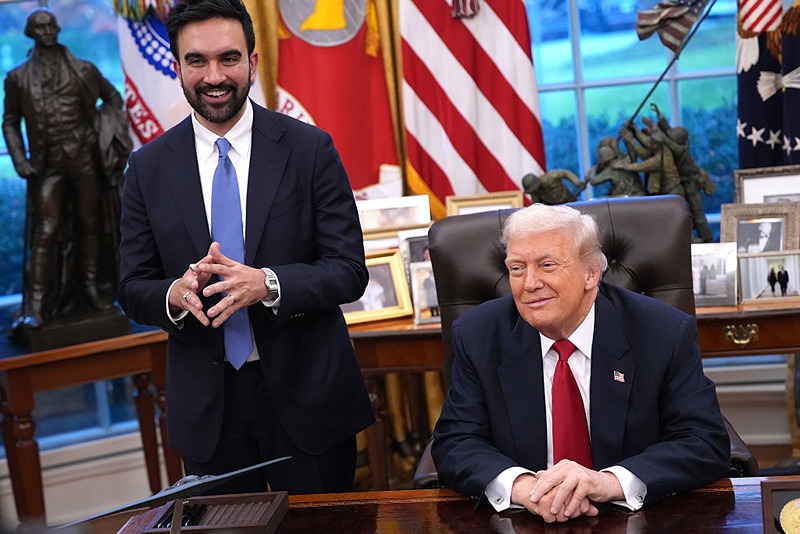
President Donald Trump will meet with New York City’s far-left Mayor Zohran Mamdani at Gracie Mansion on Monday to discuss issues facing America’s most populous city — just as it prepares to host the United Nations General Assembly and weeks before the midterm elections.
The sit-down at the mayor’s official residence marks the latest chapter in an unlikely alliance between a Republican president and one of the nation’s most prominent progressive mayors. The relationship has confounded political observers on both sides of the aisle, challenging conventional wisdom about partisan gridlock in an era of deep political polarization.
Mamdani, 34, has emerged as a leading voice among Democratic Socialists of America-backed candidates who swept primaries across the country. His rise fuels a broader debate over the future of the Democrat Party ahead of November’s midterms. The former New York State Assembly member’s stunning victory in the 2025 mayoral race sent shockwaves through establishment Democratic circles, as he defeated more moderate candidates by energizing younger, more progressive voters across the five boroughs. His election represented a significant shift leftward for New York City politics, even in a city long considered a Democratic stronghold.
President Trump and NYC Mayor Zohran Mamdani are set to meet Monday, 9/21/26 at Gracie Mansion in New York City.
Mamdani’s office says the meeting will focus on issues affecting New York City and its residents.
For more updates, watch OAN on OAN Live or click the link in our… pic.twitter.com/P2wyQY5yGH
— One America News (@OANN) September 20, 2026
Despite their political divide, the two leaders have met multiple times since Mamdani’s election in November 2025. Their first high-profile meeting took place at the Oval Office shortly after Mamdani won, followed by additional White House visits focused on housing affordability and other critical issues facing New York City. The frequency of these meetings stands in stark contrast to the more adversarial relationships Trump maintained with previous New York City mayors, suggesting a pragmatic approach from both leaders despite their vastly different ideological foundations.
The willingness of both men to engage across party lines has drawn criticism from their respective bases. Progressive activists have questioned whether Mamdani is compromising his principles by meeting with an administration many on the left view as antithetical to their values, while some conservative commentators have wondered whether Trump is legitimizing a politician whose Democratic Socialist credentials represent everything they oppose.
Trump has publicly called Mamdani a “communist” — but both men have expressed optimism about working together where interests align. This transactional approach to governance reflects Trump’s self-described deal-making style, prioritizing results over ideological purity.
“I think you’re going to have, hopefully, a really great mayor. The better he does, the happier I am,” Trump said at the time in the Oval Office with Mamdani.
Trump continued: “There’s no difference in party, there’s no difference in anything. And we’re going to be helping him to make everybody’s dream come true. Having a strong and very safe New York.”
The president’s comments highlighted his focus on New York City’s success, a city where he built his real estate empire and launched his political career. Trump’s personal connection to New York has often colored his approach to dealing with the city’s leadership, even when that leadership comes from the political left.
Monday’s meeting comes as New York prepares to host world leaders at the UN General Assembly. The timing — weeks before the midterms — adds national significance to the gathering, with both leaders seeking wins they can claim heading into November. For Trump, demonstrating the ability to work with even the most progressive Democratic officials could help counter narratives about partisan dysfunction. For Mamdani, securing federal support or resources for New York City would validate his unconventional approach to dealing with the Trump administration.
The agenda is expected to focus on public safety, affordability, and immigration enforcement — issues where Trump and Mamdani have previously found common ground despite Mamdani’s progressive base pushing back on cooperation with the administration. These policy areas represent the practical concerns of New York City residents that transcend ideological boundaries, even as the two leaders may propose vastly different solutions to addressing them.