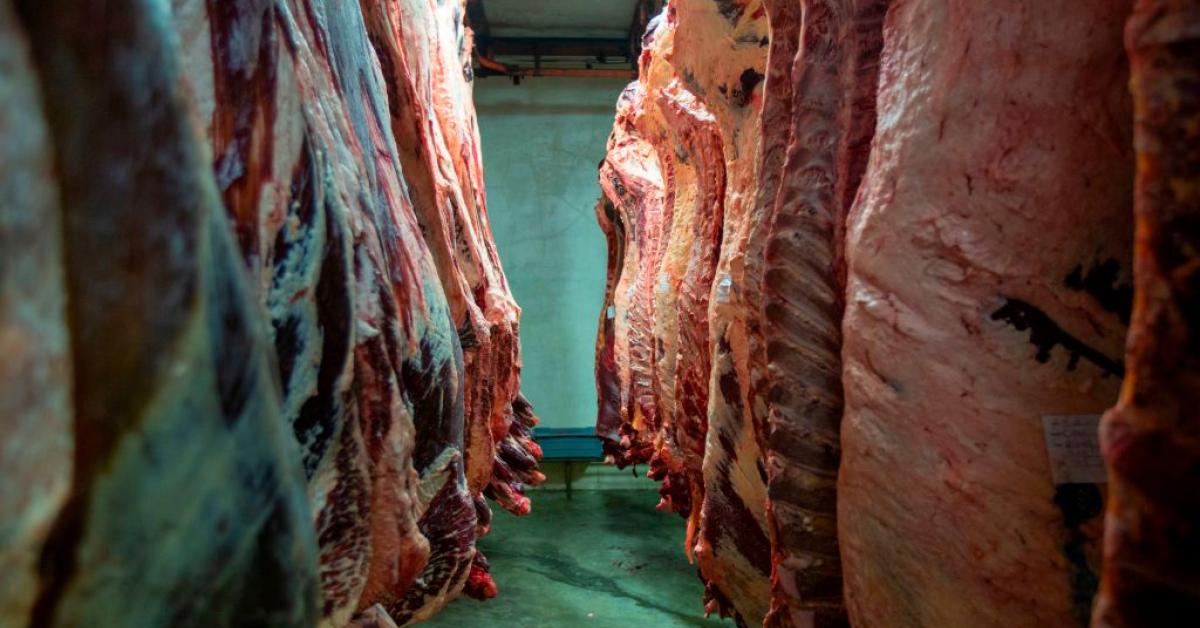
President Donald Trump on Friday announced a 90-day plan to allow increased beef imports with no additional tariffs — a move he says will help ranchers rebuild herds and lower prices for American families.
The announcement comes as beef prices remain elevated and the U.S. beef herd sits at its smallest size in decades. Ground beef prices have remained a persistent pain point for American consumers since the pandemic-era inflation surge, and the reduced domestic herd has limited the supply available to meet demand. The combination has kept prices stubbornly high at grocery stores and restaurants across the country, making beef affordability a political flashpoint.
300,000 metric tonsof ground beef product can now enter the country over the next three months without the usual out-of-quota tariff, Trump explained in a Truth Social post.
“As everyone knows, under President Biden, beef prices soared at their fastest rate and the American beef herd fell to its smallest size in modern history. As we work to rebuild this herd and help our ranchers, for the next 90 days, the United States will allow up to 300,000 metric tons of product for ground beef to be imported with no out of quota tariff.”
Trump framed the move as a short-term relief measure while American ranchers recover from the Biden-era collapse of the beef industry. The temporary waiver of out-of-quota tariffs is designed to increase the flow of imported beef into U.S. markets quickly, creating immediate downward pressure on retail prices without requiring permanent changes to trade policy. The president is positioning the policy as a bridge strategy that addresses consumer concerns while domestic producers work to expand their operations.
But the plan has drawn fire from the American beef industry before — and the criticism isn’t going away. The tension highlights a classic policy dilemma: measures that provide short-term consumer relief can simultaneously undercut the long-term viability of domestic producers who face higher operating costs than their foreign competitors.
When Trump reportedly considered a similar executive order in May, the American Farm Bureau Federation pushed back hard. AFBF President Zippy Duvall warned the plan would flood the market with foreign beef and destroy incentives for U.S. ranchers trying to rebuild their herds. The Farm Bureau represents agricultural producers across the country and has historically been a reliable ally of Republican administrations on trade and regulatory policy, making their opposition particularly notable.
“Ranchers are finally starting to recover from years of losses. Any plans to increase beef imports are extremely worrisome and could undermine the fragile recovery ranchers are experiencing,” Duvall said at the time.
The Federation argued that while imports might lower grocery-store prices in the short term, they would also weaken the domestic ranching economy — leaving American producers vulnerable when the 90-day window closes. The concern is that ranchers making investment decisions about herd expansion could be discouraged by depressed prices caused by the import surge, potentially delaying the very recovery the policy is meant to support. If domestic producers scale back their rebuilding plans, the U.S. could become more dependent on foreign beef supplies long after the temporary tariff waiver expires.
The out-of-quota tariff structure exists specifically to protect domestic producers from exactly this kind of market disruption. By temporarily removing that protection, the administration is acknowledging that consumer price relief has become the higher political priority, at least for the next three months.
Trump’s plan puts him at odds with a key rural constituency that helped elect him — but the president is betting families will notice the price relief before ranchers feel the squeeze. The political calculation reflects the broader challenge facing the administration as it tries to demonstrate quick economic wins for consumers while managing relationships with producer groups that form part of its electoral base. Suburban and urban voters focused on grocery bills may respond positively to lower beef prices, while rural voters directly connected to cattle production may view the same policy as a betrayal.
The 90-day clock starts now. Whether Trump extends the waiver or pivots back to supporting domestic production will be one of the next economic tests for the administration. The outcome will signal whether the White House views this as a genuine short-term emergency measure or the beginning of a broader shift in agricultural trade policy that prioritizes consumer prices over producer protection.