
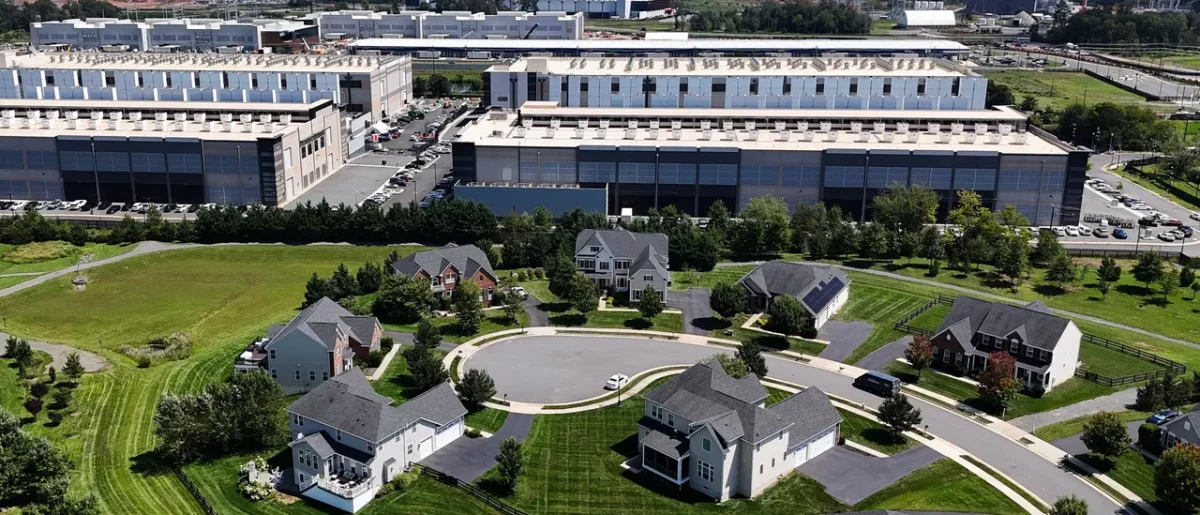
A bipartisan Senate bill would force artificial intelligence data centers to pay for the massive grid upgrades they need instead of passing the costs to American families.
The measure—part of the broader Bipartisan American Affordability and Jobs Act unveiled Sept. 30—would require data centers to cover all transmission costs linked to their facilities, keeping those costs off the bills of households and small businesses. The bill goes much further than the mostly voluntary steps Washington has taken so far.
Republican West Virginia Sen. Shelley Moore Capito, Republican Utah Sen. Mike Lee, Democratic New Mexico Sen. Martin Heinrich and Democratic Rhode Island Sen. Sheldon Whitehouse negotiated the bill. The four are the lead members from their respective parties on the Senate’s energy and environment committees.
“IT WILL ENSURE THEY PAY THEIR FAIR SHARE OF THE GRID UPGRADES THEY REQUIRE—NOT LEAVE THAT BILL TO AMERICAN FAMILIES.”
Heinrich said the bill “will mean more energy on the grid, more good-paying jobs, and lower electricity costs for families and businesses.” He added: “And as data centers drive demand for more power, it will ensure they pay their fair share of the grid upgrades they require—not leave that bill to American families.”
New data centers of at least 20 megawatts would have to cover the added costs they put on the power system, including generation, storage, transmission and distribution. Federal and state regulators could also charge large data centers more than those costs and use the extra money to lower other customers’ bills.
Utilities would have to secure financial guarantees before building data center infrastructure. The facilities would remain responsible for those costs even if they stop buying power before recovering them.
States would get wide latitude to go further—including treating data centers less favorably than other large industrial customers and requiring them to secure new power supplies or accept limits on their electricity use. More than half the states already have policies in place or pending that require data centers to pay more of what it costs to serve them.
Ari Peskoe, director of the Electricity Law Initiative at Harvard Law School, said he hasn’t seen proposed costs and restrictions like these before.
“I don’t think we’ve seen growth that’s comparable to data centers today,” Peskoe added.
Jane Flegal, a former White House official under President Joe Biden and now a senior fellow at the nonprofit Searchlight Institute, told Axios that “having some teeth on data center accountability and ratepayer protection is just table stakes to getting a deal done.”
The bill would also speed approvals for the power plants and transmission lines data centers need, so it cuts both ways for tech companies. Craig Sundstrom, Amazon’s energy policy director, said the bill “could unlock the investment needed to build new generation and transmission faster.”
An unnamed tech industry official warned that some provisions amount to an “unprecedented level of discriminatory treatment” for a single industry. The official said tougher rules for connecting to the grid could push some developers to build power supplies entirely off the grid.
“America has had a permitting system filled with delays, expenses, red tape, uncertainty,” Capito said when the bill was unveiled.
Drew Maloney, president and CEO of the Edison Electric Institute, which represents investor-owned utilities, said his group was reviewing how the transmission provisions would affect its effort to serve 250 million customers.
A vote on the bill will not happen until after the midterm elections. Lee said he is confident the Senate will pass it in a lame-duck session in November.
If we want cheaper energy, we need permitting reform.
If we want to force data centers to pay their fair share and then some, we need permitting reform.
If we want to build out clean energy and the jobs that come with it, we need permitting reform.
And all of that reform is in…
— Martin Heinrich (@SenatorHeinrich) October 5, 2026
4. First big bite at REAL data center accountability: data centers must pay for any network upgrades needed to serve their big demand, so ratepayers don’t bear the cost burden of added infrastructure.
— Sheldon Whitehouse (@SenWhitehouse) October 4, 2026