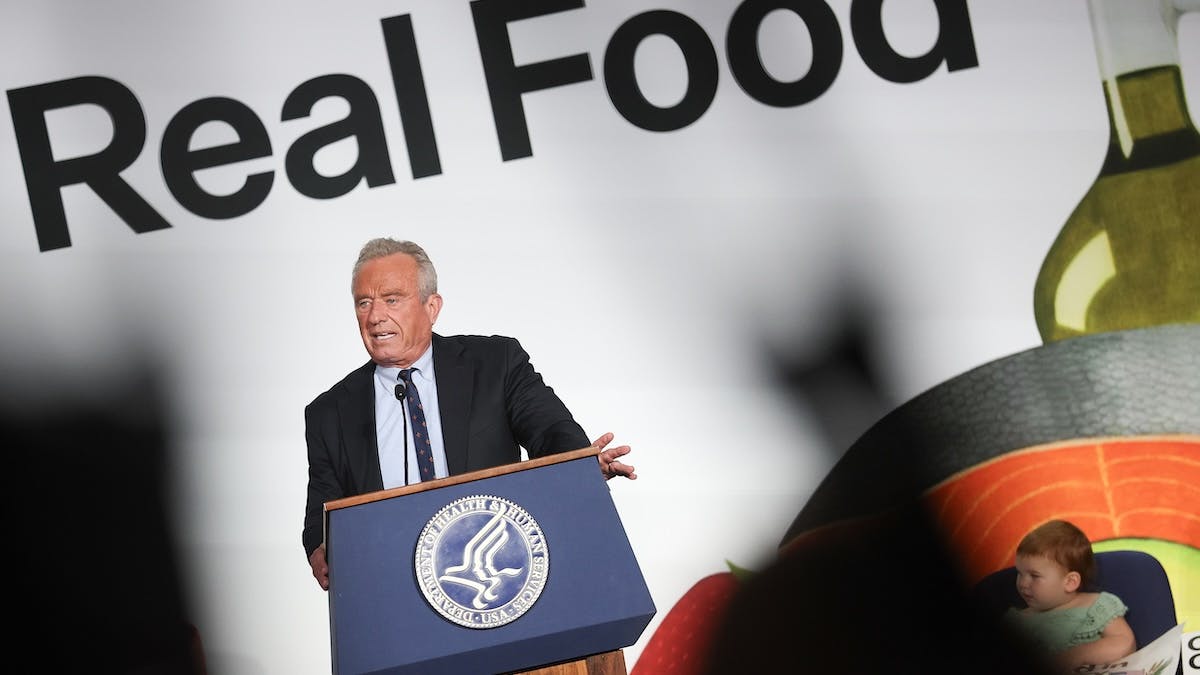
Health and Human Services Secretary Robert F. Kennedy Jr. just launched a government cooking show — and it’s taking aim at the food industry that’s been poisoning Americans for decades.
“The Real Food Show” premiered last week with a simple mission: teach Americans how to eat real food at prices that won’t break the bank. The first episode features celebrity chef Andrew Gruel walking viewers through crispy salmon cakes with apple, white bean, and greens salad — all for $4.91 per serving.
The initiative marks a dramatic departure from traditional government health communications, which have typically relied on static pamphlets, complex pyramid diagrams, and dense scientific reports that few Americans actually read or understand. By embracing the accessible format of cooking television — a medium that has exploded in popularity over the past two decades — the administration is meeting Americans where they already spend their time: on screens, seeking practical guidance for daily life.
The show comes on the heels of Kennedy’s revamped nutritional guidelines released earlier this year, which flipped the old food pyramid on its head.
“The previous guidelines were crafted by food lobbyists. The new guidelines flip the old ones on their head by being spearheaded by top nutritionists.”
This represents a fundamental shift in how federal dietary recommendations have been developed for generations. The old system, critics have long argued, allowed corporate interests from grain producers to sugar manufacturers to influence what appeared on official government guidance. The result was decades of advice that many nutrition experts now believe contributed to skyrocketing obesity rates, diabetes prevalence, and metabolic disease across the American population. Kennedy’s approach signals an attempt to rebuild public trust in federal health guidance by prioritizing scientific consensus over industry lobbying.
Unlike typical cooking shows, every ingredient gets broken down for its nutritional value. Salmon delivers high-quality protein. Beans offer prebiotic fiber. Sidebars pop up throughout explaining why each component matters for American health.
This educational component transforms what could be simple recipe demonstration into genuine nutritional literacy training. For decades, Americans have been told what to eat without understanding why. The digestible format helps viewers connect the dots between individual ingredients and long-term health outcomes, empowering them to make informed decisions beyond just following recipes. It’s the difference between teaching someone to cook one meal and teaching them to think critically about food choices across their entire diet.
The written recipes emphasize what the public messaging has largely ignored: the new guidelines recommend nearly as many servings of vegetables as protein, and whole grains play a major role alongside the widely-discussed focus on healthy fats.
Chef Gruel brings industry insider knowledge to the table. Flash freezing technology has made frozen fish a better choice than fresh in many cases, he explains. The hosts also cover sustainable fishing regulations and U.S.-based fisheries — tying the Make America Healthy Again movement to American food independence.
This connection between personal health and national food security reflects a broader political philosophy gaining traction in current policy discussions. The argument goes beyond individual wellness to encompass questions about supply chain resilience, economic sovereignty, and reducing dependence on foreign food sources. It’s a messaging strategy that attempts to unite health-conscious consumers with those primarily motivated by economic nationalism and domestic industry support.
The under-$5-per-serving target hits a sweet spot. It’s cheaper than dining out and accessible for families watching grocery budgets. The hosts point out the cost drops even further with canned salmon or tuna swaps.
Budget accessibility has been the Achilles heel of healthy eating advocacy for years. When wellness influencers promote expensive organic produce, grass-fed meats, and specialty ingredients, they inadvertently position nutritious eating as a luxury available only to the affluent. By anchoring the show around affordable price points and offering even cheaper alternatives, the production team addresses one of the most common objections to dietary improvement: cost barriers that leave working families feeling like healthy eating simply isn’t realistic for their circumstances.
But the show isn’t perfect. Novice cooks might find themselves lost in ingredient substitutions and flavor modifications. Basic questions — how do you know when salmon is fully cooked, why does emulsion matter for vinaigrette — go unanswered.
These gaps suggest the show may be targeting viewers with at least baseline cooking competency rather than attempting to reach complete beginners. That’s a strategic choice that could limit the program’s reach among the demographics that might benefit most from improved nutrition education. Future episodes may need to address foundational cooking techniques if the show truly aims to transform American eating habits at a population level.
For intermediate home cooks and families looking to break free from ultra-processed food, the show delivers. It’s a conversation starter about real nutrition that’s been missing from American kitchens.
And with groceries at record highs and the standard American diet packed with chemicals and empty calories, Kennedy’s cooking show offers something the food lobbyists never did: a roadmap back to real food.
The show proves one thing clearly — the Trump administration isn’t just talking about making America healthy again. They’re teaching Americans how to do it, one meal at a time.