HHS Secretary Robert F. Kennedy Jr. just handed American fishermen a major win — and gave U.S. consumers a simple way to avoid toxic seafood from polluted foreign fish farms.
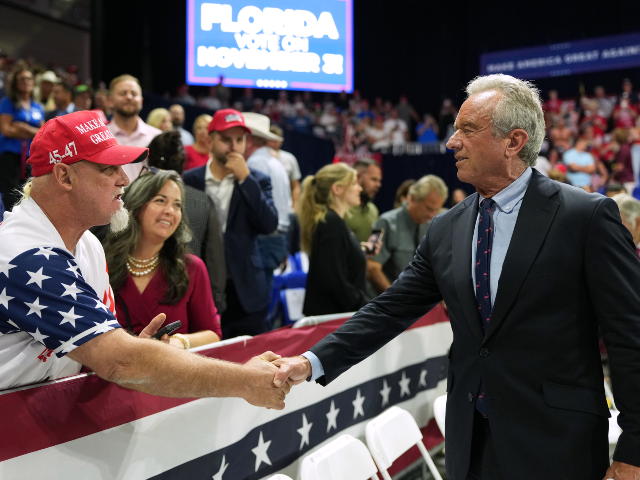
Kennedy announced the initiative Friday at a packed rally with President Donald Trump in Fort Myers, Florida. The centerpiece: a voluntary Made in the USA label for American-caught fish, designed to help domestic fishermen compete against cheap imports from countries with questionable safety standards.
Kennedy didn’t mince words about what American families are actually eating when they buy imported seafood.
“Fish caught in the U.S. does not compare with the imports from countries that have few quality and safety controls and can even be toxic.”
The secretary detailed examples from Vietnam and Cambodia, where shrimp farms fence off mangrove swamps, kill local fish populations, and raise shrimp “loaded with antibiotics” for five years — destroying the ecosystem in the process.
“No European country will take them, so they ship them all over here,” Kennedy told the crowd. “President Trump is rebuilding the infrastructure, he’s reopening the markets for our commercial fishermen.”
The numbers back up the urgency. National Oceanic and Atmospheric Administration data shows that in 2023, an estimated 80 percent of fish purchased in the U.S. was imported from other countries.
The Trump administration is also launching a new government website — seafood.gov — now tracking catches, sales, infrastructure, and strategies to support American commercial fishermen.
Kennedy said he had been working for 40 years to help New England fishermen overcome the restrictions strangling their industry. “Finally the government under President Trump is stepping up to help,” he said.
The New England Fishermen’s Stewardship Association called the Made in USA label a “major win” for Americans in a statement on X.
“We believe U.S. seafood is the most sustainably harvested in the world, and this label gives consumers a simple, recognizable way to identify American-caught seafood while supporting our domestic fishing, processing, and retail industries,” NEFSA director of advocacy Jason Joyce said.
At the Fort Myers rally, Kennedy highlighted the disadvantage Florida fishermen face in a market flooded with imports. He called the city “the greatest shrimpery in all of Florida” — drawing cheers — but pointed out that local fishermen “have to compete with criminal enterprises abroad.”
“Commercial fishermen in this country have the strongest environmental regulations, they have the greatest sustainability regulations, but it puts them at a disadvantage to all the other fishermen in the world,” Kennedy said.
The seafood.gov website lays out the administration’s strategy: removing “unnecessary burdens,” restoring “access to productive fishing grounds,” upgrading catch limits based on “the best and most current science,” and eliminating “permitting barriers to private investment in working waterfronts, cold storage, and shoreside facilities.”
The initiative comes as President Trump’s trade policies reshape domestic industries. Some Maine lobstermen expressed concern in August about Canada trade tensions, fearing they could become “collateral damage” since Canada purchases large quantities of lobster from Maine fisheries.
But for fishermen nationwide, Kennedy’s announcement signals the Trump administration is serious about leveling the playing field — and protecting American consumers from toxic imports in the process.
A Statement from NEFSA's Jason Joyce on the creation of a U.S. Caught Seafood label:https://t.co/3bOURP8FGg pic.twitter.com/G7YCpRWNZI
— NE Fishermen's Stewardship Assoc. (@fishstewardship) October 23, 2026