
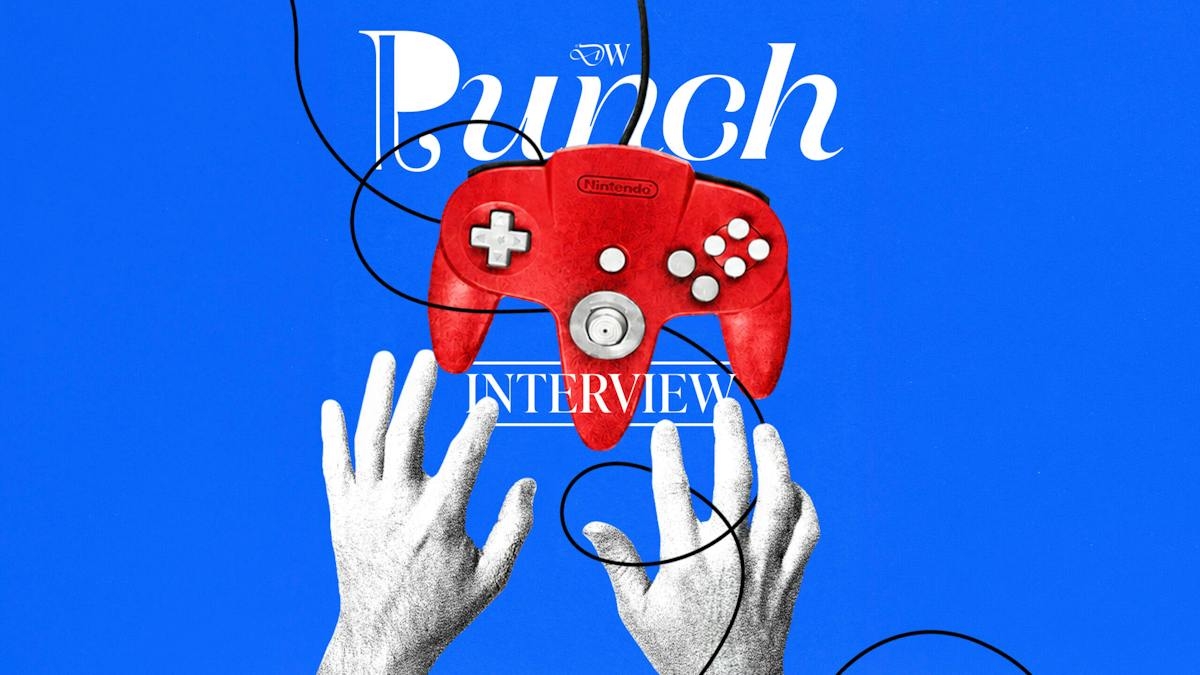
Tech entrepreneur Palmer Luckey is pushing back against the modern gaming industry — and the iPad-kid culture it created — by reviving the social, face-to-face gaming experiences conservatives grew up with in the 1990s and early 2000s.
Luckey, who sold his virtual reality startup Oculus VR before turning 30 and later co-founded defense tech company Anduril Industries, now runs ModRetro. The company builds modern versions of classic gaming systems like the Nintendo 64 and Game Boy — hardware designed for in-person multiplayer, not data-harvesting subscription services.
In a wide-ranging interview, Luckey explained why the games conservative parents grew up playing didn’t turn them into screen-addicted zombies — and why today’s games are fundamentally different.
“Modern games are basically dopamine-addiction apparatuses. Even if the people building the games didn’t set out to create that, they have to build them that way by necessity.”
The shift happened when the gaming industry moved “from innovation to extraction,” Luckey said. Developers now start with the business model — free-to-play, live-service, subscription-based — rather than asking what would make a great game.
The result: companies have completely removed support for split-screen play and LAN parties. Everything is gated through data-collecting, revenue-generating online services. Players are treated as commodities, not friends gathering around a console.
Luckey contrasted modern smartphone games with classics like Tetris, GoldenEye 007, and Super Smash Bros. Those older games were inspired by physical-world puzzles and board games that have existed for centuries — not by psychological manipulation tactics.
“Tetris is basically a real-world puzzle game of the kind that has existed for thousands of years, turned into something you can do in bite-sized chunks on a digital device,” Luckey said. “It has nothing in common with the social, local, mobile-subscription-service games that kids are getting hooked on today.”
Even Jeff Bezos and Hillary Clinton were famously addicted to Tetris, Luckey noted. “Bezos has said on the record that Tetris reprograms your brain.”
The entrepreneur described watching his friend’s young daughters play ModRetro Tetris for the first time. Within three days, they were competing head-to-head, tracking scores, and asking for more games. The tangible experience — holding a physical device, not tapping a screen — made all the difference.
ModRetro’s flagship project, the M64, began in 2012 as an effort to reverse-engineer the Nintendo 64 and build a modern version compatible with today’s TVs. The original N64 hardware doesn’t work with most modern televisions, and aging connectors and capacitors mean many units no longer function.
The new M64 lets families play original N64 cartridges on modern TVs — no CRT required, no technical expertise needed. Just plug it in and play.
Luckey emphasized that nearly every popular N64 game was built around in-person multiplayer: Mario Kart 64, Mario Party, GoldenEye 007, Perfect Dark, Super Smash Bros. These weren’t games you played alone with strangers online. They were social experiences.
“Anyone who has seen an iPad kid and then seen kids sitting around a Nintendo 64 playing GoldenEye knows there is a radical, massive difference between the two things — even if both happen to involve a screen,” Luckey said.
“The games we played didn’t ruin us, and they didn’t turn us into iPad kids.”
Luckey closed with a stark analogy: the difference between 1960s marijuana and today’s hyper-potent THC vapes.
Parents who smoked low-potency pot decades ago don’t always realize their teenager is using something hundreds of times stronger. The same dynamic applies to games, Luckey argued.
“Right now, many parents who played games as kids are letting their children become iPad kids,” he said. “They’re like the hippies who smoked dirt weed in the 1960s and 1970s and think there’s no difference between that and their teenager smoking something 100 times more potent today.”
For parents looking to break the iPad-kid cycle, Luckey recommended starting with two kids, two Chromatic handhelds, two copies of Tetris, and a link cable. No internet required.
Then graduate to the N64 classics — Mario Kart, Smash Bros, GoldenEye — and watch the difference unfold in real time.