Kamala Harris told Democrats they need to get comfortable with a “certain kind of ruthlessness” if they want to win back the White House — a direct signal the failed 2024 nominee is gearing up for another run.
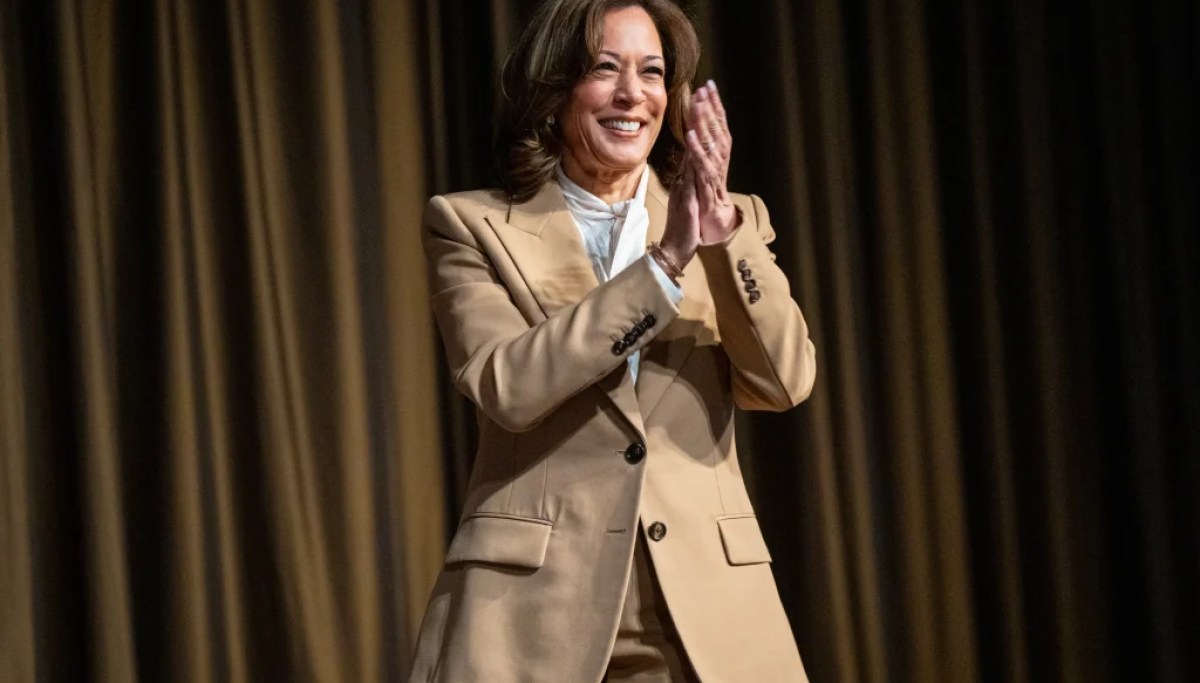
The former vice president delivered the combative message Friday night at the Louisiana Democratic Party’s annual fundraising gala in New Orleans, framing her potential 2028 campaign as a battle that requires “leaders who have moral conviction and know how to fight.”
The Louisiana event marked one of Harris’s most explicit statements yet about the strategic direction she believes Democrats must take following their 2024 defeat. Party fundraising dinners like these have historically served as testing grounds for presidential hopefuls to workshop their messaging with core Democratic audiences before launching into national campaigns. Harris appeared to be using the New Orleans stage to gauge reaction to a more aggressive posture than the one that defined her previous campaign.
“AS I TRAVEL THE COUNTRY, PEOPLE ARE SAYING ‘WE WANT OUR LEADERS TO FIGHT.’ AND IN THIS FIGHT, I SAY WE START BY GETTING COMFORTABLE WITH SOME THINGS, INCLUDING HAVING A CERTAIN KIND OF RUTHLESSNESS.”
The word choice represents a notable departure from the cautious rhetoric that characterized much of Harris’s time as vice president and her brief 2024 presidential campaign. Political analysts often describe “ruthlessness” in campaign contexts as a willingness to aggressively attack opponents, pivot quickly when strategies fail, and prioritize winning over maintaining careful diplomatic language. It’s the kind of quality Democrats have increasingly said they want after watching Republican candidates dominate news cycles with provocative statements while Democratic nominees stayed on-message with poll-tested talking points.
Harris lost to President Donald Trump in a landslide after replacing Joe Biden as the Democratic nominee in 2024. Biden left office with dismal approval ratings and presided over the worst inflation in 40 years — baggage Harris carried straight into her defeat.
The inheritance of Biden’s record proved impossible for Harris to overcome during the compressed 2024 campaign timeline. As sitting vice president, she struggled to distance herself from administration policies that voters blamed for their economic pain, while also trying to demonstrate loyalty to the president who had elevated her to the ticket. That political tightrope left her unable to credibly position herself as a change candidate, even as polling consistently showed Americans wanted a dramatically different direction.
Now she’s testing a new pitch: ruthless fighter instead of Biden’s deputy.
Harris told the gala crowd of hundreds that voters across the country are demanding leaders who “know how to fight.” The speech focused heavily on affordability — the issue that helped sink her campaign when families were paying 20-30% more for groceries than they did under Trump’s first term.
By centering her remarks on affordability and economic anxiety, Harris appeared to be acknowledging what post-election analysis identified as the defining issue of 2024. Exit polls and voter surveys repeatedly showed that concerns about cost of living outweighed all other factors in determining vote choice. The grocery price comparison Harris confronted represents perhaps the most visceral economic indicator voters used to evaluate the Biden-Harris administration’s performance, making it unavoidable territory for any Democrat hoping to reclaim credibility on economic management.
The Louisiana appearance is part of a broader comeback tour. Harris confirmed in April she’s “thinking about” a 2028 presidential run despite her crushing loss. Recent polling shows her as a leading Democratic candidate for 2028, though she remains deeply tied to Biden’s unpopular economic record.
Her positioning in early 2028 polling reflects both name recognition advantages and the unsettled nature of the Democratic field rather than enthusiastic voter support. History offers mixed lessons for defeated vice presidential or presidential candidates attempting comebacks — Richard Nixon eventually succeeded after his 1960 loss, but many others faded into political irrelevance. Harris faces the challenge of remaining visible and relevant without appearing desperate or tone-deaf to the reasons voters rejected her ticket.
Translation: Democrats want someone who can land punches. Whether Harris — who couldn’t land any against Trump in three months of campaigning — is that person remains the $2 billion question her party burned through last cycle.
The 2028 primary field is already taking shape. Harris faces potential competition from governors who distanced themselves from Biden’s failures and weren’t on the ticket when inflation peaked. Her “ruthlessness” pitch sounds like a candidate who knows she has ground to make up.
Those governors represent a particular threat because they can point to state-level accomplishments while credibly arguing they had no role in the federal policies voters punished Democrats for in 2024. They enter the race without the defensive posture Harris must adopt when questioned about her previous administration’s record. The comparison will force Harris to demonstrate that her new approach represents genuine evolution rather than superficial rebranding designed to obscure an unchanged candidate.
The irony: calling for ruthlessness after running one of the most carefully-scripted, gaffe-avoiding campaigns in modern history. Voters will decide in 2028 whether Harris 2.0 is actually different — or just better-marketed.