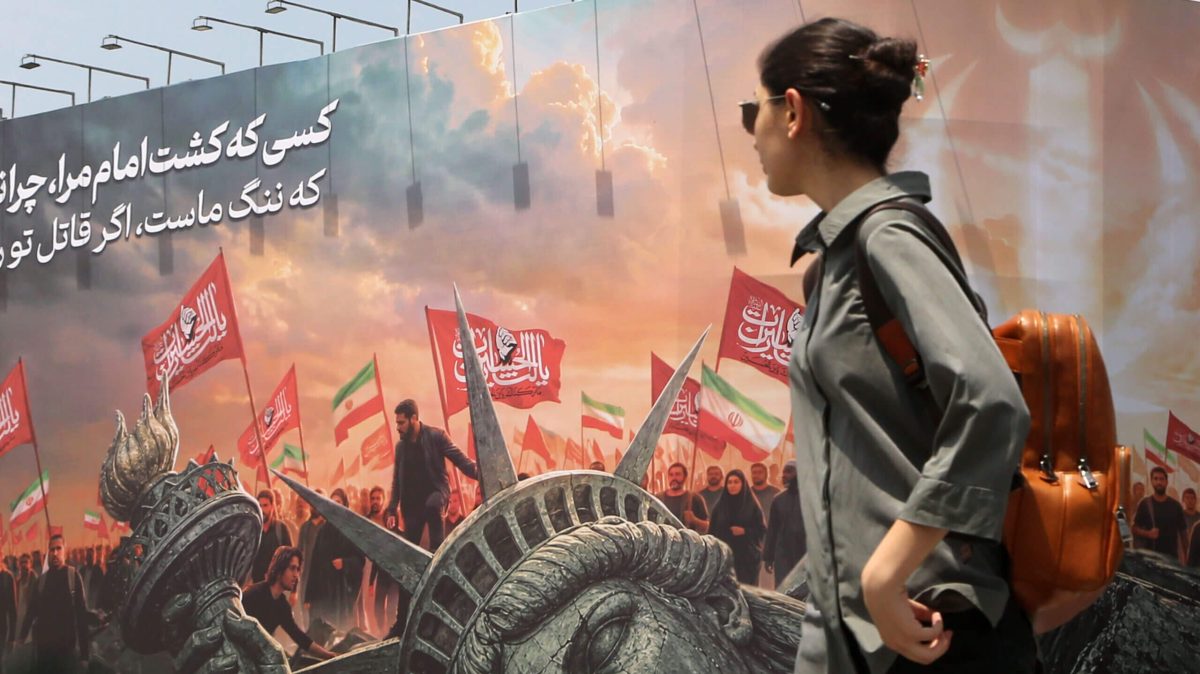
Iran’s fanatic regime is starting to crack under the weight of President Trump’s economic warfare — and it’s showing in the regime’s desperate threats to regional allies if Trump doesn’t negotiate.
Despite public denials, Tehran has been quietly pursuing talks through intermediaries, according to Trump. The president claims a deal is close — and the mullahs’ recent behavior suggests he’s right.
Iranian officials threatened Saudi Arabia, the UAE, and Qatar this week that they’ll attack all of them if the U.S. launches new strikes instead of seeking a diplomatic end to the war. That’s not the language of a regime confident in its position. That’s the sound of a government scrambling to avoid Trump’s promised “decapitation” attack.
“Trump was reportedly on the verge of ordering what he called a massive attack on Iran — by his own description, harder than any U.S. strike since World War II — before calling it off at the request of Saudi Arabia, the UAE, Qatar, and, according to Trump, Iran.”
Trump gave Tehran one last chance to reach a deal before unleashing what he described as the hardest U.S. strike since World War II. The regime’s threats to regional states — attempting to force Trump toward diplomacy — may represent Iran “blinking” in the face of overwhelming U.S. force.
The president has already succeeded in his primary objective: stopping Iran from getting a nuclear bomb. The massive damage inflicted on Iran’s nuclear program — including destruction of critical facilities, loss of specialized equipment smuggled over decades, and deaths of key nuclear personnel — means even residual elements would take billions of dollars and decades to reconstitute.
Now Trump is betting on a different weapon: economic strangulation.
The U.S. naval blockade is costing Iran roughly $400 million a day in lost oil revenue, a devastating blow to an economy already in dire shape before the war began. Sustained over months, that pressure threatens something the regime can’t survive: its ability to pay the soldiers and police who keep it in power.
A vocal group of Washington hawks — including Washington Post columnist Marc Thiessen and Fox News analyst General Jack Keane — want Trump to order one more round of strikes, reopen the Strait of Hormuz by force, declare victory, and walk away. Thiessen has faulted the June Memorandum of Understanding Vice President Vance helped negotiate, arguing in a Washington Post column that Trump should launch a final push to completely destroy Iran’s remaining military capabilities.
But their finish-the-job argument raises an obvious question: why would the Iranian regime stop its attacks after one more U.S. military campaign, when the fanatics running the country appear willing to burn it down rather than fold?
Why believe two more weeks of bombing will destroy all 1,000 of Iran’s remaining missiles? And if the U.S. calls off the war after a two-week campaign, isn’t it more likely that Iran simply resumes firing at its neighbors?
More force may ultimately prove necessary — but only if diplomacy fails and only when coordinated with America’s Gulf allies. A narrowly targeted, allied-coordinated strike combined with sustained economic pressure would better serve American interests than an open-ended bombing campaign that punishes ordinary Iranians, hardens the regime’s fanaticism, and leaves its resolve intact.
Declaring victory after one final barrage might satisfy Washington pundits. It won’t change the regime’s ideology or its willingness to absorb punishment while waiting out the U.S. political cycle.
Two more weeks of U.S. military strikes may also open the door wider for Russia and China to meddle by evading sanctions and providing weapons and technical support.
Time is on Trump’s side. Unlike a bombing campaign — which a regime bent on defiance can frame as martyrdom — economic strangulation threatens something much harder to survive: the regime’s ability to pay the forces that keep it in power.
That slow economic stranglehold, not another two weeks of bombing, may prove to be Trump’s strongest card.