An ICE agent is facing scrutiny after an incident in North Austin on Sunday left a 29-year-old Venezuelan man hospitalized in serious but stable condition.
The man has been identified as Rafael Garces Perez. His attorney, Kate Lincoln-Goldfinch, claims Perez has legal status through his wife. If confirmed, this detail could raise significant questions about the circumstances that led to the encounter and whether proper protocols were followed in determining Perez’s immigration status prior to the confrontation.
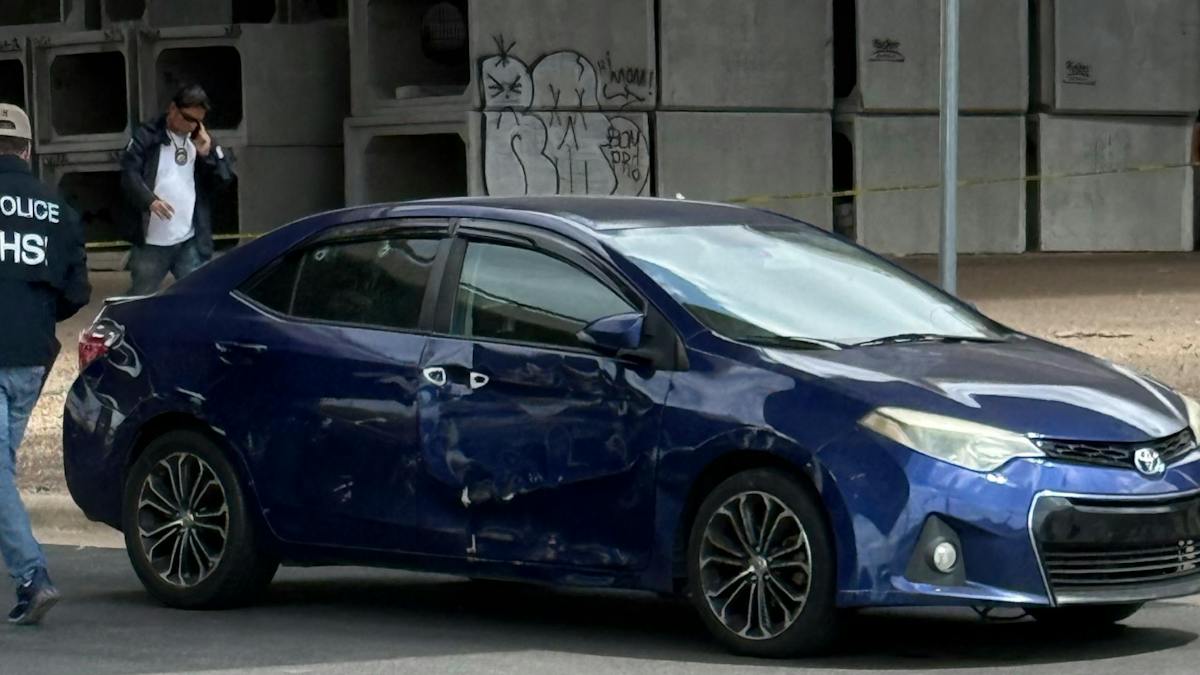
The incident occurred near the intersection of Research Boulevard and Anderson Square, where a blue Toyota Corolla sat with damage to its passenger-side door. The visible vehicle damage suggests a physical altercation or struggle may have taken place, though the exact sequence of events remains undisclosed. Details on how the encounter unfolded were not shared, and the Department of Homeland Security did not immediately respond to requests for comment.
The lack of information from federal authorities has created a vacuum that local officials and community leaders have rushed to fill with their own statements and demands. This pattern is not uncommon in incidents involving federal law enforcement, where jurisdictional complexities and internal review processes can delay public disclosure of facts.
Austin Mayor Kirk Watson confirmed Perez’s condition at a press conference. The mayor’s decision to personally address the incident reflects the seriousness with which city leadership is treating the matter, particularly given Austin’s historically contentious relationship with federal immigration enforcement efforts. Councilmember Mike Siegal said the incident was “terrible” and added his hope that investigators would determine whether an Immigration and Customs Enforcement officer “committed a crime” and that the officer would be “fully prosecuted.”
“My hope today is that we can investigate what happened, and if an (Immigration and Customs Enforcement) officer committed a crime that they will be fully prosecuted, and then we can hope to restore some semblance of law and order in this country.”
Siegal’s statement reflects broader tensions between local Austin governance and federal immigration policy, tensions that have persisted through multiple administrations and have made Austin a focal point in national debates over sanctuary city policies and local cooperation with ICE operations.
Rep. Greg Casar (D-TX) rushed to judgment before any facts emerged, calling the incident unjustified.
“The horror has come to our city,” Casar said. “ICE has shot a person in Austin this morning. As the facts emerge, I am demanding a full, independent investigation, immediate release of the body camera footage, and accountability for any ICE officer who broke the law.”
Casar’s immediate call for body camera footage highlights a key question in the investigation: whether such footage exists and what it might reveal about the encounter. The use of body-worn cameras by ICE agents has been inconsistent, and the availability of such evidence could prove critical in establishing what transpired during the incident.
The horror has come to our city: ICE has shot a person in Austin this morning.
As the facts emerge, I am demanding a full, independent investigation, immediate release of the body camera footage, and accountability for any ICE officer who broke the law.
Over and over, ICE has…— Congressman Greg Casar (@RepCasar) September 20, 2026
Casar also predicted protests against what he called a “deadly mass deportation machine.”
“Just like Americans have from Minneapolis to Houston, Austinites will speak out peacefully against this deadly mass deportation machine,” he said. “ICE has been terrorizing our country for far too long. We will not be silent.”
The congressman’s reference to protests in other cities places the Austin incident within a broader national context of community responses to immigration enforcement actions. His characterization of the situation before a full investigation has been completed illustrates the charged political atmosphere surrounding immigration policy and enforcement.
The circumstances leading to the encounter remain unclear. Without official statements explaining why the ICE agent was attempting to make contact with Perez, what led to the use of force, and whether the agent felt threatened or was following standard enforcement procedures, any conclusions about the appropriateness of the agent’s actions remain premature. ICE has not released a statement on the incident.
As the investigation proceeds, key questions remain unanswered: Was Perez the target of the ICE operation, or was he encountered incidentally? What prompted the use of force? And if Perez does indeed have legal status as his attorney claims, what failures in procedure or communication might have led to this outcome?