The House passed a sweeping sanctions bill Wednesday targeting Russia and Iran, honoring the late Sen. Lindsey Graham two months after his unexpected death in July. The legislation represents one of the most aggressive foreign policy moves in recent years, building upon previous sanctions frameworks that have sought to economically isolate Moscow following its ongoing military actions in Ukraine.
The 61-page “Lindsey O. Graham Sanctioning Russia and Iran Act of 2026” sailed through the Senate 86-11 last month. It empowers President Trump to levy tariffs of up to 100% on any nation buying Russian energy — a provision aimed directly at major buyers like China and India. This approach marks a significant escalation in Washington’s strategy of secondary sanctions, which target not just adversarial nations but also their trading partners. Unlike primary sanctions that directly restrict U.S. entities from doing business with sanctioned countries, these secondary measures attempt to force third-party nations to choose between access to American markets and their existing trade relationships with Russia.
The bill cuts off the Kremlin’s financial lifeline by cracking down on foreign nations purchasing Russian oil and gas. It holds trade partners accountable for fueling Russian energy exports. Energy revenues have long been recognized as the backbone of Russia’s economy and its ability to sustain military operations, with oil and gas sales accounting for a substantial portion of the Russian federal budget in recent years.
“This is a moral issue that requires moral courage. I want us to be able to say that we did everything possible to end this war. That we understood the threat. That we had the courage to do what was right — to cripple the Russian war machine and turn the tide toward peace.”
Rep. Michael McCaul (R-Texas), who spearheaded the House effort, said the measure aims at “crippling the Russian war machine.” As chairman of the House Foreign Affairs Committee, McCaul has been a leading voice on confronting authoritarian regimes and has worked closely with Senate counterparts to advance this legislation through both chambers.
McCaul added the sanctions “will force” Russian President Vladimir Putin to “the negotiating table.” This theory of economic pressure as a path to diplomatic resolution has been debated among foreign policy experts, with supporters arguing that financial pain creates political pressure while critics question whether sanctions alone can alter the strategic calculations of determined adversaries.
“Evil is on the march, history is calling, and now is the time to act,” McCaul declared on the House floor. “Lindsey Graham once said this bill would be his great achievement. I can think of no better way … to honor his life and his legacy than by passing these tough sanctions.”
Rep. Don Beyer (D-Va.) opposed the bill, calling it an unchecked move with “no guardrails or oversight.” Beyer’s concerns reflect broader anxieties among some lawmakers about granting expansive executive authority in foreign economic policy, particularly regarding tariff powers that could affect global trade relationships and potentially raise costs for American consumers and businesses.
“This bill has a loophole that would allow him to define basically any country as a facilitator of evading Russian sanctions,” Beyer said. “He could then hit them with tariffs of up to 100%, with no guardrails or oversight, and no expiration.” The lack of sunset provisions or mandatory congressional review has been a sticking point for critics who worry about the concentration of trade policy authority in executive hands without sufficient checks and balances.
The legislation also targets Russian government officials — including oligarchs, some family members, and Russian financial institutions. It stretches sanction authority aimed at slashing funding flowing into Iran’s weapons and energy sectors, according to NBC News. The Iran-focused provisions represent an expansion of existing sanctions architecture, linking the two nations’ sanctions regimes in recognition of their growing strategic cooperation in recent years.
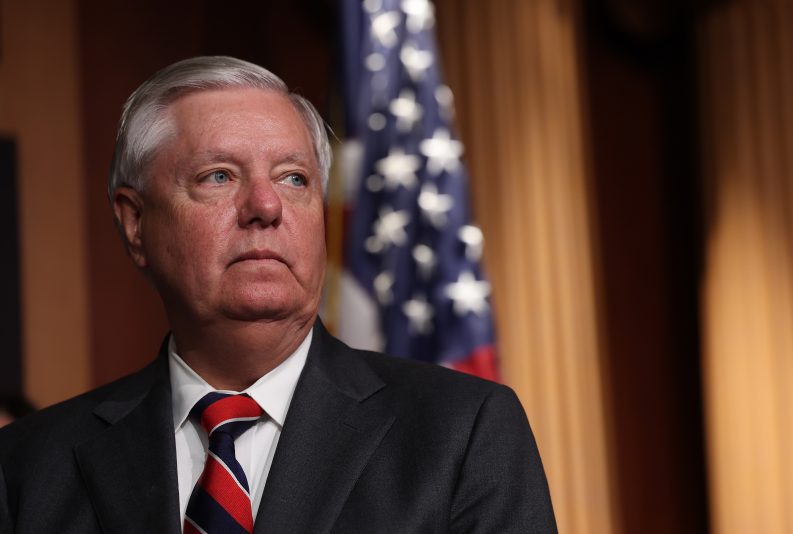
Graham, a fierce champion of the measure before his death, had called the bill his “great achievement.” The Republican senator passed away suddenly in July, leaving behind a legacy of tough foreign policy stances against adversarial regimes. Throughout his career, Graham was known for his hawkish positions on national security matters and his willingness to work across party lines on foreign policy legislation, making this bipartisan memorial measure a fitting capstone to his decades of service in Congress.