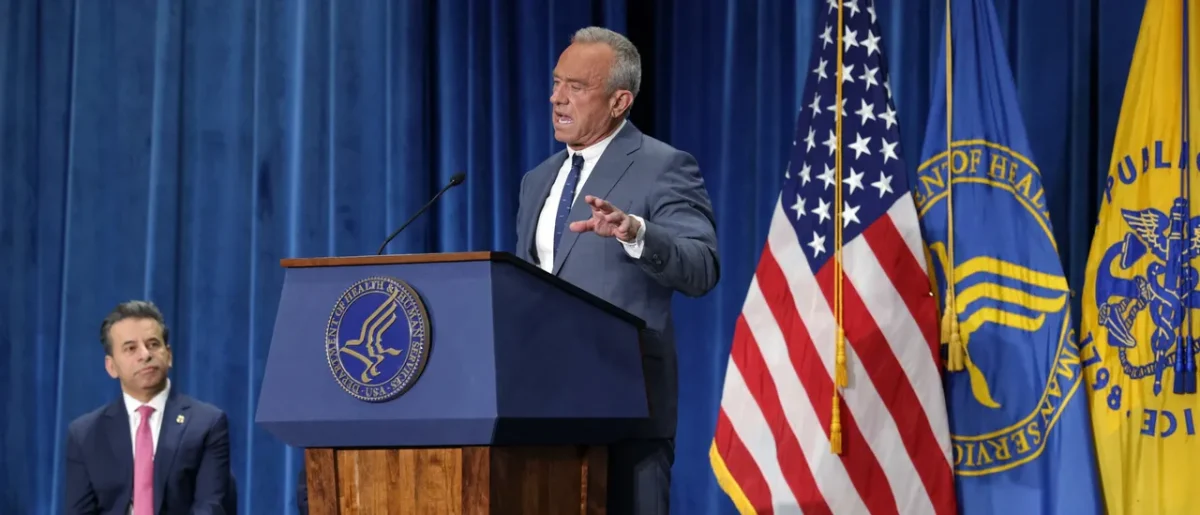
The Make America Healthy Again movement scored a major win Monday as 19 medical schools pledged to overhaul nutrition education requirements — a sharp break from decades of neglect.
The schools signed HHS’s “Nutrition Education Pledge,” committing to incorporate 40 hours of nutrition education into graduation requirements effective this fall, according to an HHS press release.
Until now, medical students received an average of just 1.2 hours of nutrition education during their entire training.
“Poor diets are the primary driver of America’s chronic disease epidemic, and today’s announcement reflects the shifting landscape toward placing nutrition and prevention at the core of patient health.”
HHS Secretary Robert F. Kennedy Jr. said more work remains, adding he looks forward to seeing nutrition play an increased role as the latest science and best practices develop.
The 40-hour standard requires medical students to achieve competencies in 71 areas including nutritional differences between minimally processed and highly processed foods, working with other health professionals for multidisciplinary nutrition care, and responsible use of AI for nutrition advice.
Prominent names among the 19 new signees include the University of Massachusetts, University of Maryland, and Texas A&M University. They join 54 schools that took the pledge earlier this year.

The stakes are enormous. Ninety percent of the nation’s $5.3 trillion in healthcare spending goes toward fighting chronic and mental health conditions, according to the Center for Disease Control.
Another study estimates that approximately 1 million Americans die from food-related chronic conditions per year.
An HHS spokesperson told the Daily Caller News Foundation the commitment marks a significant step toward addressing the chronic disease crisis, noting that more than 40% of federal health care spending is tied to largely preventable, diet-related conditions and more than 70% of U.S. adults are overweight or obese.
“Under Secretary Kennedy’s leadership, this effort reflects growing support for equipping future physicians with the knowledge and tools to prevent, manage, and treat chronic disease through evidence-based nutrition and lifestyle interventions,” the spokesperson said.