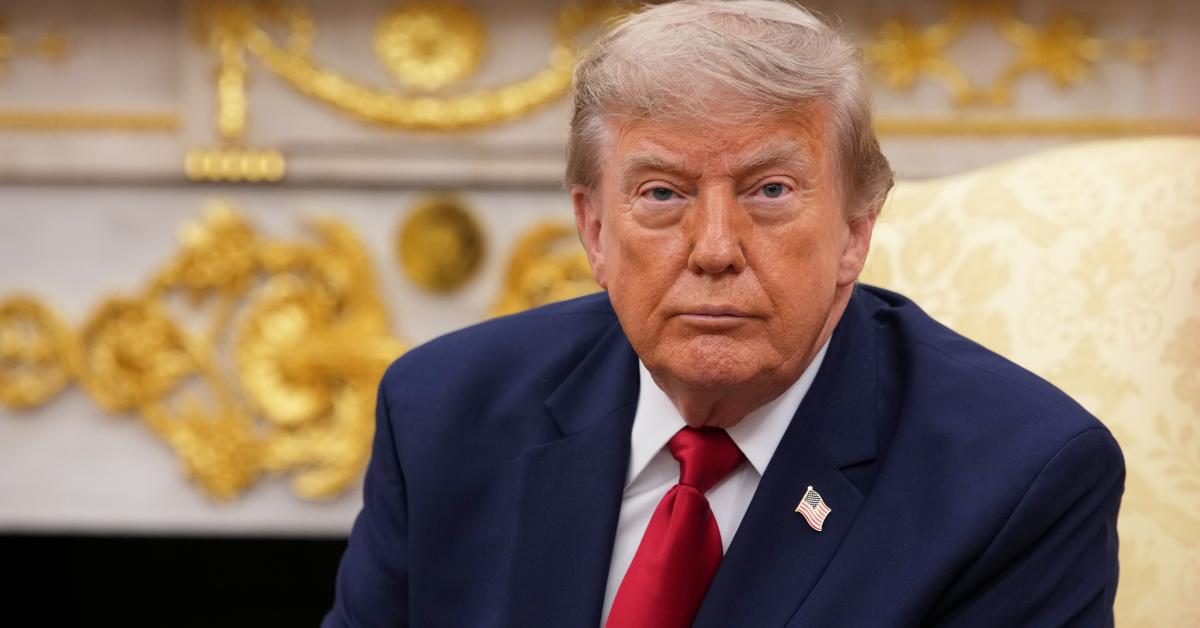
Newly declassified documents reveal the FBI secretly opened a full counterintelligence investigation into President Donald Trump — alleging he was a Russian asset — just eight days after he fired FBI Director James Comey in May 2017.
The investigation had no evidence. The firing itself had been recommended by the Justice Department on grounds that had nothing to do with Russia.
The electronic communication launching the probe was sent on May 16, 2017. The FBI knew the Comey firing stemmed from his mishandling of the Hillary Clinton email investigation, not Russia. Yet the Bureau opened a full investigation into a sitting president anyway.
“The goal of the investigation is to determine if President Trump is or was directed by, controlled by, and/or coordinated activities with the Russian Federation.”
House Judiciary Committee Chairman Jim Jordan, R-Ohio, blasted the FBI’s conduct in an interview on Just the News, No Noise.
“Whenever we do these investigations, the only thing we get wrong is that it’s always worse than we thought,” Jordan said. “No evidence whatsoever, but they do this stuff anyway. Spend taxpayer money, spend resources, going after the guy that we the people made the President of the United States.”
The Eight-Day Timeline
On May 9, 2017, Deputy Attorney General Rod Rosenstein sent a memo to Attorney General Jeff Sessions recommending Comey be fired for mishandling the Clinton email investigation. Rosenstein wrote the FBI was “unlikely to regain public and congressional trust until it has a Director who understands the gravity of the mistakes and pledges never to repeat them.”
At no point did Rosenstein mention Russia.
Trump fired Comey that same day.
The next day, May 10, a friend of Comey’s leaked memos Comey had written about alleged interactions with Trump. The New York Times published the first piece on May 11, claiming Trump asked Comey for a “loyalty” pledge.
That same day, Trump sat for an interview with NBC’s Lester Holt about the firing. The FBI cherry-picked portions of that interview to justify the investigation, claiming Trump gave “changing reasons” for the firing.
But the full interview showed Trump saying he wanted Russian interference investigated — he just thought it should have been quicker. “In my opinion, it should have been over with a long time ago,” Trump said. “[Comey’s] the wrong man for that position.”
On May 16, the FBI sent the electronic communication opening a counterintelligence investigation into Trump. The memo was approved by then-FBI General Counsel James Baker and then-Assistant Director for Counterintelligence William Priestap.
“The FBI is opening a full investigation based on an articulable factual basis that reasonably indicates that President Donald J. Trump may be or has been, wittingly or unwittingly, involved in activities for or on behalf of the Government of the Russian Federation which may constitute violations of federal criminal law or threats to the national security of the United States.”
The memo connected Trump’s firing of Comey to unproven allegations that Trump’s 2016 campaign colluded with Russia.
No Collusion, No Case
The very next day, May 17, Rosenstein appointed former FBI Director Robert Mueller as Special Counsel to investigate the alleged collusion. The announcement came barely a week after Rosenstein himself penned the letter outlining why Comey should be fired.
On March 7, 2019, Mueller released his report — finding no collusion between Trump’s 2016 campaign and Russia.
On August 29, 2019, an Office of the Inspector General report determined Comey’s leaking of his memos violated DOJ and FBI policies. Inspector General Michael Horowitz wrote that Comey “failed to live up to his responsibility” to protect sensitive information.
“By not safeguarding sensitive information obtained during the course of his FBI employment, and by using it to create public pressure for official action, Comey set a dangerous example for the over 35,000 current FBI employees,” the report said.
The DOJ declined to prosecute.
Jordan called the revelations another example of just how far the FBI went to undermine Trump. “Wow, it was even worse than we thought,” he said.
James Comey better hope that there are no "tapes" of our conversations before he starts leaking to the press!
— Donald J. Trump (@realDonaldTrump) May 12, 2017
The Comey Tweet That Made This Weird
Here’s the detail patriots can’t stop talking about — and it comes straight from Comey’s own timeline.
On November 2, 2017 — barely six months after Trump fired him — Comey posted a public reply on Twitter about the cover of his forthcoming book. His exact words:
Check the actual cover. I’m all about Oxford commas.
— James Comey (@Comey) November 2, 2017
Now compare that to the codename FBI officials assigned to the secret counterintelligence probe they’d opened on Trump just months earlier: “Oxferd Comma.”
Coincidence? Insider joke? Deliberate homage?
The White House was careful in its Wednesday announcement — noting that the newly-declassified memos contain no direct evidence establishing that Comey’s tweet inspired the codename choice. That’s the official line.
But the timing is impossible to ignore. Comey was well-known among Bureau colleagues for being obsessive about Oxford commas. The probe was, by all accounts, launched in a spirit of revenge after Trump fired him. Legal analyst Jeff Clark, posting on X, speculated the codename was likely chosen as an homage to Comey by loyalists inside the Bureau who resented his removal.
Whether or not that’s provable, the optics are devastating: the FBI’s own investigators appear to have named a probe targeting a sitting president after a grammatical preference of the man Trump had just fired for cause.
Why This Matters Now
The story would be a footnote if the Bureau’s Trump probe had produced anything. It didn’t. As reporters have noted this week, the “Oxferd Comma” inquiry was eventually folded into Robert Mueller’s Special Counsel investigation — which itself concluded with no proof that Trump colluded with Russia or acted as any kind of foreign asset.
That leaves patriots with a hard question: what does it mean when the nation’s premier law enforcement agency opens a secret counterintelligence probe on the sitting president — using a codename that appears to reference the removed director’s own social media habits — without producing any evidence?
The declassification of these memos is the beginning, not the end. Congress will now have the paper trail to ask exactly who signed off on “Oxferd Comma,” who chose the name, and whether the entire operation was, as the White House suggested, motivated by institutional payback rather than legitimate national security concerns.