
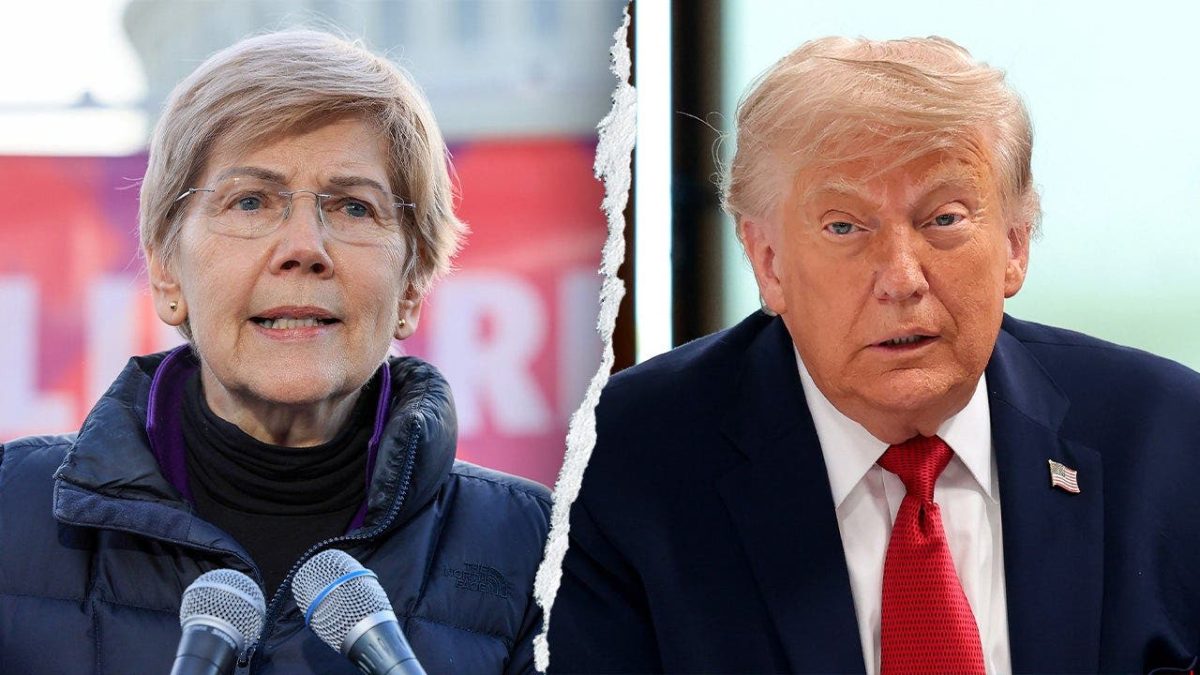
Senate Democrats are refusing to support Republican ethics provisions in landmark crypto legislation — despite the White House signing off on the restrictions targeting President Donald Trump’s exploding crypto income.
The Senate is preparing to vote on the CLARITY Act, a 600-page bill that would bring cryptocurrency under federal financial regulation for the first time. Buried in the package: ethics guardrails that Republicans say would rein in Trump’s crypto holdings, which ballooned his income by 250% in his first year back in office.
Trump’s financial disclosure forms show his income jumped from $620 million in 2024 to $2.2 billion in 2025 — a $1.4 billion surge driven almost entirely by crypto ventures including the $TRUMP memecoin, World Liberty Financial token sales, and Stablecoin Holdco. His sons Don Jr. and Eric run the operations.
“If it doesn’t stop the president from profiting off of crypto, and using it as a way to take bribes right out in public, then it’s not really any ethics provision.” — Sen. Elizabeth Warren, D-Mass.
The ethics provisions would ban federal officials from creating their own digital currencies for profit, promoting or endorsing crypto, and require divestiture or a blind trust within one year of enactment. Officials could still own crypto but would have to disclose sales.
Republicans say the rules apply to lawmakers across the board — not just Trump. Sen. Cynthia Lummis, R-Wyo., who drafted the provisions with the White House, told Fox News the goal is to “serve the House, the Senate, the judiciary, and the executive branch in a fair way” — not to “plan legislation around one person who holds one office for the next two years.”
Sen. Bernie Moreno, R-Ohio, who worked alongside Lummis on the ethics section, said the restrictions target “issuance, promotion, and sponsorship of crypto” — a far stricter standard than Democrats ever applied to then-Speaker Nancy Pelosi’s stock trades.
Democrats are demanding more.
They argue the provisions don’t cover Trump’s sons, meaning the Trump family crypto empire — which has profited massively from his name and office — escapes scrutiny. They also object that enforcement power lies solely with Acting Attorney General Todd Blanche, a close Trump ally, and that the ethics rules sunset on Jan. 20, 2029, the day Trump leaves office.
Sen. Cory Booker, D-N.J., told Fox News Digital he still has “a lot of ethics concerns, and there’s still work to do.”
“This is the partisan draft. It’s very obviously not going anywhere,” Booker said. “If there’s only one pathway to do this it’s doing (it in) a bipartisan manner.”
The dispute is slowing the bill’s momentum as the Senate races toward its August recess. Senate Majority Leader John Thune, R-S.D., had hoped to bring the CLARITY Act to the floor next week but acknowledged that timeline may slip.
“I don’t think we’ll be able to get it done, but I would like to at least get Clarity started,” Thune said.
Sen. Cynthia Lummis told Fox News’ Maria Bartiromo the bill is set for a floor vote the week of July 20 — a tight window before the August break. The 10-month effort to pass the CLARITY Act aims to bring regulatory certainty to U.S. crypto markets and encourage businesses to stay onshore.
Lummis noted Trump himself agreed to the choice between a blind trust or full divestiture of his crypto holdings.
“Since President Trump actually agreed that he would have the choice to either put his assets in a blind trust, or divest of his participation in digital assets and companies that derive revenue from digital assets, somehow, that’s not enough,” Lummis said.
Moreno told Fox News Digital that Democrats opposed to the ethics language should “just offer an amendment” rather than block the entire bill.
“The ethics piece is this much of the bill — Tiny bit — just offer an amendment,” he said.