
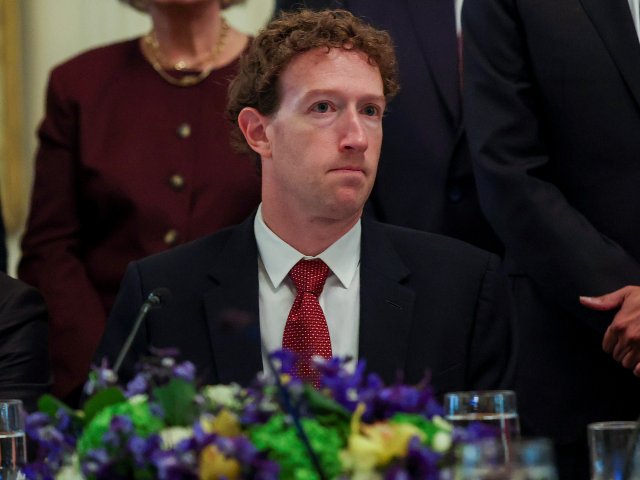
Meta CEO Mark Zuckerberg is weighing a move out of California if voters approve a billionaire wealth tax this November — and the tech giant is scrambling to keep him from leaving.
In an SEC filing this week, Meta disclosed that Zuckerberg told the company’s special committee he was “evaluating relocating his primary residence outside California.” According to the filing, any move would be public and “inevitably noted and commented upon by Company employees.”
The disclosure marks a rare moment where a major technology company has publicly acknowledged the influence of state tax policy on executive decision-making. While wealthy individuals have long engaged in tax planning that includes residency considerations, it’s unusual for such deliberations to become part of formal regulatory disclosures, underscoring the magnitude of both the potential tax liability and the organizational concerns about leadership continuity.
Meta concluded Zuckerberg’s continued leadership near headquarters matters as the company spends heavily on AI and competes against rivals. The filing stated the goal is to keep Zuckerberg “continuing to lead the Company from California and in close proximity to Meta Superintelligence Labs.”
“The goal is to keep Mr. Zuckerberg continuing to lead the Company from California and in close proximity to Meta Superintelligence Labs.”
The emphasis on physical proximity reflects broader debates within the technology industry about remote work and leadership presence. Despite Meta’s own investments in virtual reality and remote collaboration tools, the company is making clear that it views in-person leadership as critical during a period of intense competition in artificial intelligence development. Meta Superintelligence Labs represents the company’s ambitious push into advanced AI, an area where competitors like OpenAI, Google, and Anthropic are racing to achieve breakthroughs.
So Meta agreed to gradually lift restrictions over the next eight years on Zuckerberg’s ability to sell certain shares — but only if he stays in a leadership role and stays based near the Silicon Valley headquarters. Under the plan, Meta would create a new class of shares letting Zuckerberg sell up to half his economic stake in the company without losing his voting control.
This arrangement represents a significant shift in Meta’s governance structure. The dual-class share structure that gives Zuckerberg outsized voting power has long been a point of contention among corporate governance advocates, but the new plan would allow him to diversify his personal holdings while maintaining control over company direction. The eight-year timeline also provides Meta with leadership stability during a critical period of technological transition.
Meta acknowledged the arrangement carries financial risk given the ballot measure, warning in the filing of a “significant, multi-billion dollar tax payment.”
The measure itself, which California voters will decide on in November, would impose a one-time five percent tax on billionaires’ assets. Several prominent tech figures oppose it, including Google co-founder Sergey Brin, investor Ron Conway, DoorDash CEO Tony Xu, and crypto billionaire Chris Larsen. They have spent millions of dollars fighting it. Xu also sits on Meta’s special committee.
The opposition campaign reflects concerns that extend beyond individual tax bills to the broader business climate in California. The state has long been home to the technology industry, but in recent years has seen an exodus of companies and individuals to states like Texas and Florida that have no state income tax. The wealth tax debate has reignited questions about whether California’s regulatory and tax environment remains competitive for retaining its most valuable residents and businesses.
Not everyone in the industry is against the tax. Nvidia CEO Jensen Huang has said he wouldn’t mind paying it.
A key issue raised by the tech community is how the potential wealth tax might treat paper profits from stock gains and stakes in companies that have not gone public — a common form of compensation among startups that have yet to become profitable.
This concern touches on a fundamental characteristic of startup compensation and venture capital investment. Unlike traditional employment where income arrives as cash salary, much of the wealth in Silicon Valley exists as equity stakes in private companies. These holdings may appear valuable on paper but cannot easily be converted to cash without triggering complex tax consequences or, in some cases, violating contractual restrictions on share sales.
Figma cofounder and CEO Dylan Field pointed out that founders and potentially early employees could be subject to the wealth tax but would not be able to use company stock to pay it. Some founders may also face capital gains taxes, resulting in a “double tax event.”
Field also highlighted the challenges founders may face if their startup has an unsuccessful year while still being liable for the wealth tax. They may be forced to lower their startup’s valuation through a “down round,” making it more difficult to attract talent and investors, take out loans they may struggle to repay, or leave California altogether.
These scenarios illustrate the volatility inherent in startup valuations. A company valued at billions of dollars one year might see its valuation collapse the next due to market conditions, competitive pressures, or operational challenges, yet the wealth tax liability would be based on the earlier, higher valuation. This creates a potential mismatch between tax obligations and actual financial resources.
“Silicon Valley startups (ironically) follow the herd. Once enough respected companies/founders establish a pattern, other startups will follow, even if the wealth tax does not apply to them yet,” Field noted on X.
The ballot measure is scheduled for a vote in November 2026.