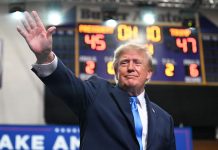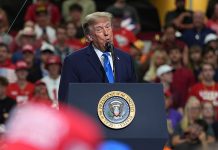
President Donald Trump announced Friday the federal government will send $90 one-time payments to over 20 million Medicare enrollees to help cover Part B premiums — tapping a fund no president has ever used before.
The move represents an unprecedented use of federal healthcare funds and comes at a politically pivotal moment for the administration. Medicare Part B, which covers doctor visits, outpatient care, and medical equipment, has seen premiums rise steadily over the past decade, creating financial pressure on seniors living on fixed incomes. The standard monthly premium for Part B in 2025 stands at $185, meaning the $90 payment would cover roughly half a month’s cost for most beneficiaries.
Trump is pulling the money from Congress’ $2 billion Medicare Improvement Fund, created in 2008 under President George W. Bush but left untouched by every administration since, according to a White House fact sheet.
The fund was originally established as part of broader Medicare reform efforts during the final year of the Bush administration, intended to provide flexibility for quality improvement initiatives and demonstration projects. However, successive administrations under Presidents Obama, Trump in his first term, and Biden all left the fund largely intact, using it sparingly if at all for its originally intended purposes. Healthcare policy experts have long debated the most effective use of these dollars, with some advocating for systemic improvements to Medicare operations and others pushing for direct beneficiary relief.
“President Trump believes that Medicare Improvement Funds should be used to directly help people on Medicare, not special interests, and is returning healthcare dollars back into the hands of the American people to benefit them and their individual healthcare needs.”
The announcement comes one month before midterm elections and as Trump faces low approval ratings on healthcare policy — even in rural areas that overwhelmingly backed his 2024 presidential run.
The timing has drawn scrutiny from political observers who note that healthcare remains a top concern for older voters, a demographic that historically turns out in higher numbers during midterm elections. Senior citizens constitute one of the most reliable voting blocs in American politics, and their support has proven crucial in past electoral contests. The intersection of healthcare policy and electoral politics is particularly sensitive given that Medicare beneficiaries represent approximately 65 million Americans, many of whom vote consistently.
A September survey found 54% of rural voters are unhappy with the president’s healthcare approach. Trump’s move to cut checks directly to seniors signals an attempt to shore up support among a critical voting bloc.
Rural communities face unique healthcare challenges, including hospital closures, provider shortages, and longer distances to medical facilities, making Medicare coverage even more essential in these areas. The dissatisfaction among rural voters is particularly notable given that these same regions provided some of Trump’s strongest electoral margins in previous elections.
Most seniors enrolled in Medicare Part B qualify for the payments, unless their premiums are already covered by Medicaid. The White House emphasized Trump’s crackdown on healthcare fraud as justification for redirecting the fund’s purpose.
The dual-eligible population — those covered by both Medicare and Medicaid — will not receive the payments since their Part B premiums are already subsidized by state and federal Medicaid programs. This targeting ensures the payments reach seniors who bear the direct cost burden of their Medicare premiums each month.
During the summer, the Department of Justice announced a record healthcare fraud takedown, charging 455 individuals with over $6.5 billion in alleged fraud.
The Centers for Medicare and Medicaid Services moved to suspend 1,079 providers and revoke billing privileges for 1,403 others. Investigators found more than $10 billion in fraudulent payments made to Medicare Trust Funds, according to the June DOJ press release.
Healthcare fraud has long plagued federal insurance programs, with the Government Accountability Office consistently identifying Medicare as particularly vulnerable to improper payments. The administration’s enforcement actions represent one of the largest coordinated efforts to combat such fraud in recent years. By linking the direct payments to fraud recovery efforts, the White House is framing the $90 checks as a way of returning ill-gotten funds to their rightful beneficiaries.
The Trump Administration said it “is cracking down on fraud and corruption” and “has taken the strongest actions to protect the integrity of the exchanges, including ending loopholes used to fraudulently enroll individuals.”
The White House fact sheet confirms this is the first time any administration has deployed the Medicare Improvement Fund for direct payments to beneficiaries.
Checks are expected to reach seniors in the coming weeks, giving the president a tangible healthcare win heading into the midterms. The speed of implementation suggests significant coordination between the Treasury Department, Centers for Medicare and Medicaid Services, and the White House to ensure delivery before voters head to the polls.