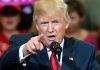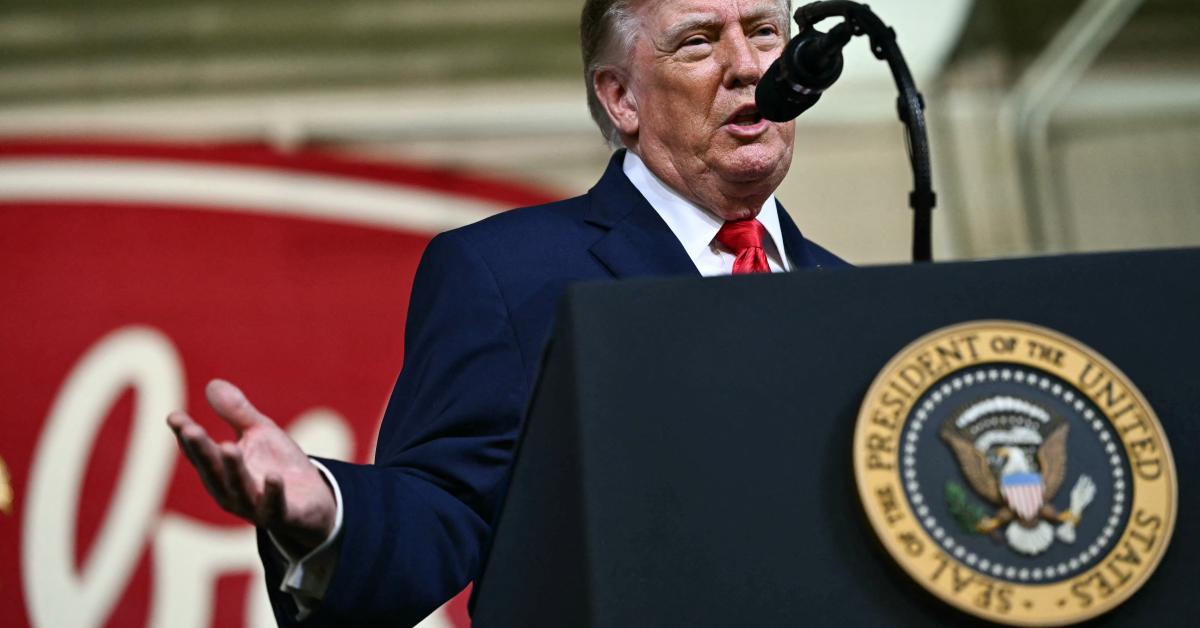
President Trump announced Saturday he will give every adult U.S. citizen $5,000 if Republicans win both the House and Senate in the 2026 midterm elections.
The unprecedented proposal represents one of the most explicit vote-for-payment pitches in modern American political history. While candidates routinely promise tax cuts or spending programs that would benefit constituents, directly linking a specific cash amount to electoral outcomes breaks with traditional campaign messaging. The announcement immediately sparked debate about both the legality and feasibility of such a conditional promise.
“If Republicans win the House of Representatives and the Senate in the 2026 Midterm Elections, I’m going to give all Adult Citizens in the United States of America, $5,000. Thank you for your attention to this matter, and I look forward to signing those checks!” Trump wrote in a Truth Social post accompanied by video.
“IF REPUBLICANS WIN THE HOUSE OF REPRESENTATIVES AND THE SENATE IN THE 2026 MIDTERM ELECTIONS, I’M GOING TO GIVE ALL ADULT CITIZENS IN THE UNITED STATES OF AMERICA, $5,000.”
The president tied the cash promise directly to GOP turnout, calling on Republican voters to use every available method to cast their ballots — including mail-in voting, a tactic he’s historically criticized but now embraces for strategic advantage.
Trump’s pivot on voting methods marks a notable shift in Republican strategy. For years, particularly following the 2020 presidential election, Trump and allied conservatives expressed deep skepticism about mail-in ballots and early voting procedures. His new call for Republicans to use these same tools reflects a pragmatic recognition that Democrats have successfully leveraged expanded voting access in recent election cycles. The shift also signals an attempt to compete with Democrats on organizational and tactical grounds rather than continuing to fight procedural battles that may have cost Republicans winnable races.
“Republicans must WIN the 2026 Midterm Elections, and we must use every appropriate tool — Whether you vote early, absentee, by mail, or in-person, we must ‘swamp’ the Radical Left Dumocrats with massive turnout! SO IMPORTANT — PLEASE GET OUT AND VOTE,” Trump wrote on Truth Social.
The announcement comes as Republicans face a competitive midterm landscape. Trump’s promise of direct payments to voters echoes pandemic-era stimulus checks — but this time framed as a reward for electoral victory rather than economic relief.
The COVID-19 stimulus payments, which included multiple rounds of direct checks to Americans under both the Trump and Biden administrations, remain relatively popular in public memory. Those payments were justified as emergency economic measures during unprecedented lockdowns and economic disruption. By invoking a similar cash-transfer mechanism, Trump may be attempting to recreate the positive associations many voters had with receiving government checks bearing his name. However, the conditional nature of this proposal — tying payment explicitly to partisan political outcomes — represents fundamentally different policy terrain.
The plan would require congressional approval and faces immediate questions about cost and feasibility. With roughly 260 million adults in the U.S., a $5,000-per-person payout would cost approximately $1.3 trillion — a figure that would dwarf most federal programs and require either massive spending cuts, new revenue, or debt financing.
To put that figure in perspective, $1.3 trillion exceeds the entire discretionary budget for most federal departments. It approaches the annual cost of Social Security and would represent a significant percentage of total federal spending in any given year. The sheer magnitude of the proposal raises questions about implementation that extend beyond simple political feasibility. Any such program would require complex administrative mechanisms, eligibility verification systems, and coordination across federal agencies — challenges that would take considerable time to address even if there were unanimous political will to move forward.
Trump has not yet detailed how the payments would be funded or whether they would be universal or means-tested. The president is known for bold campaign promises that energize his base, and this latest pitch appears aimed at driving Republican turnout in what could be a tight midterm battle.
The absence of implementation details is consistent with Trump’s broader communication style, which typically emphasizes bold headline promises while leaving policy specifics to be worked out later. Whether this approach proves effective may depend less on the realistic prospects of $5,000 checks being delivered and more on whether the promise itself succeeds in motivating Republican voters to turn out at higher rates than they otherwise would. Political analysts will be watching closely to see if the unusual nature of the promise generates sustained media attention and voter enthusiasm, or if questions about its viability ultimately undermine its motivational impact.
Early voting is already underway in several states. Trump’s direct-to-voter appeal — complete with his signature closing line about “signing those checks” — positions him as the central figure in the midterm fight, even as he also campaigns for Republican candidates nationwide.