Senate Democrats blocked two bills with overwhelming public support Wednesday — the Stop Insider Trading Act and the Ratepayer Protection Act — in what Republicans are calling pure election-year obstruction. The twin rejections highlight a deepening partisan divide over legislative strategy in an election year, with both parties accusing the other of prioritizing political advantage over policy outcomes that polling suggests the American public broadly favors.
The stock trading ban passed the House with 13 Democrat votes. It would prohibit members of Congress and their families from buying individual stocks and require 7-14 days’ notice before selling existing holdings. The legislation addresses longstanding concerns about conflicts of interest and insider trading on Capitol Hill, an issue that has drawn bipartisan scrutiny following reports of suspicious trading patterns by lawmakers of both parties in recent years. Public frustration with congressional stock trading has intensified as voters increasingly view such activity as incompatible with public service.
Every Senate Democrat voted against it. The reason? Republicans included a voter ID provision. The addition of the voter ID language transformed what might have been a straightforward ethics reform measure into a flashpoint in the ongoing national debate over voting access and election integrity.
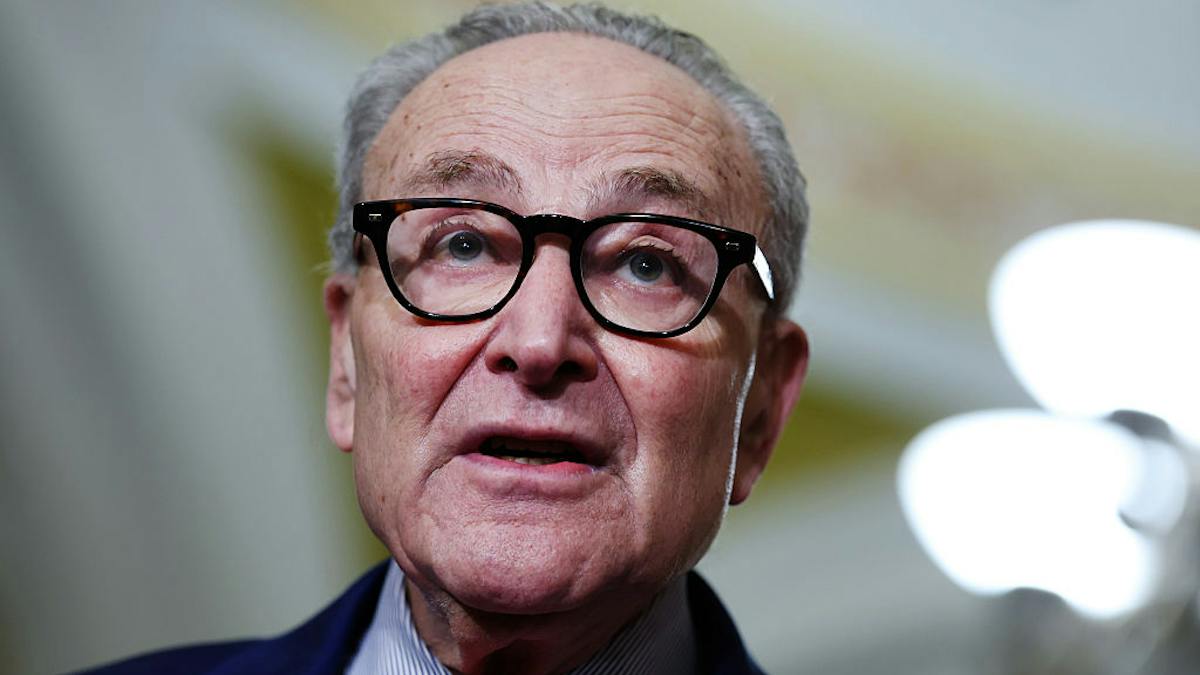
“They don’t want this bill to become law. So they put a poison pill in that they knew would tank it. It’s really trickery. Skullduggery.” — Senate Minority Leader Chuck Schumer
But Schumer’s “poison pill” claim falls apart under scrutiny. A 2023 Pew Research Center poll found 83% of Americans — including 71% of Democrats — support laws requiring voters to show identification at the polls. The polling data reveals a significant disconnect between Democratic voters and their elected representatives on this issue, undermining the argument that the provision made the bill politically unpalatable to the party’s base.
A separate 2023 University of Maryland study found 86% support banning members of Congress from trading stocks while in office. The convergence of strong public support for both provisions in the Republican-drafted legislation complicates the Democratic leadership’s strategic calculus and raises questions about whether procedural objections are masking other concerns.
Translation: Democrats just voted against two policies the American people want — to protect their electoral playbook. The decision places Senate Democrats in the uncomfortable position of opposing measures that align with majority opinion across the political spectrum, potentially creating vulnerability in competitive races where voters prioritize government accountability and election integrity.
CNN data analyst Harry Enten laid it out plainly: “Voter ID is NOT controversial in this country. A photo ID to vote is NOT controversial in this country. It is not controversial by party and it is not controversial by race. The vast majority of Americans agree.” His analysis underscores how the political class has diverged from public sentiment on an issue that polling consistently shows bridges partisan and demographic divides.
NBC Nightly News anchor Tom Llamas went further, noting the gap between voters and their elected Democrats: “Voter ID rules do have wide public support, but the vast majority of Democrats on Capitol Hill oppose them.” The observation highlights a tension within the Democratic coalition between grassroots voter attitudes and the party’s institutional position on voting legislation.
Democrats also tanked the Ratepayer Protection Act Wednesday — a bill that passed the House 417-3 with bipartisan support. The measure would require states to consider forcing Big Tech companies to cover utility costs for new data center construction. The near-unanimous House vote reflected broad agreement that the explosive growth of energy-intensive data centers should not burden residential ratepayers with higher electricity bills, making the Senate’s rejection all the more striking to supporters of the legislation.
Senate Democrats blocked it in a procedural vote, 57-43, despite support from Democratic Sens. Amy Klobuchar (MN), Jon Ossoff (GA), Raphael Warnock (GA), and Maggie Hassan (NH). The defections from Democratic leadership suggest internal disagreement over the tactical decision to block legislation that addresses constituent concerns about utility costs in states experiencing data center expansion.
Schumer called the bill “toothless” and “optional” because it doesn’t mandate state adoption of the standards. His criticism focused on the legislation’s framework, which would provide guidance to states rather than impose federal requirements on utility regulation, an area traditionally left to state discretion.
Sen. Chris Murphy (D-CT) told Semafor the GOP is “cooked” on the issue: “I think Donald Trump is going to tweet five more times that he loves data centers. And that is the official position of their party. This is panic.” Murphy’s comments reflect Democratic confidence that Republicans will face their own contradictions as they balance support for data center development with constituent concerns about utility costs.
Republicans see the pattern clearly: Democrats are blocking popular legislation — bills their own voters support — to deny the GOP any wins before November. The Republican interpretation frames Wednesday’s votes as part of a broader strategy to prevent the majority party from claiming legislative achievements that could bolster their case to voters in the upcoming election cycle.
The charges remain allegations. The case has not been proven in court.