
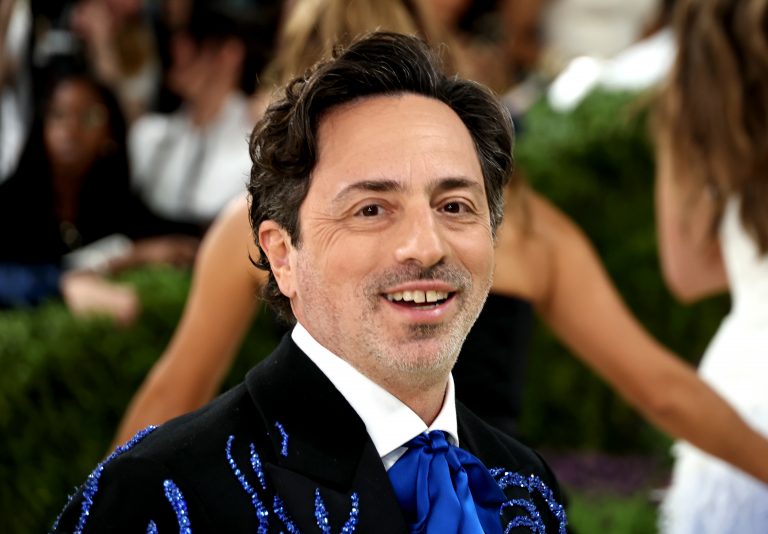
Google co-founder Sergey Brin has dropped $102 million into a campaign to kill California’s billionaire wealth tax — a ballot measure that would personally cost him nearly $14 billion.
The unprecedented spending underscores how high the stakes have become in what many observers are calling the most consequential ballot fight in California’s modern history. The clash pits progressive advocates who see extreme wealth concentration as a policy failure against technology leaders who argue such measures will fundamentally damage the state’s innovation economy.
Brin’s massive contribution went to Building a Better California, a group opposing Proposition 40 on November’s ballot. The measure would impose a one-time 5% tax on the total assets of any California resident worth over $1 billion.
The proposition represents a novel approach to wealth taxation in the United States, where taxes have traditionally targeted income or capital gains rather than accumulated assets. Supporters argue that billionaires have benefited disproportionately from California’s infrastructure, educational institutions, and business-friendly environment, and should contribute accordingly. Critics counter that taxing unrealized gains and illiquid assets sets a dangerous precedent that could extend to other wealth brackets over time.
With Brin’s estimated net worth at $270 billion, according to Bloomberg’s billionaires index, the tax would trigger a staggering $14 billion bill.
That single tax liability would exceed the annual budgets of several California state agencies and represents more than Brin has donated to philanthropic causes over his entire career. The sheer magnitude of the potential payment helps explain why the Google co-founder has committed such extraordinary resources to defeating the measure, viewing the $102 million campaign expenditure as a rational investment to avoid a far larger financial hit.
Opposition groups have already spent nearly $100 million on advertisements targeting voters. Brin joins several other Silicon Valley billionaires bankrolling the fight against the proposal.
The coordinated opposition campaign has flooded California airwaves with warnings about economic consequences, featuring small business owners, tax policy experts, and middle-class Californians who express concern that today’s billionaire tax could become tomorrow’s millionaire tax. The advertising blitz represents one of the most expensive ballot measure campaigns in state history, rivaling spending on past battles over property taxes and education funding.
“I fled socialism with my family in 1979 and know the devastating, oppressive society it created in the Soviet Union. I don’t want California to end up in the same place.”
The Moscow-born Google co-founder made that comparison to The New York Times earlier this year, framing the wealth tax as a step toward the Soviet-style system his family escaped.
Brin’s personal history lends particular weight to his opposition. His family left the Soviet Union when he was six years old, seeking economic opportunity and freedom from government overreach. That biographical detail has featured prominently in opposition messaging, though supporters of the tax dismiss the comparison as inflammatory and historically inaccurate, noting that a one-time 5% levy bears little resemblance to Soviet economic policies.
The tax could trigger a billionaire exodus from California — some wealthy residents have already fled the state to avoid the deduction, taking businesses with them. But the proposition’s authors deliberately designed a trap: the tax applies retroactively to anyone residing in California at the beginning of 2026.
This retroactive design element has sparked intense legal debate. Constitutional scholars have questioned whether such retrospective taxation would survive court challenges, though the measure’s authors maintain they’ve carefully structured it to withstand scrutiny. The strategy reflects lessons learned from previous wealth tax proposals in other jurisdictions, where advance warning gave wealthy residents ample time to relocate.
Emmanuel Saez, a University of California, Berkeley professor who helped author the proposition, explained the timing strategy.
“It’s too late to leave now. Because the ballot was announced in late November 2025, it left only one month for billionaires to leave. And we chose that design because we believe, based on the tax experts, that it’s basically impossible to sever residency with California within one month.”
Saez, a leading economist whose research on income inequality has influenced progressive policy debates nationwide, has become the intellectual architect behind California’s wealth tax movement. His work documenting the growing concentration of wealth among the ultra-rich has provided the empirical foundation for arguments that traditional taxation mechanisms have failed to address extreme inequality.
Term-limited Governor Gavin Newsom, widely expected to launch a 2028 presidential campaign, has publicly promised to vote no on Proposition 40. Republican Steve Hilton and Democrat Xavier Becerra — both running to succeed Newsom as governor — have also signaled opposition to the measure.
Newsom’s opposition is particularly significant given his national profile among Democratic voters and progressive donors. His stance reflects the delicate balance California Democrats must strike between their party’s increasingly populist rhetoric on wealth inequality and the practical reality that Silicon Valley billionaires fund much of the state’s Democratic political infrastructure and provide tens of thousands of high-paying jobs.
The fight over Proposition 40 has become a proxy battle for California’s economic future, with billionaires warning the tax could drive the state’s most successful entrepreneurs to Nevada, Texas, and Florida — states with no income tax and no wealth tax proposals on the horizon.
Beyond its immediate fiscal implications, the measure has taken on symbolic importance as a test case for whether wealth taxes can work in the American context, with national implications for similar proposals that progressive activists hope to advance in other high-tax states.