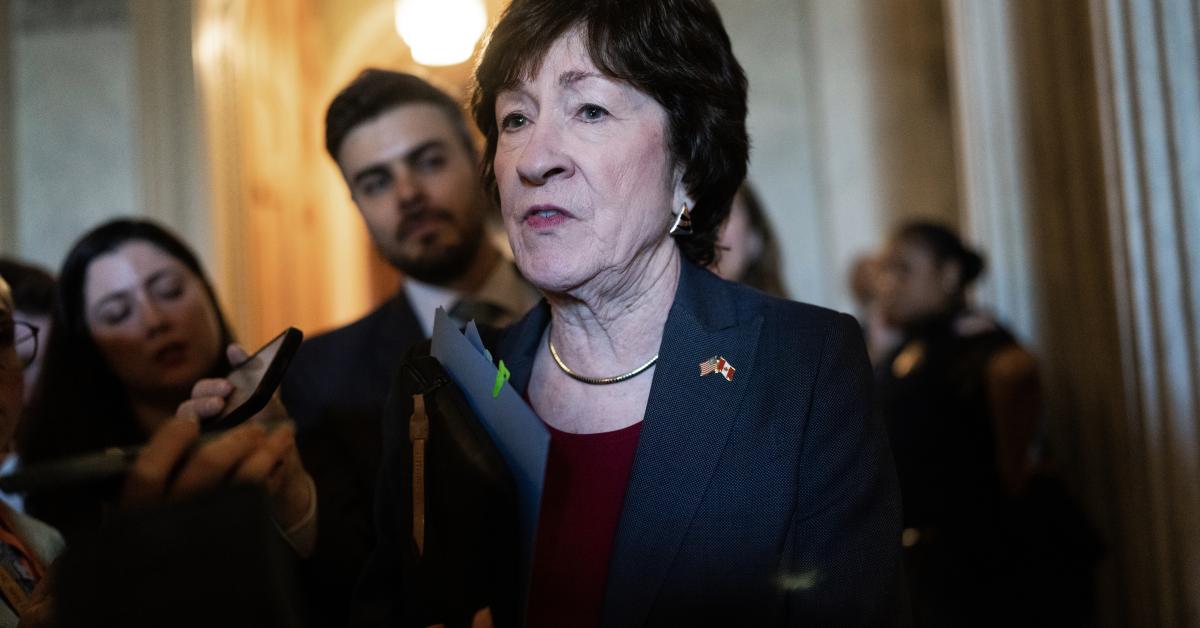
Sen. Susan Collins is pushing back hard against a Democratic super PAC attack ad claiming she voted to slash Medicaid funding — a charge fact-checkers already called false.
The $2 million ad buy from the Senate Majority PAC targets the Maine Republican over a procedural vote on President Trump’s One Big Beautiful Bill, blaming her for birthing center closures across the state. The advertising campaign represents one of the most aggressive pushes by national Democrats to tie Collins to Trump’s legislative agenda, despite her well-documented history of breaking with her party on key healthcare votes.
Collins has built much of her political brand on independence from party leadership, particularly on healthcare issues that resonate deeply with Maine voters. The state has a significant rural population that depends heavily on Medicaid coverage and access to local healthcare facilities, making any perceived threats to these programs politically toxic.
“I did NOT vote to cut Medicaid. I voted against the One Big Beautiful Bill specifically because of its Medicaid provisions. I warned that the proposed reductions could threaten health care for Mainers and put rural hospitals at further risk.”
Collins was among a handful of Republicans who broke with Trump last year to vote against final passage of his landmark tax cuts and policy bill, citing steep Medicaid reductions. Her opposition to the legislation came despite intense pressure from the White House and Republican leadership to support what they characterized as the administration’s signature domestic policy achievement.
The divide between procedural votes and final passage votes has become a frequent battleground in political advertising, allowing campaigns to characterize lawmakers’ positions in ways that may lack full context. In this case, the distinction between advancing legislation for debate and ultimately opposing its passage forms the crux of the dispute.
The Senate Majority PAC ad claims Collins cast “the deciding vote to advance Trump’s Medicaid cuts, so they can give billionaires a tax break.” The narrator adds: “Every time it matters, Susan Collins caves to Donald Trump.” The ad’s framing attempts to paint Collins as complicit in policies she ultimately voted against, a narrative strategy designed to erode her moderate credentials with swing voters.
But PolitiFact previously rated similar claims that Collins “sided with Trump to cut Medicaid” as false. The fact-checking organization noted that while Collins did vote on procedural matters related to the legislation, her final vote against the bill represented her actual position on the policy.
Democrats point to Collins’ initial procedural vote to advance the OBBB legislation — a talking point pushed by disgraced former Democratic Senate candidate Graham Platner before he dropped out amid sexual harassment allegations. The argument hinges on the notion that voting to allow debate on legislation constitutes support for its contents, a position that voting rights advocates and congressional scholars have often disputed as oversimplifying the legislative process.
Collins said the closure of birthing centers in Maine stems from “workforce, reimbursement, and demographic pressures that have been threatening rural maternity care for years.” She called on Gov. Janet Mills and the Democratic-controlled state Legislature to deliver more funding and resources. The closures represent a broader trend affecting rural America, where healthcare access has deteriorated due to multiple converging factors beyond any single piece of federal legislation.
“This is something Troy Jackson should have prioritized as Senate president,” Collins said, seeking to turn the healthcare debate back on her opponent’s record in state government.
She’s now facing a challenge from Jackson — an Allagash Democrat and former state Senate president — who replaced Platner as the party’s nominee in a special convention. Jackson’s late entry into the race has complicated Democrats’ messaging strategy, as he works to build name recognition statewide while Collins leverages her decades of incumbent visibility.
The Maine Senate race is a must-win for Democrats pushing to retake the chamber, where Republicans currently hold a 53-45 majority. Both parties are pouring tens of millions into TV and digital ads targeting undecided voters. National strategists view Maine as one of a handful of competitive states that will determine Senate control, elevating what might otherwise be a regional contest to a race with nationwide implications.
Cook Political Report and Inside Elections both rate the race a Toss Up ahead of the Nov. 3 midterms, reflecting the uncertainty in a state where Collins has previously won by comfortable margins but where Trump remains unpopular.
The latest polling shows Collins opening a lead over Jackson, but still within the margin of error. Previous polls showed Jackson slightly ahead, suggesting a volatile electorate that may not solidify preferences until the final weeks of the campaign.