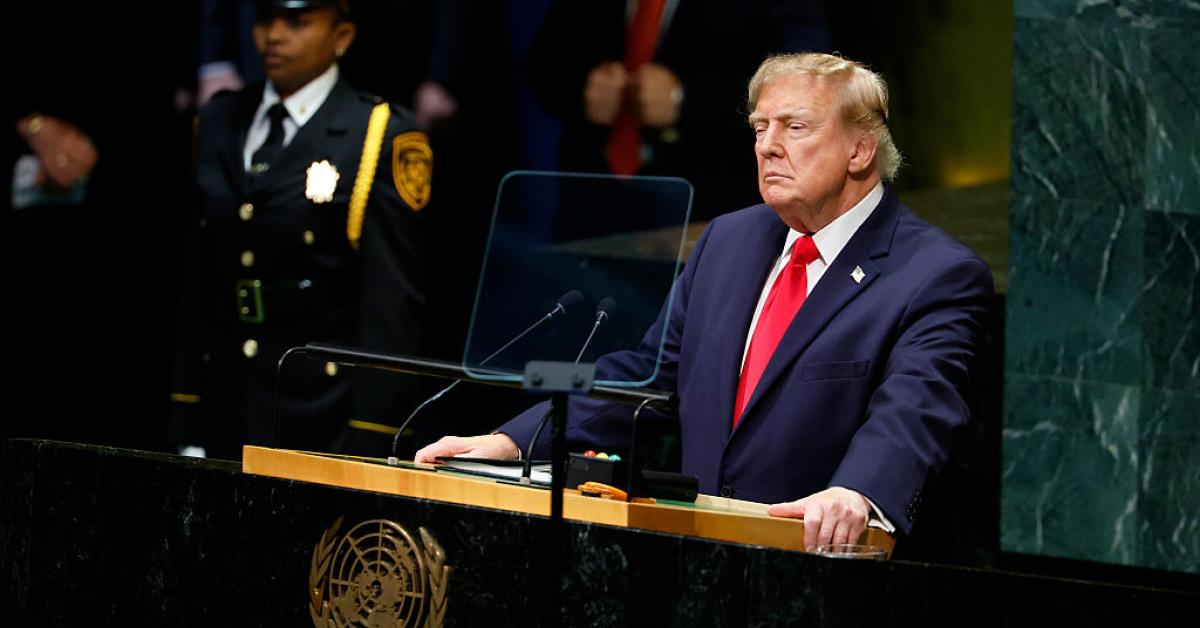
President Trump declared over the weekend that more people are working in the United States than at any point in recorded history — and he’s calling out the mainstream media for ignoring the news.
The proclamation comes amid what the administration characterizes as a sustained pattern of underreporting positive economic developments by major news outlets. Trump has consistently argued that traditional media organizations have failed to give adequate coverage to economic gains occurring under his leadership, a criticism that has become a centerpiece of his communication strategy with supporters.
On Saturday, Trump posted that he had a “new responsibility” to report economic wins himself because the “Fake News refuses to do it.”
This approach represents a continuation of the president’s longstanding practice of bypassing traditional media gatekeepers to communicate directly with the American public. By framing himself as the primary source of economic news, Trump positions his social media platforms as an alternative information channel for citizens seeking what he portrays as unfiltered facts about the nation’s fiscal health.
On Sunday, he announced: “More people working in the United States right now than at any point in the History of our Country!”
“The American People elected me to deliver HISTORIC Economic Results, and now, I have a new responsibility, reporting our incredible results because the Fake News refuses to do it.”
Trump’s Saturday post laid out a string of record-breaking economic indicators the press has downplayed or ignored entirely.
The list of metrics he cited spans multiple sectors of the economy, from manufacturing activity to household earnings to international trade flows. Each indicator, according to the president’s interpretation, tells a story of economic expansion that contradicts narratives of stagnation or decline that he suggests dominate mainstream coverage.
S&P Global reported this week that U.S. business growth hit its highest level in more than five years — and if you exclude distorted COVID reopening figures, the mark goes back even further.
The distinction about COVID-era data is significant because the pandemic created unusual volatility in economic measurements. Massive shutdowns followed by rapid reopenings produced statistical anomalies that can make year-over-year comparisons misleading. By noting that the current growth exceeds even pre-pandemic benchmarks when those distortions are removed, Trump emphasizes the durability and authenticity of the current expansion.
What does that mean for patriots? More orders. More output. More American workers being hired. Manufacturing is growing, businesses are expanding, and demand is strong.
Trump also highlighted that U.S. real median household income is now the highest ever recorded. The United States poverty rate is at its lowest level on record.
These twin achievements—rising incomes and falling poverty—represent core measures of broadly shared economic prosperity. Real median household income, adjusted for inflation, serves as a key indicator of whether typical American families are actually getting ahead financially, not just seeing nominal wage gains eroded by rising prices. The poverty rate decline suggests that economic growth is reaching Americans at all income levels, not just those at the top of the economic ladder.
U.S. goods exports in 2026 are on pace for their highest level in history, and trillions of dollars in new investments are pouring into the country.
The export surge reflects increased global demand for American-made products, while the investment inflows signal that domestic and international businesses view the United States as an attractive place to deploy capital. Together, these trends point to confidence in the long-term competitiveness and stability of the American economy.
Trump didn’t hold back on the media blackout.
“If anyone else were President, this would be all the Media would talk about,” he wrote. “But because no one ever wants to give me credit, no one is talking about these Historic Numbers.”
The contrast he draws speaks to a broader tension between the administration and press corps over what constitutes newsworthy economic coverage and how achievements should be contextualized and attributed.
He closed with a rally cry for the midterms: “VOTE FOR REPUBLICAN AND ‘TRUMP’ CANDIDATES IN THE MIDTERMS. WE HAVE ALREADY MADE AMERICA GREAT AGAIN, BUT NOW WE WILL REACH NEW LEVELS OF GREATNESS.”
The explicit connection between economic performance and electoral politics underscores Trump’s strategy of making the upcoming midterm elections a referendum on measurable results rather than rhetoric or style.
Business is growing. Americans are earning more money than ever before. Poverty is at its all-time lowest level. Exports are surging.
The numbers don’t lie — even when the press refuses to report them.