Google is preparing to launch a satellite carrying its AI chips into orbit as part of an early test of whether space could someday host AI data centers.
The move represents a significant shift in how tech companies are thinking about the future of computing infrastructure. For decades, the data center industry has been defined by massive ground-based facilities that consume enormous amounts of electricity and water for cooling. Now, as artificial intelligence workloads demand ever more processing power, companies are beginning to explore whether the harsh environment of space might paradoxically offer advantages that Earth cannot.
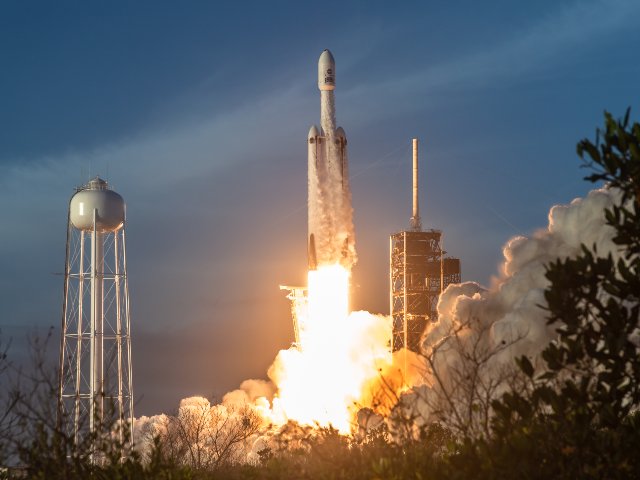
The satellite is fitted with Google’s Tensor Processing Units and is scheduled to launch October 1 on a SpaceX Falcon 9 rocket. It will circle Earth in low orbit, drawing power from the sun.
Tensor Processing Units, or TPUs, are Google’s custom-designed chips specifically optimized for machine learning tasks. Unlike general-purpose processors, TPUs are built to handle the massive matrix calculations that underpin modern AI systems, from language models to image recognition. Placing these specialized chips in orbit would mark the first time such advanced AI-specific hardware has been tested outside the protective envelope of Earth’s atmosphere.
The project, dubbed “Suncatcher,” aims to see whether the hardware can handle the physical stress of spaceflight and the radiation and thermal extremes of space. Google says some things can only be tested in orbit.
The name “Suncatcher” is a nod to the satellite’s reliance on solar power, a critical component of making space-based computing economically viable. Without the need for terrestrial power grids or the infrastructure to support them, solar-powered satellites could theoretically operate with far lower ongoing costs than their ground-based counterparts, assuming the technology can be made to work reliably.
Ground testing has already turned up encouraging signs — the chips can tolerate substantial g-forces and radiation exposure. Heat is a tougher problem.
The thermal challenge is particularly acute in space, where there is no air to carry heat away through convection. Instead, satellites must rely entirely on radiation to dissipate heat, a far slower and less efficient process. This fundamental physics problem has long constrained the design of spacecraft electronics and represents one of the most significant engineering hurdles for space-based AI computing.
“The chips can only run for about 15 minutes before they’ll need to be turned off to cool down.”
Fifteen minutes is a tight window for anything resembling sustained computing, which is why Google is treating this launch as a first step rather than a finished system.
The limitation underscores the experimental nature of the mission. Modern AI training runs can take days or even weeks of continuous computation. Inference tasks — where trained models are used to process new data — are faster but still require reliability and uptime far beyond what fifteen-minute intervals could provide. Solving the thermal management problem will be essential if space-based AI infrastructure is to move from concept to reality.
Travis Beals, Project Suncatcher’s senior director of product management, framed the mission as methodical engineering. “Exploring space as a viable location for scalable AI compute won’t happen all at once,” he said. “This first launch is about seeing what works, identifying points of failure, and applying those findings to future missions.”
Google’s ambitions extend beyond a single satellite. The company envisions eventually launching a constellation of chip-carrying satellites and has already committed to putting two more into orbit next year.
A constellation approach could offer redundancy and the ability to distribute workloads across multiple platforms, potentially working around the thermal constraints that limit individual satellites. It could also provide continuous coverage and processing capability as satellites pass over different parts of the globe.
Google isn’t alone in this. Elon Musk, Jeff Bezos and former Google CEO Eric Schmidt have all floated space-based data centers as an alternative to Earth-bound ones, which need large amounts of land, power and cooling to run.
The interest from multiple tech titans suggests this is more than speculative thinking. Musk’s SpaceX already provides the launch infrastructure making such projects feasible, while Bezos’s Blue Origin is developing its own launch capabilities. Schmidt has been vocal about the strategic importance of maintaining American leadership in AI infrastructure, viewing it as a national security imperative as much as a business opportunity.
AI data centers are changing the political landscape. Space could be an ideal location for the data centers of the future, as opposed to America’s heartland and suburban neighborhoods throughout the country.
The political dimension has become increasingly contentious as communities push back against the environmental impact and resource demands of large-scale data centers. Local opposition to new facilities has grown as residents grapple with concerns about water usage, noise from cooling systems, and strain on electrical grids. Space-based infrastructure could sidestep many of these conflicts entirely, though it would introduce new questions about orbital regulation, space debris, and international governance.
The launch comes as the race to control AI infrastructure heats up — a topic explored in depth by Breitbart News social media director Wynton Hall’s New York Times bestseller Code Red: The Left, the Right, China, and the Race to Control AI, which examines how the MAGA movement can shape AI policy to benefit humanity without handing control to leftists in Silicon Valley or allowing the Chinese to take over the world.