
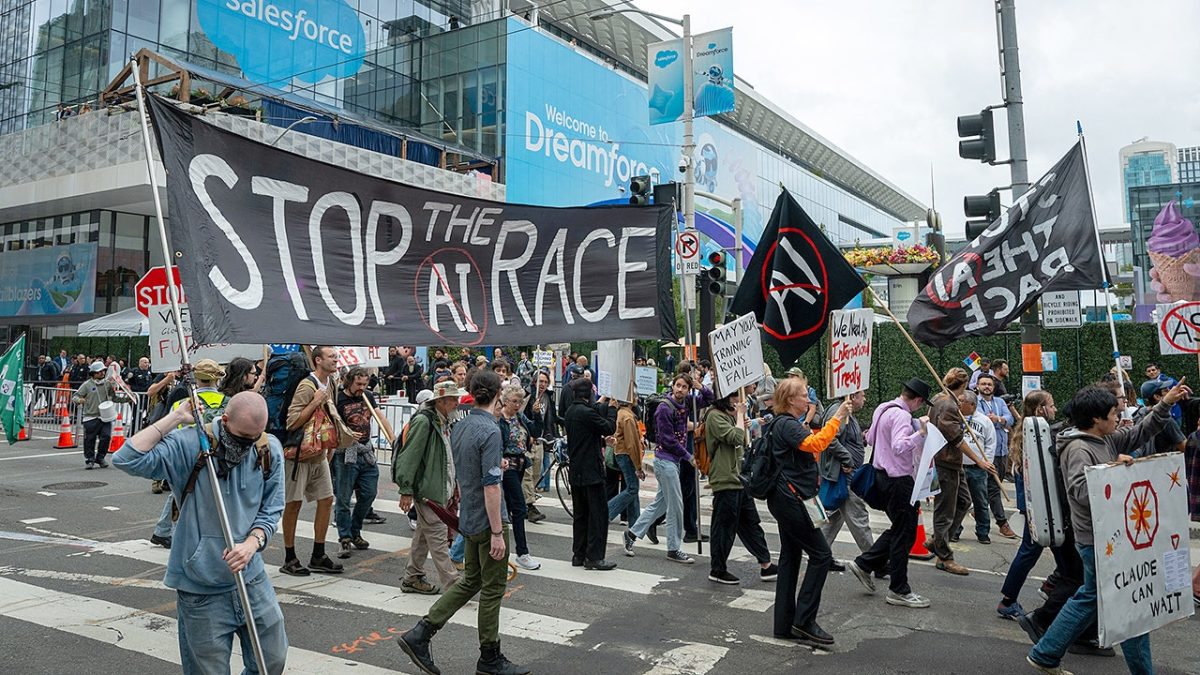
71% of American voters oppose building artificial intelligence data centers near their communities, according to a new Fox News national survey — yet 52% favor building them in remote locations, revealing a stark “Not In My Backyard” divide that’s turning AI infrastructure into a midterm wedge issue.
The contradiction runs deep. Voters overwhelmingly reject data centers in their own backyards — 46% strongly oppose them — but shift to narrow support when the facilities are pushed to distant locations. That gap exposes the core tension: Americans want AI’s benefits without bearing the local costs.
“In this election, the bottom line is that technology is no longer just a tool. It’s a wedge issue. As infrastructure demands force AI into the physical world, campaigns that map tech anxiety onto their voter coalitions will shape the midterm narrative.”
Republican pollster Daron Shaw, who conducts the Fox News Poll with Democrat Chris Anderson, captured the political reality.
The NIMBY pattern cuts across community types. About 7 in 10 urban, suburban, and rural voters all oppose data centers in their areas. But that consensus fractures when asked about remote facilities — 57% of suburban voters and 50% of urban voters support them there, while 51% of rural voters still say no.
Women, White voters, those without a college degree, and Democrats lead the opposition to data centers regardless of location. Men, non-White voters, college graduates, and Republicans are more open to the infrastructure.
When voters hear the costs, opposition hardens fast. Support drops by roughly 30 points when respondents are told data centers could strain local water supplies, raise energy bills, or grow to enormous size. Opposition softens only when tied to national security — voters are 18 points more likely to support construction if told the centers help maintain a competitive edge over China.
The poll reveals broader AI pessimism driving the infrastructure backlash. Majorities now view artificial intelligence as bad for the U.S. economy (54% bad vs. 36% good), mental health (54-34%), society (56-34%), the environment (60-30%), and jobs (63-29%). The lone exception: day-to-day life, where 47% see AI as good — down from 50% in November 2025.
Overall, AI technology is viewed unfavorably by 60% of voters, compared to just 37% favorable — a 23-point deficit that has widened from 11 points in April. Democrats (67% unfavorable), White voters without a college degree (65%), women (64%), and independents (64%) hold the most negative views. The technology’s strongest supporters are non-White men (49% favorable), voters with graduate degrees (49%), and MAGA Republicans (46%).
The political implications are immediate. On the generic congressional ballot, Democrats lead Republicans by 7 points overall. But among voters who oppose data centers in either location, Democrats lead by at least 19 points. Republicans hold only a 9-point advantage among those who allow construction in remote areas.
Voters trust Democrats over Republicans to handle building AI data centers by 14 points — a margin driven by massive advantages among Black voters (D +51), voters under 30 (D +35), Hispanic voters (D +29), and independents (D +26). White rural voters are one of the few groups favoring Republicans on the issue (R +4).
Cross-party defections compound the problem for the GOP: 15% of Republicans prefer Democrats on data centers, compared to just 4% of Democrats favoring Republicans.
The survey also finds overwhelming support for banning AI in kindergarten through eighth grade classrooms — 76% favor the ban, with the strongest backing from moms (81%). Support for banning cellphones in K-12 classrooms is similarly high: 72% favor, 25% oppose.
A majority (57%) supports prohibiting police departments from using automated license plate readers like Flock Safety cameras, though age creates the sharpest divide. Voters under 30 back the ban by 28 points, while those 65 and over support the cameras by 7 points.
The Fox News Poll was conducted September 11-14, 2026, by Beacon Research (D) and Shaw & Company Research (R), surveying 1,211 registered voters. The margin of error is ±3 percentage points.