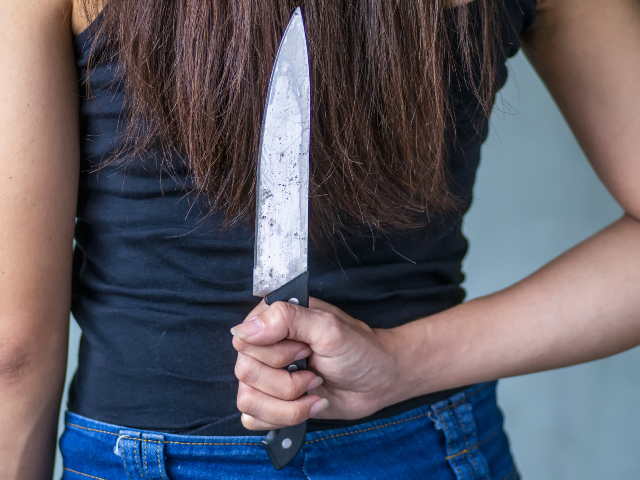
A 17-year-old high school student in Brazil stands accused of a violent classroom attack after her math exam was graded — telling police she targeted the instructor because she did not like her.
The incident unfolded September 11 at Dr. Gerson dos Santos State School in Cametá, a municipality in the northern state of Pará. The school, which serves hundreds of students in both day and evening shifts, has been operating for decades as a cornerstone of public education in the region. Like many Brazilian public schools, it faces ongoing challenges related to funding, security infrastructure, and student support services.
Security footage captured the teenager standing at the desk where math teacher Betânia de Almeida was seated. Moments later, the girl appeared to pull a blade from her pocket and lunge toward de Almeida.
The two struggled as the teacher fell to the ground, fighting to get the weapon away from the student. De Almeida eventually broke free and ran out the classroom door. The student concealed the blade under her shirt before leaving the room.
De Almeida was taken to Cametá Regional Hospital, where she received stitches and was released the following day. A CT scan confirmed the wound did not damage any internal organs. Hospital staff reported that the teacher was fortunate the injuries were not more severe, given the nature of the attack. De Almeida has since been recovering at home, though the psychological impact of such a traumatic encounter in her own classroom remains significant. Teachers across the region have expressed solidarity with de Almeida while voicing concerns about their own safety in increasingly volatile educational environments.
The student was taken into custody at the scene. According to reports, she told an officer she went after the teacher because she did not like her. The simplicity of the stated motive has troubled education experts and law enforcement officials alike, raising questions about conflict resolution skills, mental health resources, and the escalation patterns that lead students from academic frustration to violence.
Under Brazilian law, the teen cannot be held criminally liable due to her age. A lawyer said she will likely face an infraction comparable to attempted homicide — but as a minor, the legal consequences differ from adult prosecution. Brazil’s juvenile justice system emphasizes rehabilitation over punishment, with minors subject to socio-educational measures rather than traditional criminal sentencing. These measures can include counseling, community service, or placement in youth rehabilitation facilities, depending on the severity of the offense and the individual circumstances of the case.
The attack adds to a growing pattern of violence in Brazilian schools. In 2023, government leaders acknowledged the country was experiencing an epidemic of violent incidents on campuses. The recognition marked a turning point in national conversations about school safety, prompting debates over metal detectors, armed security personnel, and mental health screening programs. Despite these discussions, implementation of comprehensive safety measures has been uneven across Brazil’s vast public education system, which serves millions of students nationwide.
“Alarm bells began ringing earlier this month after a 25-year-old man hacked to death four children between the ages of five and seven, in Blumenau, in the south of the country. A few days earlier, a 13-year-old stabbed a teacher to death and injured four other people at a school in São Paulo.”
Just months ago, a 13-year-old was arrested after an incident at a Brazilian school campus that left two staff members gone. Authorities across the country have expressed concern over the spread of online threats warning of additional violence. Education officials have noted that some attacks appear to be inspired by international school violence incidents, with perpetrators sometimes sharing manifestos or warnings on social media platforms before carrying out assaults. The digital dimension of the threat has complicated prevention efforts, requiring cooperation between educators, law enforcement, and technology companies.
The charges remain allegations. The case has not been proven in court. Legal proceedings involving minors in Brazil are typically conducted with privacy protections that limit public disclosure of details, making it difficult to track outcomes or assess the effectiveness of interventions in individual cases.
A third-year high school student from the night shift cowardly pulled a knife on the teacher because she didn't give her a good grade. It happened in Brazil, and the educational crisis is evident. pic.twitter.com/zV3dcSA2TK
— John F. Kennedy Jr Q (@Real_JFK_Jr_) September 14, 2026
Teen stabs teacher as she desperately fights for her life in scary, caught-on-video attack https://t.co/rx4Dptbvyy pic.twitter.com/apovu3zrKM
— New York Post (@nypost) September 19, 2026