The Federal Reserve raised interest rates this week, and the legacy media braced for an explosion from President Trump that never came.
Trump refused to take the bait.
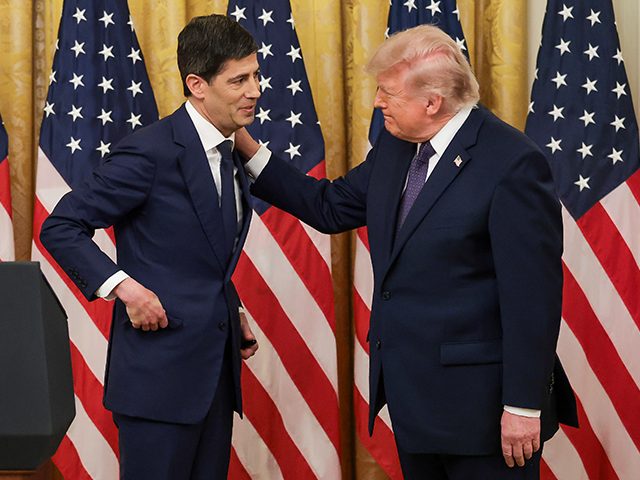
When Fed Chair Kevin Warsh and the Federal Open Markets Committee raised the fed funds rate by a quarter point, financial reporters salivated over what they assumed would be an inevitable presidential attack. Instead, Trump expressed confidence in his Fed chair — leaving the press scrambling to rewrite their pre-loaded hit pieces.
“If Trump followed the script and attacked Warsh for agreeing to the hike, the media would have portrayed him as having not understood who he was appointing as chair.”
The move was a trap. If Trump had criticized Warsh, outlets would have accused him of endangering Fed independence and not understanding his own appointee. The president saw through it and refused to play along.
If you listened closely, you could almost hear the weeping of the financial press.
What the Fed Actually Did
The Fed raised two interest rates: the overnight federal funds rate it targets and the interest on reserves rate it sets. But the 10-year Treasury yield — the benchmark for mortgages and corporate debt — barely moved. It closed Thursday at 4.9470 percent, down from the previous Friday’s close of 4.9750 percent.
The 30-year Treasury yield that media outlets obsessed over weeks ago dipped from 5.354 percent to 5.328 percent.
Longer-term rates actually fell.
At the same time, the Fed’s Summary of Economic Projections showed officials becoming more confident about real economic growth and the labor market. The median forecast for unemployment was revised down. Growth was revised up. Core inflation projections barely changed.
Fed officials now expect 2.3 percent real growth this year and 2.4 percent next year — up from June’s projections of 2.2 percent and 2.3 percent. Even in 2028 and 2029, they see the economy growing above the long-term estimate of two percent.
No Fed Officials See Downside Risk to Growth
The Summary of Economic Projections included a historic detail hardly anyone noticed: no Fed officials see downside risk to their growth projections. The only risk recorded is upside risk.
That’s the first time this has ever happened.
The Fed’s longer-run estimate of the fed funds rate — the rate consistent with full employment and price stability — has climbed from 2.5 percent in 2019 to 3.2 percent at the latest meeting. The Fed now thinks the fed funds rate should be 1.2 percentage points higher than the inflation target. That’s more than double what it was from 2019 until 2024.
This reflects a story of the real economy strengthening and real rates moving higher — not runaway inflation.
Warsh Breaks the Phillips Curve
Warsh’s discussion of the economy at the press conference made it clear he does not view business investment, capital expenditures, the AI boom, or low unemployment as inflationary. The inflation discussion was separate from the growth discussion.
This is an extremely important sign that he does not believe in the Phillips Curve — the theory that too much growth or too much employment causes prices to rise.
The median inflation projection for next year shows a big decline with only one more hike, no increase in the unemployment rate, and accelerating growth.
Non-inflationary growth is back.
Immigration Critics Were Wrong
Fed officials know that changes in U.S. immigration policy and retiring baby boomers will mean labor force growth is likely to be low or even negative in the years ahead. Many economists criticized President Trump’s immigration restrictions on the grounds that it would reduce economic growth.
Instead, Fed officials now expect more growth. That means they think growth will come from improved productivity growth. It also means the per capita growth picture is even better than it was when Fed officials were likely assuming immigration-driven population growth.
Trump’s policies are delivering a major difference in the size of the U.S. economy.
The longer-run tendency for GDP growth, which had been stuck at 1.8 percent for nine and a half years, moved up to 2.0 percent in March. If you compound that over a decade, you are talking about a fundamentally larger American economy.
The Fed raised rates. Long-term rates fell. Growth projections rose. Trump refused the media’s pre-written script. And the economy continues to strengthen under policies the establishment said would fail.