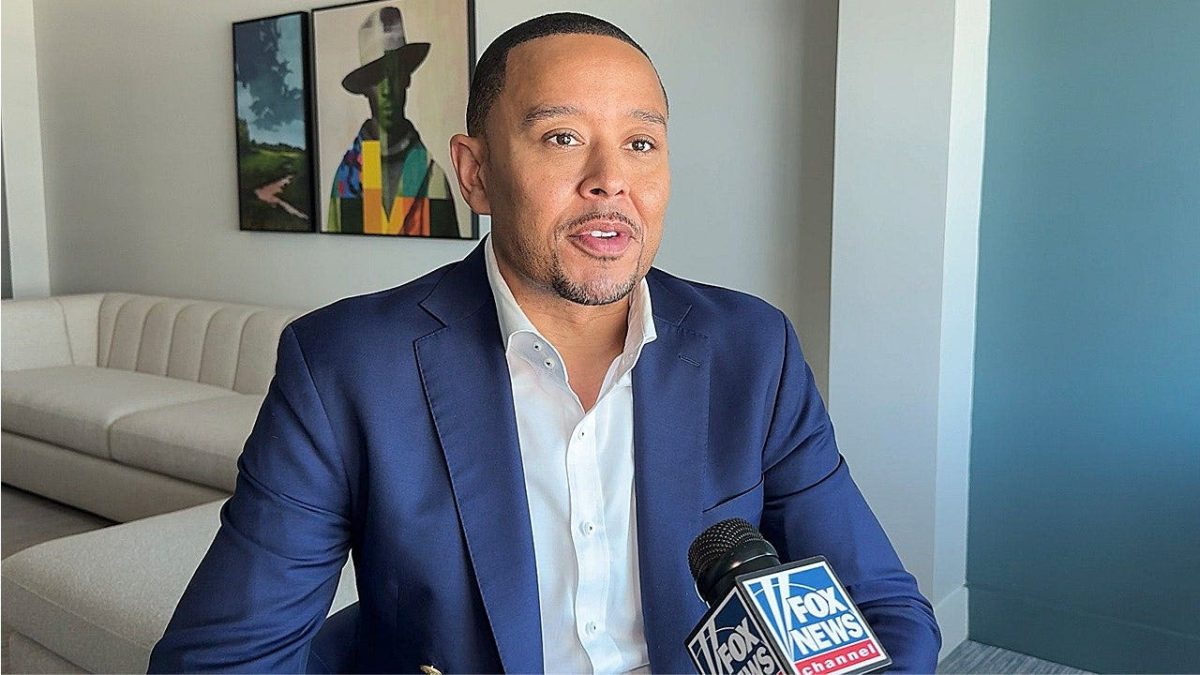
T.W. Shannon — former chair of Black Voices for Trump and Oklahoma’s Republican lieutenant governor nominee — says the GOP can hold the historic gains Trump made with Black voters even without him on the ballot in 2026.
The question of whether Republicans can maintain their expanded coalition in the upcoming midterm elections has become a central concern for party strategists. For decades, the GOP struggled to make meaningful inroads with Black voters, typically capturing single-digit percentages in presidential elections. The gains made in 2024 represented a significant shift in American political dynamics, raising questions about whether those results were tied specifically to Trump’s personal appeal or reflected a broader realignment.
Shannon sat down with Fox News Digital at the first-ever Republican Midterm Convention in Dallas this week and laid out the blueprint.
The Dallas convention itself marked a departure from traditional GOP midterm strategy, with party leadership gathering to specifically address how to translate presidential-year success into congressional races. The event drew Republican officials and candidates from across the country, all seeking to understand how to replicate the formula that worked in 2024.
“It’s because Donald Trump has transformed the Republican Party back into the working party,” Shannon said.
“You see Democrats competing for the Black vote now. Something that you used to not see at all. They didn’t have to, they just took it for granted.”
This shift in Democratic campaign behavior represents a notable acknowledgment that their traditional dominance among Black voters can no longer be assumed. For generations, Democratic candidates consistently captured approximately 90% or more of the Black vote, making targeted outreach seem unnecessary. The changed competitive landscape has forced both parties to articulate their specific policy proposals for Black communities rather than relying on historical voting patterns.
Trump won 16% of the Black vote in the 2024 presidential election — nearly double his total four years earlier, according to Fox News Voter Analysis.
The 16% figure, while still representing a minority of Black voters, marked the highest percentage for a Republican presidential candidate in decades. Political analysts across the spectrum recognized this as a significant development, particularly in swing states where even small shifts in voter demographics can determine electoral outcomes. The doubling of support from the previous election cycle suggested momentum rather than a one-time anomaly.
Shannon — Oklahoma’s youngest and first African American House speaker — pointed to Trump’s second administration delivering job creation and lower crime rates in Black communities as proof the party’s working-class agenda works.
“These are things that actually benefit Black voters and Black communities,” he said.
Shannon’s emphasis on tangible outcomes over rhetorical appeals reflects a strategic approach focused on results-based messaging. The argument centers on the premise that voters respond to measurable improvements in their daily lives — employment opportunities and public safety — rather than symbolic gestures or identity-based appeals alone.
The Republican rising star then took aim at Democrats aligned with the Democratic Socialists of America.
“Look at what the DSA is offering — we’re talking about raising taxes, we’re talking about doing away with the Senate, disbanding the police,” Shannon said. “These are not things that are well received in the Black community.”
The DNC pushed back hard.
“Black Americans are going to reject Trump’s billionaires-first, cost-raising agenda at the ballot box this November and elect Democrats who are fighting to lower costs and deliver for working families,” a DNC spokesperson told Fox News Digital.
The spokesperson added that the DNC “is investing critical resources to reach, register, and mobilize Black voters across the country.”
The sharp exchange between Shannon and the DNC encapsulates the broader battle both parties are waging for Black voter support heading into the midterms. Each side is attempting to frame the other as out of touch with the economic priorities and values of Black communities, recognizing that even marginal shifts in this voting bloc could determine control of Congress.
Shannon — a Lawton native and the first member of the Chickasaw Nation to serve as Oklahoma House speaker — is heavily favored to win his lieutenant governor race in November in solidly Republican Oklahoma.
His unique background as both the first African American and first Native American to hold the speaker position gives Shannon credibility as a messenger on issues of representation and opportunity within the Republican Party. A victory in November would position him as a prominent voice in discussions about the party’s future direction and its appeal to diverse constituencies.
Speaking in primetime at the convention gave him a chance to stand on the “national stage,” he said.
“Any time I get a chance to tell the story about how great Oklahoma is and how great America is, I won’t miss a chance to do it.”