
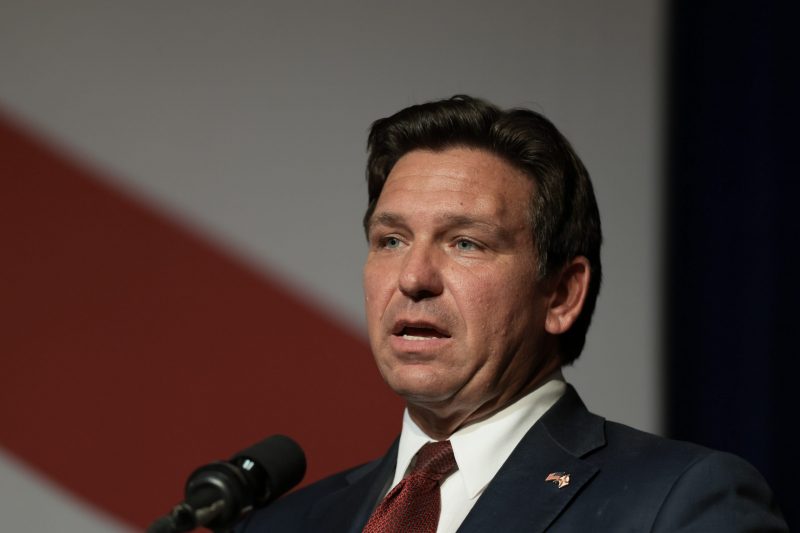
Florida Governor Ron DeSantis is offering the holdout juror in the Lindsay Clancy triple-murder case asylum in Florida after NBC investigators published details about the man’s personal history.
The move comes after NBC10 journalist Ryan Kath reported Friday that the juror — the sole member of a 12-person panel who refused to acquit Clancy — allegedly failed to pay rent for months and was previously accused of domestic violence.
The public identification and subsequent investigation of individual jurors in high-profile cases has long been a contentious issue in American jurisprudence, with legal experts debating the balance between public transparency and the protection necessary to ensure jurors can deliberate freely without fear of retaliation or public scrutiny. This case has reignited those debates, particularly given the emotionally charged nature of the underlying crime and the unusual circumstances of a single dissenting juror preventing a verdict.
“A man objected to allowing a woman to kill her three young kids and get away with it, so NBC is trying to smear that juror, whose identity should be protected. Another low for legacy media. If the juror is being harassed, Florida will provide asylum — I’m sure he’d be welcomed and appreciated.”
DeSantis posted the statement Friday, accusing NBC of running a smear campaign against a juror whose identity should have remained protected.
The governor’s intervention marks an unusual step into another state’s judicial process and reflects his ongoing criticism of mainstream media outlets. DeSantis has frequently positioned himself as a defender against what he characterizes as media overreach, and his offer to the juror extends that posture into the realm of jury protection and interstate sanctuary.
A man objected to allowing a woman to kill her three young kids and get away with it, so NBC is trying to smear that juror, whose identity should be protected. Another low for legacy media.
If the juror is being harassed, Florida will provide asylum — I’m sure he’d be welcomed… https://t.co/1kRMNAbaYD
— Ron DeSantis (@RonDeSantis) September 11, 2026
NBC10’s investigation allegedly uncovered a restraining order against the juror and revealed that in September 2021, he was charged with assaulting his wife. A police report allegedly showed the juror’s teenage nephew called 911 saying his uncle threw his wife into a dresser.
Court records showed the couple later divorced and the criminal charge was dismissed, according to the outlet. The same nephew later obtained a restraining order after the juror allegedly assaulted him.
The report raised questions about the jury-selection vetting process in the high-profile case.
The revelation of these background details has prompted legal observers to question how thoroughly potential jurors were screened during voir dire, the process by which attorneys and judges question prospective jurors to determine their suitability for service. In cases involving serious violent crimes, particularly those with mental health defenses, the screening process typically involves extensive questioning about personal experiences, biases, and backgrounds that might affect impartiality.
Twelve jurors were tasked with determining whether Clancy, who admitted to taking the lives of her children ages 5, 3, and 8 months, is criminally responsible — or whether her mental health struggles meant she couldn’t understand that her actions would break the law.
The distinction between committing an act and bearing criminal responsibility for that act lies at the heart of insanity defenses, which vary by jurisdiction but generally require proof that a defendant could not appreciate the nature or wrongfulness of their actions due to mental disease or defect. Such defenses are notoriously difficult to prove and controversial with juries, who must weigh complex psychiatric testimony against the facts of often horrific crimes.
Plymouth Superior Court Judge William Sullivan declared a mistrial after several days of deliberation when the jury could not reach a consensus. The jurors told the judge in a note that only one member disagreed with the group’s opinion, prompting Clancy’s lawyer, Kevin Reddington, to demand the man be removed entirely.
In the final days of the trial and afterward, the public learned that the one juror apparently in favor of a guilty verdict was one of the three men in the group. This week, jury member Paula Devlin revealed that all members of the jury were White except for the holdout — a Black man.
The racial composition of the jury has added another layer of complexity to an already contentious case, raising questions about whether demographic factors played any role in the deliberations or in the subsequent public and media treatment of the holdout juror. Legal advocates have long argued that diverse juries are essential to fair verdicts, and that minority jurors who dissent from majority-white panels deserve particular protection from intimidation or public pressure.
DeSantis’s offer of asylum appears to be both symbolic and serious — signaling support for a juror who refused to acquit in a case where the defendant admitted to the acts but argued she lacked criminal responsibility.
Whether the juror will accept the offer or whether Florida has legal mechanisms to provide meaningful protection to a resident of another state remains unclear, but the governor’s public statement has already succeeded in drawing national attention to questions of juror privacy and media responsibility in the digital age.