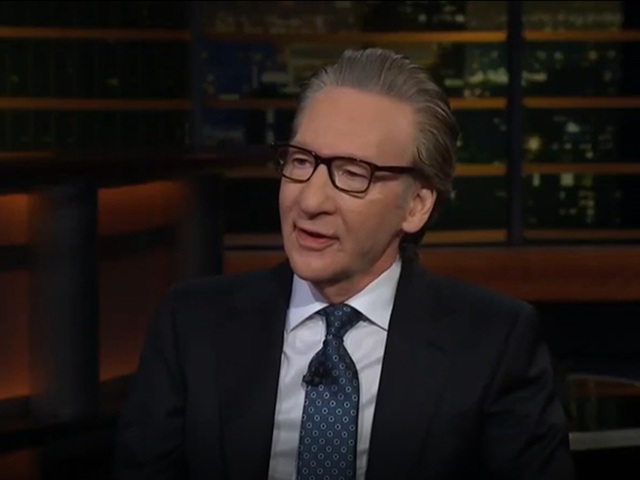
Bill Maher just called out the mainstream media for refusing to tell Americans the truth about radical Islamic terrorism.
During his Friday night HBO monologue, the Real Time host slammed journalism associations for instructing reporters to put the word “terrorism” in scare quotes — as if the ideology behind 9/11 doesn’t matter anymore.
The remarks reflect a growing frustration among critics who argue that major news organizations have become so concerned with avoiding perceived bias that they’ve abandoned clarity and honesty when covering threats to American security. This shift in language represents more than just semantics — it signals a broader reluctance within institutional media to acknowledge uncomfortable truths about the motivations behind terrorist violence that has shaped American foreign and domestic policy for more than two decades.
“When it comes to terrorist attacks, please, there are very fine people on both sides.”
Maher’s jab was pointed: the same media that endlessly misrepresented Trump’s Charlottesville remarks now bends over backward to avoid naming the enemy that murdered nearly 3,000 Americans on September 11, 2001.
The contrast highlights what many see as a glaring inconsistency in how mainstream outlets approach controversial topics. While conservative politicians and their supporters face intense scrutiny and are frequently labeled with terms like “extremist” or “radical” with little hesitation, the same journalistic standards somehow don’t apply when the subject involves ideologically-motivated violence stemming from radical interpretations of Islam. This asymmetry has fueled accusations of political bias and eroded public trust in institutions that once served as America’s primary gatekeepers of information.
He opened the segment by reminding viewers how much has changed since that day.
“So much has changed since 9/11, for example, back then, we were against the terrorists,” Maher said. “Really, no cap. Now, a lot of media outlets don’t even want you to say the t-word.”
The observation speaks to a dramatic cultural shift that has occurred over the past two decades. In the immediate aftermath of September 11, there was broad national consensus about identifying the threat and the ideology that animated it. Major newspapers, television networks, and political leaders across the spectrum had no difficulty calling terrorism by its name or acknowledging the specific religious extremism that motivated the attacks. That consensus has gradually eroded as concerns about Islamophobia and the potential for backlash against Muslim Americans have led many institutions to adopt increasingly cautious and euphemistic language.
He cited four American journalism associations that issued guidance on the 20th anniversary of September 11, advising reporters to use “terrorism” only in quotation marks because the word is “emotionally and politically loaded.”
“Yeah, so is the World Cup, but we don’t put soccer in quotes,” Maher fired back.
The comedian didn’t hold back on the absurdity of the media’s squeamishness.
“Really, we can’t, anymore, just say out loud who the bad guys were that morning, those 19 hijackers?” he continued. “They shared something. Oh, let’s call it a worldview. And it wasn’t astrology.”
Maher’s point hit home: the 19 hijackers shared a radical Islamic ideology — but legacy media outlets have spent two decades running from that fact, afraid to offend anyone except the American people who deserve the truth.
This avoidance has had real consequences for public discourse and policy debates. When media organizations refuse to clearly identify the ideological motivations behind terrorist attacks, they make it harder for citizens to understand the nature of the threats facing the nation and more difficult for policymakers to craft effective responses. The reluctance to speak plainly about radical Islamic terrorism has created a vacuum that’s been filled by alternative media sources and has contributed to the fragmentation of America’s information landscape.
“But, somehow, over time, we’ve decided not to harp on that, the whole business about who wanted us dead and why,” Maher said. “Let’s not put a name on it, when it comes to terrorist attacks, please, there are very fine people on both sides.”
The irony wasn’t lost on conservatives watching: the same press corps that spent years pushing the debunked “very fine people” hoax about Trump now applies the actual both-sides treatment to jihadists.
The double standard Maher identified reflects a deeper problem within modern journalism — the tendency to apply strict factual scrutiny selectively based on political considerations. When coverage decisions are driven more by concerns about social backlash than by commitment to accuracy and clarity, the media fails in its fundamental responsibility to inform the public. This failure has contributed significantly to the collapse in public confidence in traditional news sources that polls have documented in recent years.
Maher’s monologue lands at a moment when Americans are increasingly fed up with media double standards — outlets that call Republicans extremists while tiptoeing around the very extremism that has killed thousands on U.S. soil.
The full segment aired Friday night on HBO.