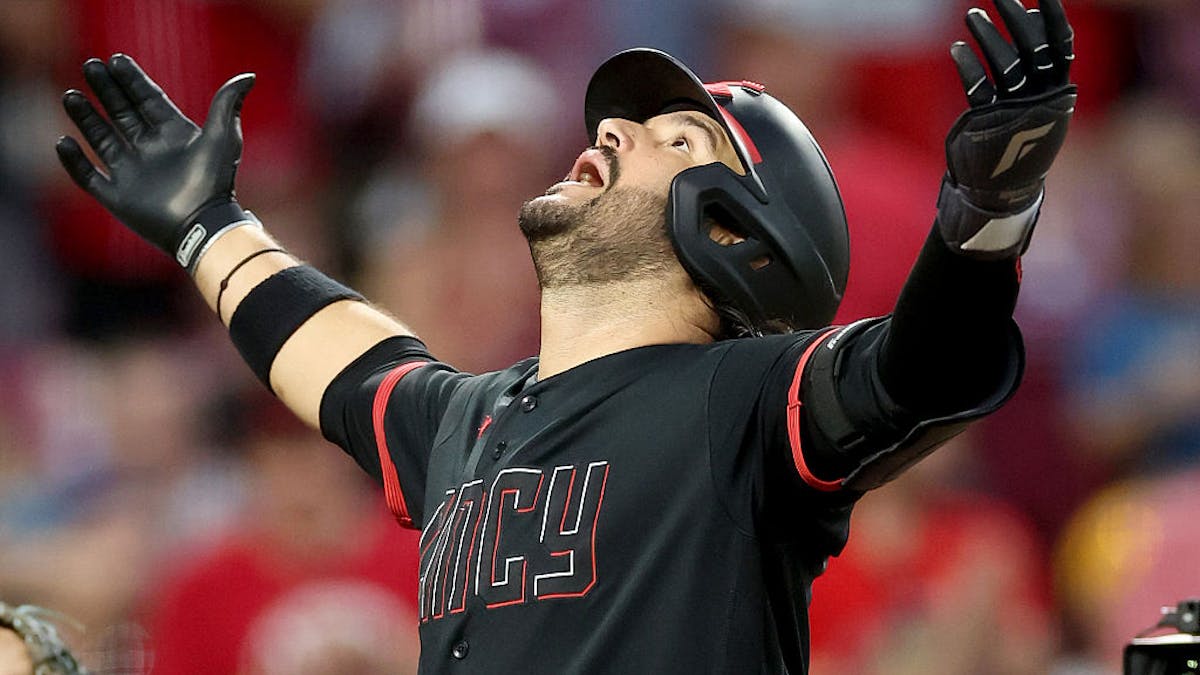
Cincinnati Reds third baseman Eugenio Suarez missed two games in early September — not for an injury, not for a slump, but to take the United States naturalization test and become an American citizen.
The decision to step away from the diamond during a crucial stretch of the baseball season represented a significant personal milestone for Suarez, who had been working toward this moment for years. The naturalization process is no small undertaking for professional athletes, requiring extensive preparation, documentation, and a comprehensive understanding of American civics and history. For players who spend much of their year traveling with their teams, finding time to complete the requirements can be particularly challenging.
His teammates had the perfect surprise waiting when he returned.
The moment Suarez stepped up for his first at-bat as a newly minted U.S. citizen, the stadium speakers blared Lee Greenwood’s “God Bless the USA (I’m Proud To Be An American)” — his teammates had changed his walk-up song to honor the occasion.
Walk-up songs have become a cherished tradition in baseball, with players carefully selecting music that reflects their personality, heritage, or mood. The choice of entrance music is typically considered sacred ground, controlled exclusively by the player himself. That his teammates coordinated to change it without his knowledge speaks to both the significance of the moment and the tight-knit nature of the clubhouse culture.
In his first at-bat since becoming a United States citizen, Eugenio Suárez’s teammates changed his walk-up song to “God Bless the USA (I’m Proud to Be an American)” 🇺🇸 pic.twitter.com/a1r8BOiGke
— Cincinnati Reds (@Reds) September 4, 2026
Suarez, originally recruited out of Venezuela to play for the Detroit Tigers before joining the Reds, returned to Cincinnati in February 2026 after stops with several other Major League Baseball teams.
His journey represents a common path for many Latin American baseball players who come to the United States as teenagers with dreams of making it to the major leagues. Venezuela has long been a pipeline for baseball talent, producing numerous All-Stars and Hall of Famers. For many of these players, the United States becomes a second home, and eventually, they choose to make that status official through citizenship.
The timing of his citizenship test wasn’t ideal from a baseball standpoint. He’d just crushed a scorching August — six home runs, 20 RBIs, and an .852 OPS. In a sport where momentum matters and streaks can evaporate during a two-game absence, the break was a gamble.
Professional athletes and coaches frequently speak about the importance of rhythm and routine during hot stretches. Even a single day off can disrupt a hitter’s timing at the plate. Missing two consecutive games during a period of peak performance is something most players and managers would strenuously avoid, particularly during the pennant race when every game carries heightened importance. The fact that both Suarez and the organization prioritized his citizenship ceremony over these competitive considerations underscores how meaningful the moment was.
“Would his hot streak continue after a two-game hiatus?”
Suarez answered emphatically. In his second at-bat as a United States citizen, he launched a three-run home run to put the Reds ahead.
The home run provided a storybook answer to any concerns about rust or lost momentum. It was the kind of moment that baseball fans cherish — a confluence of personal significance and on-field heroics that transcends the simple box score.
Eugenio Suárez rockets the @Reds back in front 🚀 pic.twitter.com/TEqG6H68Os
— MLB (@MLB) September 5, 2026
The hot streak didn’t stop there. The next day, Suarez scored from second base on a wild pitch — a hustle play that had his own team joking about his speed.
Third basemen are not typically known for their base-running prowess, making the play all the more noteworthy. The good-natured ribbing from his teammates reflected both the unusualness of the play and the continued celebration of his return to action.
Known speedster, Eugenio Suárez pic.twitter.com/gSG3QBqHj1
— Cincinnati Reds (@Reds) September 6, 2026
On FOX News’ “The Big Weekend Show” Saturday, host Tomi Lahren drew a sharp contrast between Suarez and former NFL player Colin Kaepernick, who built his brand protesting the United States.
Lahren noted that major media outlets appeared more interested in celebrating the tenth anniversary of Kaepernick kneeling during the national anthem than spotlighting patriotic athletes like Suarez who choose to honor the country.
The commentary reflects ongoing cultural debates about patriotism, protest, and how athletes use their platforms. While some athletes have gained attention for demonstrations during national symbols, others like Suarez have made quieter but equally significant personal commitments to the country.
Suarez chose citizenship. His teammates chose Greenwood. And the timing couldn’t have been more perfect.