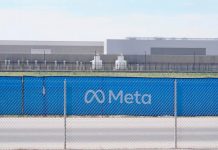
A $100 billion Big Tech data center complex planned near the Manassas National Battlefield Park in Virginia has been canceled after residents spent five years fighting it in courtrooms, newspapers, and town halls.
The “Digital Gateway” project would have sprawled across 1,600 acres — twice the size of Central Park — with up to 37 buildings consuming 3.5 gigawatts of electricity, roughly what the entire city of Tampa uses. County officials had projected $400 million a year in tax revenue if completed.
Instead, a Virginia court blocked the project’s approval over administrative defects, and the Virginia Court of Appeals upheld the ruling. The case turned on a narrow detail: newspaper announcements about the land-use deliberation ran every three days instead of the required minimum six-day interval.
The court found the repurposing process invalid on those procedural grounds alone. It did not rule on whether the data centers were necessary or what environmental damage they would cause.
“The decision to withdraw was not solely due to financial calculations. Our partnership with the business-critical community has been irreversibly damaged.”
The site sits near Manassas National Battlefield, the historic location of a major Civil War battle, and that proximity became a rallying point for opponents. Residents worried about damage to the historical site, the power demands of the buildings, new high-voltage transmission lines, noise, and falling home values.
A local Home Owners Association joined with environmental and cultural preservation groups. Retirees led filings for public records, political campaigns, and lawsuits against the project.
The land itself had already changed hands at inflated prices. Acreage that once cost up to $200,000 climbed to as much as $1 million an acre amid the broader data center construction boom.
Prince William County withdrew from the lawsuit in April, narrowing the developers’ options. That same month, Compass Data Centers, backed by Brookfield, abandoned plans for more than 800 acres of the project.
Chris Crosby, Compass’s chief executive, told Bloomberg the company’s standing with the surrounding community had suffered lasting harm.
About 100 households in the area had already spent tens of millions of dollars pursuing the fight. Facing another two to three years of legal and financial uncertainty, they chose to sell their land instead.
QTS, owned by Blackstone, held on longer, but in July it told the Virginia Supreme Court it would no longer pursue the legal battle. Compass’s earlier exit had already pushed up QTS’s share of shared power grid construction costs, on top of the tens of millions of dollars QTS had spent preparing land and power supply.
Glenn Davis, former director of the Virginia Department of Energy, told Bloomberg the industry was caught off guard by how far the backlash spread.
“The data center industry did not expect the opposition to grow like this. We let the other side lead the public opinion, and it is much more difficult to change the perception once created.”
At least 75 projects worth about $130 billion were blocked or delayed from January through March across the country as a result of data center opponents, according to a Data Center Watch study obtained by NBC News.
The authors of the study noted that this hindering of AI data centers is the most on record in a three-month period since they began tracking the matter in 2023.
Communities have internalized an opposition playbook, legislative sessions introduced formal regulatory uncertainty, and the number of active opposition groups more than doubled to 833 across 49 states.
AI data centers continue to emerge as a major issue in political races around the country.