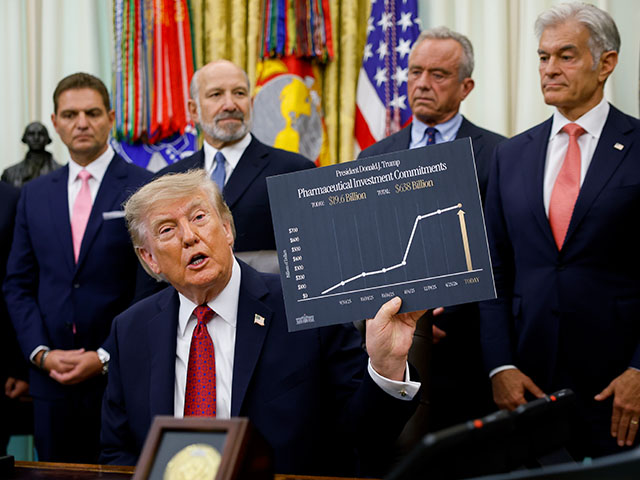
President Donald Trump just locked in deals with nine more pharmaceutical companies to slash drug prices for American patients — a win that expands his signature most favored nation (MFN) drug pricing initiative to nearly 90 percent of the branded drug market.
The most favored nation model, which ties U.S. drug prices to the lowest prices paid by other developed nations, represents one of the most aggressive federal interventions into pharmaceutical pricing in modern American history. The approach has faced years of industry resistance and legal challenges, making Monday’s announcement a significant policy milestone for the administration.
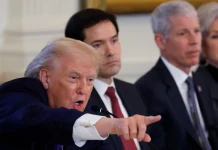
Trump announced the agreements with Alcon, Astellas Pharma, BeOne Medicines, BridgeBio, CSL, Kyowa Kirin, Sun Pharma, Teva Pharmaceuticals, and UCB on Monday in the Oval Office, flanked by pharmaceutical executives.
“I’m thrilled to announce a major expansion of one of our signature affordability initiatives, something that people have been trying to get for years, for decades, and I’m not even sure that other presidents tried.”
The agreements ensure every state Medicaid program will have access to MFN drug prices for all nine companies’ products — projected to save Americans across the country billions of dollars.
The expansion addresses a longstanding concern among healthcare policy experts that high prescription drug costs disproportionately burden Medicaid patients and state budgets. By guaranteeing MFN pricing across all state programs, the deals eliminate the patchwork of pricing variations that have historically characterized the American pharmaceutical market.
WATCH — President Trump Makes Major Healthcare Announcement:
The deals will lower costs on drugs that treat hemophilia, Parkinson’s disease, macular degeneration, glaucoma, liver disease, skin conditions, and various forms of cancer, according to the White House. All new innovative medicines the companies launch are guaranteed to have MFN pricing.
This guarantee for future products marks a departure from traditional pharmaceutical pricing negotiations, which typically address only existing medications. The commitment ensures that pricing controls will extend to the next generation of therapies, potentially affecting breakthrough treatments still in development pipelines.
The companies have committed to invest a collective $19.6 billion for U.S. manufacturing.
This manufacturing commitment addresses national security concerns about pharmaceutical supply chain vulnerabilities that became evident during the COVID-19 pandemic. The investments are expected to create domestic production capacity for critical medications that have historically been manufactured overseas, particularly in China and India.
Several are also donating substantial amounts of critical drug ingredients to the Strategic Active Pharmaceutical Ingredients Reserve (SAPIR):
- UCB will contribute 163 tons of levetiracetam, an anticonvulsant used to control and prevent certain types of seizures.
- Sun Pharma will contribute 71.4 tons of clindamycin and 6.75 tons of doxycycline — both antibiotics to treat bacterial infections.
- Teva Pharmaceuticals will contribute 45 metric tons of metronidazole, an antibiotic and antiprotozoal used to treat certain bacterial and parasitic infections, and 4.8 tons of amlodipine, an antihypertensive drug.
- Astellas will contribute 25 kg of tacrolimus, an immunosuppressant used to prevent organ rejection in people who have had organ transplants.
The SAPIR contributions bolster America’s emergency preparedness by stockpiling essential active pharmaceutical ingredients that could prove critical during public health emergencies or supply chain disruptions. The reserve concept mirrors strategic petroleum reserves but focuses on medicines Americans depend on daily.
These mark the 18th through 26th MFN deals Trump has secured since last fall. Other pharmaceutical companies that have agreed to MFN deals include AstraZeneca, EMD Serono, Eli Lilly, Novo Nordisk, Amgen, Bristol Myers Squibb, Boehringer Ingelheim, Genentech, Gilead Sciences, GSK, Merck, Novartis, Regeneron, Sanofi, Johnson & Johnson, and AbbVie.
The cumulative effect of these 26 agreements represents an unprecedented consolidation of pharmaceutical pricing reform. With nearly 90 percent of the branded drug market now covered, the initiative has achieved the scale necessary to fundamentally reshape how prescription medications are priced for American consumers and government healthcare programs.
Trump told reporters Monday that his administration accomplished what other presidents failed to even attempt for decades.
.@POTUS announces a major expansion of his Most Favored Nation drug pricing initiative — with nine new pharmaceutical companies committing to deliver their lowest drug prices for American patients. pic.twitter.com/hNoPACjnVk
— Rapid Response 47 (@RapidResponse47) August 31, 2026