Blue-collar workers in Pennsylvania have a shot at the kind of well-paying jobs they’ve been chasing for decades — but Big Tech is botching the pitch.
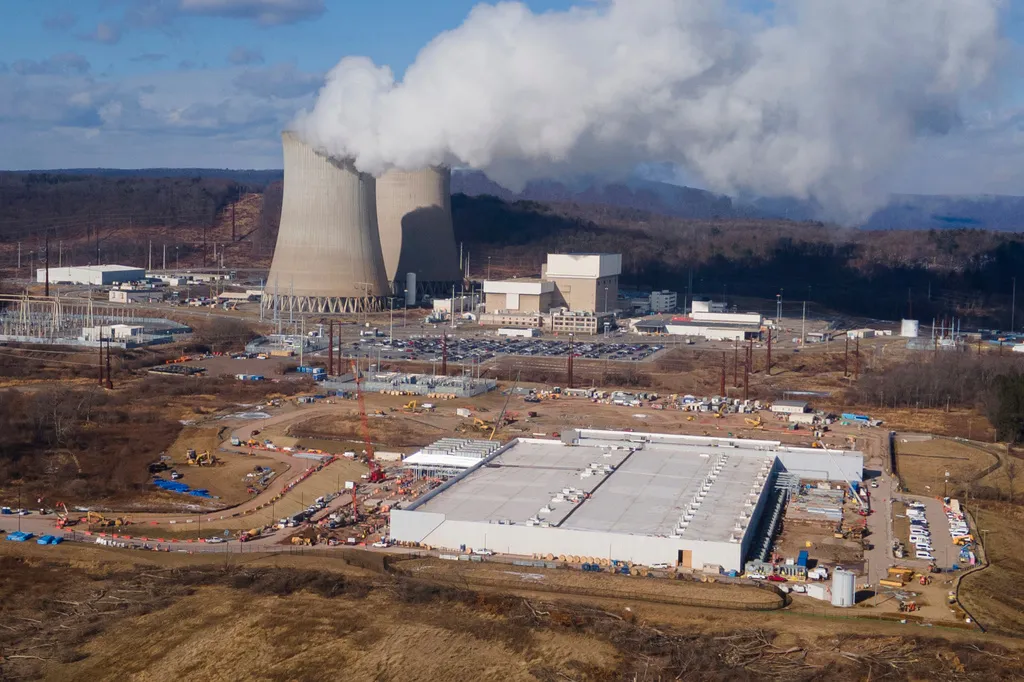
Washington Examiner columnist Salena Zito laid out the disconnect on Fox Business’s The Bottom Line Tuesday: data centers are landing in communities built around coal-fired power plants, bringing construction work up front and tax-base expansion on the back end. The problem? Workers don’t know how to navigate the industry, and the industry doesn’t know how to talk to workers.
The timing of this clash couldn’t be more critical. Pennsylvania’s industrial heartland has spent the better part of four decades searching for an economic replacement for the manufacturing and energy jobs that once sustained entire communities. Towns across the Rust Belt have watched factories shutter and coal plants close, leaving behind infrastructure and a skilled workforce with nowhere to go. Now, as the demand for data processing and artificial intelligence capabilities explodes nationwide, the very infrastructure these communities built — high-capacity electrical grids and available industrial land — has become exactly what tech companies need.
“This is the blue-collar advancement that they have been looking for for 40 years. These are good, well-paying jobs, but also, they build up the tax base and communities that have often been left behind.”
Zito said fear is drowning out the opportunity.
“On one side, you have the fear factor. People are afraid of the unknown, the destabilization. They’ve been told for four or five years, ‘AI is going to take your jobs away,'” Zito said.
That messaging has consequences. Years of national conversation about automation replacing workers has created deep skepticism in communities where job security has already been precarious for generations. The narrative around artificial intelligence has been dominated by warnings about displacement rather than discussions of the massive physical infrastructure buildout required to support it.
Concerns about water supply deterioration, spiking electricity rates, and noise pollution have made Americans wary of the artificial intelligence and data center wave hitting towns across the Rust Belt.
These aren’t abstract concerns for communities still dealing with the environmental and economic aftermath of industrial decline. Residents have lived through promises of economic revival before, only to be left with the costs and none of the benefits. The caution is rooted in experience, not ignorance.
But the other side of the equation is trades workers looking at real opportunity.
“On the other side, you have blue-collar workers, and especially the trades. They’re saying, ‘Look, these are opportunities, you’ve got construction work on the front end, but also you’ve got on the back end building up the tax base,'” Zito said.
The trades community understands what many coastal tech executives don’t: data centers require electricians, HVAC specialists, construction teams, and ongoing maintenance crews. These aren’t jobs that can be automated away or outsourced overseas. They’re the kind of stable, skilled positions that built the middle class in the first place.
Pennsylvania has the infrastructure both sides need. Electric grids built decades ago for high-voltage coal plants are exactly what data centers require. Communities that once boomed on coal have the bones — they just need the industry to meet them halfway.
The match between what exists and what’s needed is almost too perfect to ignore. Pennsylvania invested heavily in electrical infrastructure during its industrial peak, creating capacity that now sits underutilized as old plants retire. Rather than building new power infrastructure from scratch, data center operators could tap into systems already engineered for exactly the kind of load they require. It’s an economic and logistical advantage that should make the transition smoother — if the cultural gap can be bridged.
“I think the fear is outweighing the practicality of it because the industry, meaning the data power centers, these guys aren’t used to working with middle America,” Zito said.
The tech industry’s typical recruitment and community engagement strategies were built for urban centers and college towns, not for communities where trust is earned through presence and follow-through rather than glossy presentations and corporate communications.
Western Pennsylvania workers want in — they just don’t know how to navigate an industry that has no experience reaching them.
“It’s almost like they need ambassadors to be able to talk to people about, ‘Look, don’t be scared,'” Zito said.
She said Big Tech has the ability to build trust with blue-collar workers — but only if they start doing the work.
“They absolutely can, but they need to do a better job,” Zito said.
The solution isn’t complicated, but it requires tech companies to invest in the kind of on-the-ground relationship building that doesn’t scale easily or show immediate returns on quarterly earnings reports. For communities that have been overlooked and overpromised to for decades, anything less won’t be enough to overcome the skepticism — no matter how real the opportunity might be.