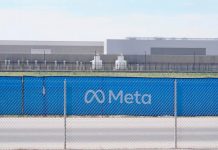

Silicon Valley’s push for artificial intelligence expansion is hitting a wall — and the tech giants have only themselves to blame.
Seventy-one percent of Americans now oppose having a data center in their area, according to Gallup polling. That backlash is forcing politicians from Pennsylvania to Texas to walk back support for projects they once championed.
The anger isn’t simple NIMBYism. Tech executives created the conditions for the revolt with apocalyptic messaging about AI replacing jobs while their companies rack up billions in profits.
“Cancer is cured, the economy grows at 10% a year, the budget is balanced, and 20% of people don’t have jobs.”
That prediction came from Anthropic CEO Dario Amodei, describing one possible AI future. Whatever he intended, Americans heard a CEO forecasting mass unemployment while his company raked in cash.
The sales pitch for earlier tech waves offered consumers something they wanted — cheaper books from Amazon, connection through Facebook, an audience on YouTube. AI’s pitch is aimed at employers promising efficiency through workforce cuts while telling workers to simply adjust to inevitable change.
Data center developers compounded the problem by operating in secret. They relied on speed, confidentiality, and political connections to secure approvals on favorable terms, according to Wall Street Journal reporting. Developers sought subsidies behind closed doors and asked local officials to sign non-disclosure agreements.
Some confidentiality makes business sense — Google doesn’t want Meta knowing where its next facility will be built. But the NDAs also prevented towns from comparing offers and residents from organizing against corporations that held all the cards.
Former Arizona senator Kyrsten Sinema’s campaign for a data center in Chandler illustrates the industry’s tone-deaf approach. A politician with little credibility among conservatives or progressives came to town warning locals that Washington might force the project on them anyway.
When it was time to vote, residents packed City Hall. The Chandler City Council rejected it 7-0.
In Loudoun County, Virginia — known as the data center capital of America — the announcement of a new facility near one community spurred residents to hang “for sale” signs in their front yards. Neighboring Prince William County rejected a 2,000-acre development proposal outright.
The backlash is deeper than infrastructure disputes. For many Americans, data centers represent the physical presence of Big Tech in their lives — a place to project anxieties about unemployment, economic disruption, and systems beyond human control.
The hackers who once disrupted traditional industries are no longer rebels. They’re the establishment, with enormous wealth, political influence, and direct White House and Pentagon connections.
If the industry wants support again, it needs a new strategy. Companies worth hundreds of billions can’t credibly cast themselves as victims of irrational locals.
A better approach would highlight the tradespeople building AI infrastructure. Union official Don Slaiman of IBEW Local 26 wrote in the New York Times that his members went from 14 million hours of work a decade ago to 28 million in 2025. The local added 600 apprentices last year.
The Wall Street Journal reported similar opportunities for welders, plumbers, and electricians earning more than $100,000 during the construction boom.
That’s a far stronger story than predicting societal upheaval. Each project builds up a talent pool capable of handling complex electrical and industrial systems — capacity that’s as much a part of America’s technological strength as its microchips.
Every project should come with a fair local deal. Large users should pay their full share of grid costs. Nearest homeowners should receive noise mitigation and utility credits. Subsidies should flow only after local hiring targets and water limits are met and enforced.
The national security argument — that America can’t compete with China in AI while treating data centers as illegitimate — deserves a hearing only after the local bargain is clear. Trying to ban all data centers will push capacity overseas, along with Americans’ data.
Data centers are becoming a convenient target for political failures in economic and infrastructure policy that predate AI. The backlash after Three Mile Island made nuclear power toxic for a generation. Data centers risk the same fate.
The right answer is a harder bargain with the industry — followed by building the capacity the country needs.