
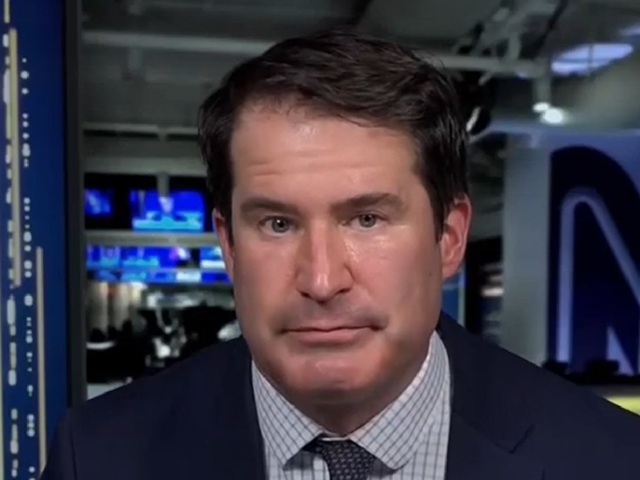
Rep. Seth Moulton (D-MA), a U.S. Senate candidate, walked back his previous criticism of biological men competing in women’s sports — now saying men “should” play women’s sports “with a discussion about where we have issues of safety and fairness.”
The reversal marks a significant shift for the congressman, who had previously taken a more cautious stance on transgender athletes in women’s sports. His evolving position comes as Democrats across the country grapple with how to address an issue that has become a flashpoint in American politics, dividing progressive activists from the broader electorate. The topic has proven particularly challenging for candidates in competitive races, who must balance the views of their party’s base with those of general election voters.
The Massachusetts Democrat appeared on CNN’s “The Source” Friday night to defend his new position, after previously drawing fire from the left for questioning the policy.
“WHERE’S OUR LEGISLATION TO ENSHRINE PROTECTIONS INTO LAW SO THAT THEY ACTUALLY CAN BE CONFIDENT THAT THEY WILL HAVE THE HEALTHCARE THAT THEY NEED WHEN THE TRUMP ADMINISTRATION IS TRYING TO TAKE IT AWAY?”
When pressed on what his new position “looks like,” Moulton pivoted to attacking Republicans and claiming Democrats are too scared to debate the issue.
The redirect is a familiar political maneuver, shifting from policy specifics to partisan critique. Moulton’s approach reflects the broader difficulty Democrats face in articulating clear positions on transgender issues that satisfy both progressive activists and moderate voters who may have concerns about fairness in women’s athletics.
“It looks like Democrats actually taking on this issue and not refusing to talk about it because we’re so scared of the debate,” Moulton said. “A lot of Democrats seem more concerned about offending people than solving problems.”
The comment appears to be a critique of his own party’s handling of the issue, suggesting that fear of backlash has prevented substantive policy discussions. This internal criticism comes as some Democrats have begun questioning whether their party’s positions on certain cultural issues may have contributed to electoral losses.
He touted his 100% rating from the Human Rights Campaign and his work championing transgender servicemembers on the Armed Services Committee.
By highlighting his advocacy credentials, Moulton attempted to establish that his position shift should not be interpreted as anti-transgender. The Human Rights Campaign is the nation’s largest LGBTQ advocacy organization, and a perfect score from the group typically signals strong support for LGBTQ rights across a range of policy areas.
“Where’s our legislation to enshrine protections into law so that they actually can be confident that they will have the healthcare that they need when the Trump administration is trying to take it away?” Moulton demanded. “Where is our legislation to enshrine protections into law so that they can’t get fired for just who they are or what they wear to work?”
The congressman’s questions highlight what he sees as a disconnect between Democratic attention to sports participation issues and other transgender rights concerns he considers more pressing. His framing suggests that focusing on healthcare access and employment discrimination might be more politically advantageous for Democrats than debating athletic competition.
The congressman admitted he “probably didn’t pick the best words” with his original stance — a stance that aligned with two-thirds of Americans.
The acknowledgment of poor word choice while simultaneously noting majority support for his original position creates an apparent contradiction. It raises questions about whether Moulton believes the substance of his earlier position was wrong, or merely its articulation. This kind of calibrated response is common among politicians trying to navigate contentious issues during campaign seasons.
When CNN’s Boris Sanchez pointed out that a recent Reuters/Ipsos poll found 67% of Americans support transgender athlete bans, Moulton dodged.
“I just think we’re out of touch with just not even being able to have a debate about the issue,” he claimed. “And just saying that, if you disagree, you’re not even welcome into the discussion.”
His response avoided directly addressing the polling data, instead focusing on the meta-question of whether Democrats permit internal debate on the issue. The framing positions Moulton as someone willing to have difficult conversations, even as he declined to engage with the specific statistic presented to him.
Moulton also attacked ICE, saying he was “the first in this race to call for abolishing and prosecuting ICE.”
The pivot to immigration enforcement represents another progressive policy position, perhaps designed to reassure Democratic primary voters concerned about his evolved stance on transgender athletes. The “abolish ICE” movement gained traction among progressives during the first Trump administration but remains deeply unpopular with general election voters.
The Massachusetts Senate race is heating up as Democrats navigate internal divisions on cultural issues that polling shows put them sharply at odds with most Americans.
These tensions are likely to define Democratic primaries across the country as the party reassesses its messaging and policy positions in the wake of recent electoral challenges. How candidates like Moulton handle these issues may serve as a test case for the party’s broader strategy heading into future election cycles.