
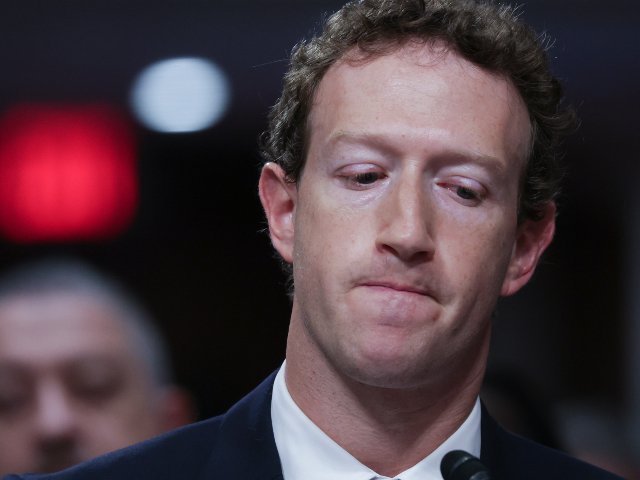
Mark Zuckerberg just lost big in a New Mexico courtroom — and the bill is nearly $1 billion.
A state judge ordered Meta Platforms to pay $942 million in penalties and abatement costs after a jury found the company violated consumer protection laws and misled parents about the safety of Facebook and Instagram for kids.
The decision marks one of the largest financial penalties ever imposed on a major technology company for child safety violations, and it comes at a time when social media platforms are facing unprecedented scrutiny over their impact on young users. The case represents a significant shift in how courts are approaching corporate liability in the digital age, potentially setting a precedent that could reshape how tech companies operate when minors are involved.
Judge Bryan Biedscheid ruled Thursday that Meta must create a new $567 million abatement fund on top of the $375 million in civil penalties a jury had already imposed. The abatement fund — intended to address harms caused by Meta’s social-media apps — was “necessary, due to the wide-ranging impacts of the harm and the complex nature of the remedy,” Biedscheid wrote.
The concept of an abatement fund is typically used in environmental and public health cases to remediate ongoing harm to communities. By applying this legal mechanism to social media harm, the court is treating the digital safety crisis with the same gravity as physical contamination or public health emergencies. This approach suggests that courts are beginning to recognize the lasting psychological and social impacts of platform design on vulnerable populations.
The ruling also forces Meta to impose strict new safety features for underage users in New Mexico, including:
- Limits on how much time minors can spend on Facebook and Instagram
- Hiding the number of “likes” on photos by default for those users
- Disclosing to young users the risks associated with its platforms
These mandated features directly challenge Meta’s core business model, which relies on maximizing user engagement and time spent on platform. The requirements echo concerns raised by former Meta employees and child development experts who have long argued that features like visible like counts and infinite scroll are deliberately designed to exploit psychological vulnerabilities, particularly in adolescents whose brains are still developing impulse control and self-regulation.
The case was brought by New Mexico Attorney General Raúl Torrez after his office conducted an undercover investigation in 2023. Investigators created a fake social media profile of a 13-year-old girl — and it was immediately flooded with inappropriate images and targeted solicitations from child predators.
The undercover investigation methodology proved crucial to the state’s case, providing direct evidence that Meta’s safety systems were inadequate despite years of public assurances from company executives. The speed and volume of inappropriate content directed at the fake profile demonstrated systemic failures in Meta’s content moderation and user protection mechanisms.
“We work hard to keep people safe on our platforms and have been transparent about the challenges of identifying and removing bad actors and harmful content.”
That’s Meta’s official statement to Breitbart News. The company says it will appeal and remains “confident in our record of protecting teens online.”
Meta’s confidence stands in stark contrast to the mountain of evidence presented during trial, which included internal company documents and testimony from whistleblowers. The company has consistently argued that it cannot be held responsible for all user-generated content on its platforms, citing both practical limitations and legal protections under Section 230 of the Communications Decency Act. However, this case focused on whether Meta misled consumers about safety features rather than on content liability alone.
But the jury didn’t buy it. During closing statements, Linda Singer, an attorney representing New Mexico, urged jurors to impose a civil penalty that could exceed $2 billion. The jury ultimately determined Meta should pay $375 million based on the number of violations found — and the judge just added another $567 million on top.
The jury’s verdict came after weeks of testimony examining Meta’s internal practices and decision-making processes regarding child safety features. The deliberations reflected growing public sentiment that technology companies must be held accountable when their products cause demonstrable harm, especially to children.
Meta now faces thousands of lawsuits from state attorneys general, school districts, and individual plaintiffs alleging the company prioritized growth over the safety of its underage users. The New Mexico case was the first to test whether social-media companies can be held legally responsible for content on their platforms.
The litigation wave represents a coordinated legal strategy by multiple states and jurisdictions, similar to the approach used in historic tobacco and opioid litigation. School districts, in particular, have argued that social media addiction has created measurable educational and behavioral problems that have strained their resources and required new interventions.
Another trial, brought by four state attorneys general, is set to begin jury selection in Oakland, California, next week. Meta has said in a court filing that the states in that case are seeking more than $1 trillion in damages.
The trillion-dollar figure underscores the potential existential threat these lawsuits pose to Meta’s business operations. Even for a company with Meta’s resources, sustained legal battles across multiple jurisdictions could force fundamental changes to how its platforms operate and generate revenue.
Zuckerberg built an empire on keeping users hooked — now he’s paying the price when those users are kids.