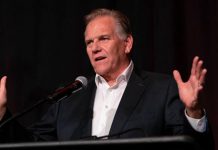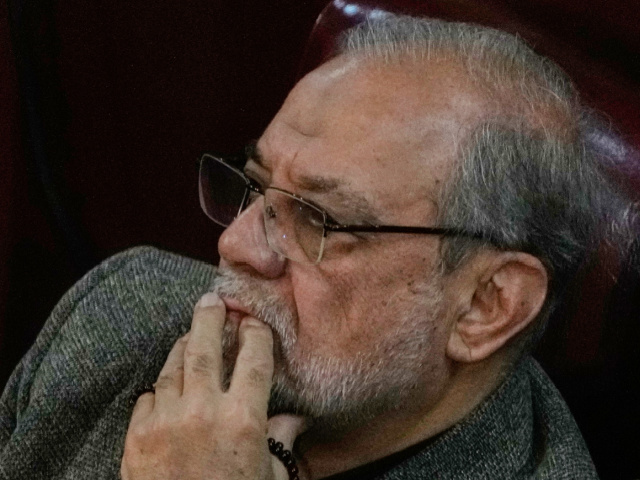
Iran’s top security official issued sweeping demands Saturday as the price for reopening the Strait of Hormuz — threatening to keep the critical waterway closed until America abandons military action, lifts sanctions, withdraws forces, and pays war damages.
Mohammad Bagher Zolghadr, secretary of Iran’s Supreme National Security Council and a former Islamic Revolutionary Guard Corps commander, laid out the regime’s conditions as Vice President JD Vance confirmed Washington remains in the “middle of the game” — applying diplomatic, economic, and military pressure to force Tehran’s hand.
“Until America corrects its behavior, the Strait of Hormuz will not be reopened.”
Zolghadr’s statement came despite days of reports suggesting Iran and Oman were nearing a temporary navigation agreement. The regime’s security chief made clear that any deal with Oman does not mean Hormuz actually reopens for normal international shipping.
Iranian Foreign Minister Abbas Araghchi confirmed Saturday that Tehran and Muscat are close to finalizing a navigation framework — while stressing the agreement itself won’t reopen the strait.
“We believe we are very close to a final agreement. However, this does not indicate the reopening of the strait,” Araghchi told reporters. “Reopening the strait is contingent upon other conditions and compensation for the United States’ violation of the Memorandum of Understanding.”
The foreign minister was referring to the June US-Iran framework that collapsed after Iranian forces resumed attacks on commercial vessels, prompting renewed American military strikes.
IRGC Gen. Hossein Mohebbi reinforced the regime’s position Saturday, saying Hormuz reopening is “completely independent” of the Iran-Oman talks and will come only after Washington accepts Tehran’s demands.
The Trump administration has rejected Iran’s effort to assert unilateral control over the international waterway. President Trump insists commercial vessels must transit without Iranian tolls, charges, approvals, or permissions.
Vance told Fox News that Iranian officials have privately assured Washington they won’t impose tolls under the emerging arrangement — despite public calls inside Iran to do exactly that.
“You see some people within the Iranian system, of course, talk about tolling,” Vance said. “The Iranians have told us they have no plans to toll the Strait of Hormuz.”
The vice president made clear Washington isn’t taking those assurances at face value.
“We don’t trust, we verify. We actually look not at people’s words, but people’s deeds.”
Vance said the immediate US goal is restoring Gulf oil and gas flow to pre-war levels while ensuring commercial vessels can safely transit the strait. That requires clearing mines Iran laid during the war and securing a commitment from Tehran to stop attacking ships.
Iranian attacks have continued even as negotiations advance. The United Arab Emirates accused Iran on Saturday of striking an Abu Dhabi National Oil Company tanker with a missile as it transited Hormuz. No casualties were reported.
ADNOC said Friday that 15 of its vessels have been attacked in Hormuz since the war began, including three this week — killing one crew member and injuring 20 others.
Oman, mediating the navigation talks, condemned the “repeated attacks” on ships and warned against actions that could jeopardize negotiations, even as Muscat said discussions continued in a “positive and constructive atmosphere.”
The United States continues enforcing its blockade of Iranian ports as diplomatic efforts move forward. CENTCOM said Saturday that US forces have redirected 53 commercial vessels, disabled two, and boarded another two under the renewed blockade. More than 30 additional vessels have been permitted through to deliver humanitarian aid.
Vance said the military and economic pressure imposed on Tehran has left Iran eager to end the broader conflict.
“They’re hurting in a big way. They want this thing to be over,” he said.
Whether Iran’s leadership can deliver what Washington requires remains unresolved.
“The question is whether they’re able, their system is able, to give the things that are necessary for us to be happy, for us to feel like we’ve gotten what we need out of this particular engagement,” Vance said. “That is still to be determined. But I do think that we’ve made some progress over the last few days.”
The vice president pointed to the damage inflicted on Iran since President Trump launched Operation Epic Fury on February 28 as leverage Washington continues to hold.
“We’ve destroyed their nuclear program. We’ve destroyed their conventional military. We’ve radically reduced their asymmetric military abilities.”
Washington is now testing whether Tehran is prepared to make lasting changes, Vance explained.
“And right now we’re trying to see if they’re willing to make the kind of long-term changes that would be necessary to have a better relationship with the United States,” he said. “And if not, that’s fine too. We’re just going to keep on applying the pressure that we can apply.”
Trump has repeatedly warned that military action remains available if diplomacy fails. The president held off last weekend on what he described as a massive new strike after Iran sought renewed negotiations and regional mediators assured him a Hormuz agreement could be imminent.
Trump said Thursday that a deal “could be soon,” while describing the strait as “sort of open right now” because the US Navy blockade controls access. He nevertheless acknowledged Iran can still attack vessels or deploy mines — warning that even a single mine can keep commercial shippers from risking billion-dollar vessels in the waterway.
Zolghadr’s demands go far beyond the mechanics of reopening the strait, tying normal commercial passage to sanctions relief, frozen assets, war compensation, US military withdrawal, and an end to American action against Iran and its regional allies.
Vance said the administration is approaching the broader confrontation accordingly.
“We’re really in the middle of the game here. This thing is not over. It’s obviously not at the beginning. We’re in the middle of the game, and we’re applying a whole host of tools — diplomatic, economic, military tools — to ensure that we get the best outcome for the American people.”
“I feel quite confident we will get there,” Vance said, “but we’re still a bit in the middle of the game.”
The Secretary of Iran's Supreme National Security Council, Mohammad Baqer Zolghadr, asserted that "the Strait of Hormuz will not be reopened unless the United States corrects its conduct," and outlined six conditions for what Iran considers corrected #US conduct.
Zolghadr… pic.twitter.com/FOd2JFg0Ez
— Al Mayadeen English (@MayadeenEnglish) August 8, 2026
Iran and Oman are close to agreeing a temporary transit route through the Strait of Hormuz, but the waterway will not reopen until the United States compensates for its "violations" of the Iran-US memorandum of understanding, Foreign Minister Abbas Araghchi said on Saturday. pic.twitter.com/MDzobrt6ZN
— Iran International English (@IranIntl_En) August 8, 2026