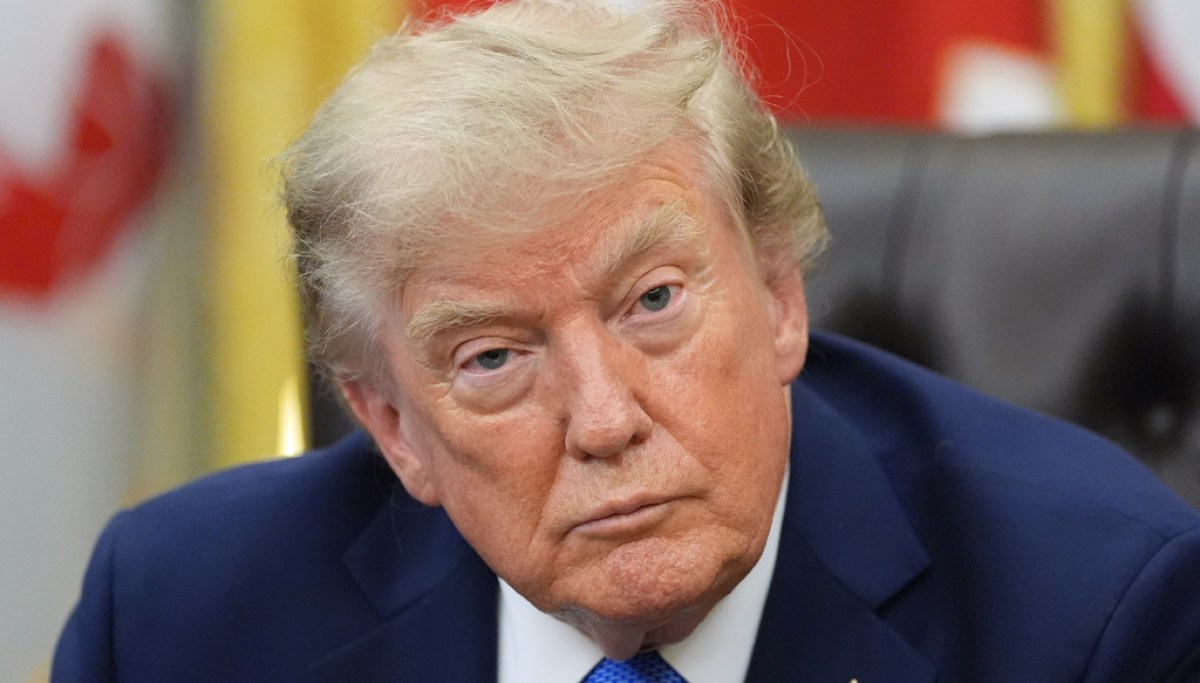
President Donald Trump is hosting an American Mining Industry Roundtable at the State Department Friday afternoon as his administration ramps up efforts to secure domestic and allied supplies of critical minerals for national security and manufacturing.
The high-level gathering represents a significant shift in how Washington approaches economic security, elevating mineral independence to the same strategic tier as energy independence and defense manufacturing. For decades, policymakers treated mining as primarily an environmental issue rather than a national security concern, allowing vital supply chains to migrate overseas with little strategic consideration for long-term consequences.
The event comes as the White House looks to reduce reliance on Chinese supply chains while replenishing weapons stockpiles depleted during the war with Iran.
This dual challenge—rebuilding arsenals while simultaneously restructuring the industrial base that supplies them—illustrates the complexity of reversing decades of strategic drift. Previous administrations outsourced these concerns to market forces, assuming global trade would remain stable and adversaries would never weaponize their control over essential resources.
Breaking China’s grip on critical minerals is a national security imperative.
The roundtable brings together mining executives and national security officials to address the strategic vulnerability created by decades of offshoring mineral extraction to hostile nations.
This cross-sector collaboration marks a departure from the siloed approach that traditionally kept Pentagon planners separate from industrial policy discussions. By convening both private sector leaders and security officials in the same room, the administration is acknowledging that America’s defense capabilities rest fundamentally on its industrial capacity and resource access.
Trump’s focus on domestic mining reverses years of environmental policy that pushed rare-earth mineral production overseas — directly into China’s hands.
Beginning in the 1990s, increasingly stringent environmental regulations made domestic mining economically unviable for many operations. Companies faced years-long permitting processes and mounting legal challenges, while Chinese firms operated under far looser standards. The result was a wholesale migration of mineral extraction and processing to China, which welcomed the strategic leverage these industries provided.
Critical minerals power everything from fighter jets to guided missiles to smartphones. China currently controls roughly 70% of global rare-earth processing capacity, giving Beijing leverage over American defense contractors and tech manufacturers.
This dominance extends beyond simple extraction. China has invested heavily in the complex refining and processing infrastructure required to transform raw minerals into usable materials for advanced manufacturing. Even minerals mined elsewhere often must be shipped to China for processing, creating chokepoints throughout the supply chain that Beijing could exploit during any geopolitical crisis.
“Reducing reliance on Chinese supply chains while replenishing weapons stockpiles depleted during the war with Iran.”
The administration is working to fast-track domestic mining permits and strengthen partnerships with allied nations like Australia and Canada that have significant mineral deposits.
These partnerships offer a middle path between complete domestic self-sufficiency and dangerous dependence on adversaries. By building integrated supply chains with trusted allies who share America’s security interests, the administration aims to create resilient networks that can withstand geopolitical shocks while remaining economically competitive.
Environmental groups have long opposed new mining projects in the United States, citing habitat concerns. But national security analysts argue that dependence on China for materials essential to weapons systems is a far greater threat.
This tension between environmental protection and national security creates difficult tradeoffs that policymakers can no longer avoid. The question is not whether mining carries environmental costs, but whether those costs are acceptable compared to the strategic risks of maintaining the status quo.
The Iran conflict exposed supply chain weaknesses when weapons stockpiles ran low. Replenishing those arsenals requires minerals that currently flow through Chinese-controlled supply chains.
The munitions expenditure rates during that conflict shocked many defense planners who had grown accustomed to limited, precision-strike campaigns. High-intensity warfare consumes vast quantities of missiles, artillery shells, and other weapons that require steady flows of specialized materials—materials America can no longer produce in adequate quantities without Chinese cooperation.
Trump’s mining push is part of a broader economic security strategy that includes tariffs on Chinese goods and reshoring of strategic industries.
The State Department roundtable signals that mineral security is now a cabinet-level priority, with diplomatic efforts focused on securing new sources outside China’s reach.
Elevating these discussions to the State Department—rather than confining them to the Commerce or Interior departments—demonstrates how thoroughly economic and security considerations have merged in Trump’s strategic framework. Diplomacy now serves industrial policy as much as traditional geopolitical objectives.
Patriots know Trump doesn’t wait for permission to protect American interests — he acts while the establishment wrings its hands over imaginary risks.