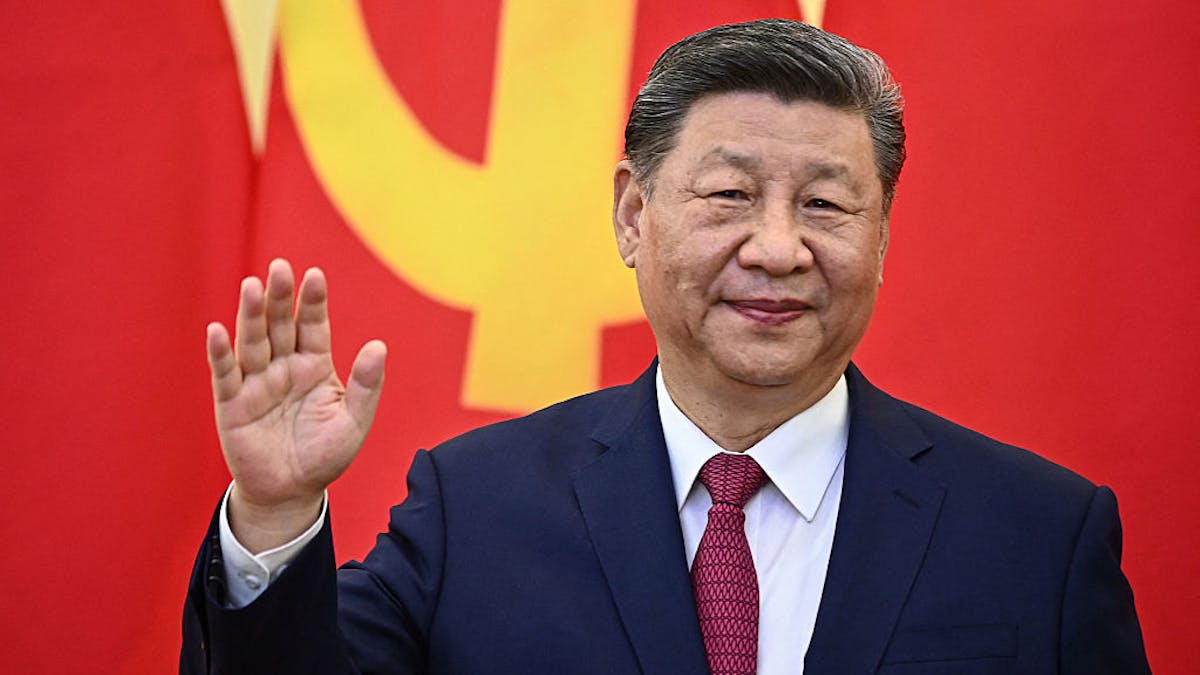
China cut its oil imports by more than half after the Iran war began — and that move kept global oil prices from skyrockating despite massive supply disruptions in the Middle East.
The decision by the world’s largest crude oil importer to dramatically curtail its purchases had an outsized impact on global energy markets at a moment when traditional supply-and-demand dynamics suggested prices should have spiraled upward. China’s withdrawal from the market effectively absorbed what would have been catastrophic pressure on oil prices worldwide, demonstrating how deeply interconnected global energy systems have become.
“China was definitely the most important factor in keeping prices down,” oil markets analyst Rory Johnston said.
Here’s the mechanic: China typically imports about 11 million barrels of oil per day. But Beijing slashed that by roughly 5 million barrels after fighting disrupted Middle East energy markets and shipping routes. That left more crude available for other buyers — including the U.S. — preventing a global price explosion.
The scale of this reduction cannot be overstated. A drop of 5 million barrels per day represents nearly half of China’s normal consumption and is roughly equivalent to the entire daily oil production of some major OPEC members. By stepping back from the market precisely when supply was tightest, China essentially rebalanced global oil flows at a critical juncture, allowing other nations to secure the energy they needed without bidding prices into economically destructive territory.
Analysts estimate oil could have hit $150 to $200 per barrel had China continued buying at its normal pace. Instead, prices hovered around $90.
“China was definitely the most important factor in keeping prices down.”
China imports more than 70% of the oil it consumes, making it especially vulnerable to price spikes. Instead of buying expensive crude on the open market, Beijing has increasingly relied on its strategic reserves — though analysts question how long that strategy can continue.
This heavy dependence on imports has long been viewed as a strategic vulnerability by Chinese policymakers, who have spent years building up reserves precisely for scenarios like this. The current drawdown represents a calculated gamble that the Middle East conflict will resolve before reserves run critically low, or that prices will eventually decline enough to make replenishing stockpiles economically viable.
Before the war, China’s Foreign Ministry urged all sides to de-escalate tensions, warning that regional conflict could disrupt global energy markets.
“The international community [should] make greater efforts to promote de-escalation of the conflict and prevent regional instability from having a greater impact on global economic development,” foreign ministry spokesman Guo Jiakun said.
Those warnings proved prescient as fighting intensified and key shipping chokepoints became threatened, forcing tankers to reroute and adding delays and costs to global oil transportation. China’s diplomatic posture suggested Beijing understood it might need to take unilateral action to protect its own economic interests if conflict couldn’t be prevented.
The U.S. government estimates China holds nearly 1.4 billion barrels of oil in underground strategic reserves and commercial storage — enough to last between six months and more than a year depending on consumption.
The wide range in that estimate reflects uncertainty about both the true size of China’s reserves and how aggressively Beijing might ration consumption during a prolonged crisis. Chinese authorities have historically been opaque about the exact quantities held in strategic storage, treating such information as a state secret with national security implications.
China employed the opposite strategy during the COVID-19 pandemic, dramatically increasing imports as oil prices collapsed. U.S. crude exports to China jumped 211% in 2020 while benchmark oil briefly traded below zero, allowing Beijing to stockpile cheap supplies.
That earlier buying spree now appears remarkably strategic in hindsight, as those bargain-priced barrels acquired during the pandemic glut are precisely what’s allowing China to stay out of today’s tight market. The contrast between China’s pandemic-era accumulation and its current drawdown illustrates a sophisticated approach to managing energy security through counter-cyclical reserve management.
“China is doing this for China, fundamentally,” said Ruby Osman, a senior policy advisor on China at the Tony Blair Institute. “But obviously it’s not unhelpful for China that it has become a global public good.”
The question now: how long can Beijing keep draining its reserves before it has to return to the open market — and what happens to your gas prices when it does?