
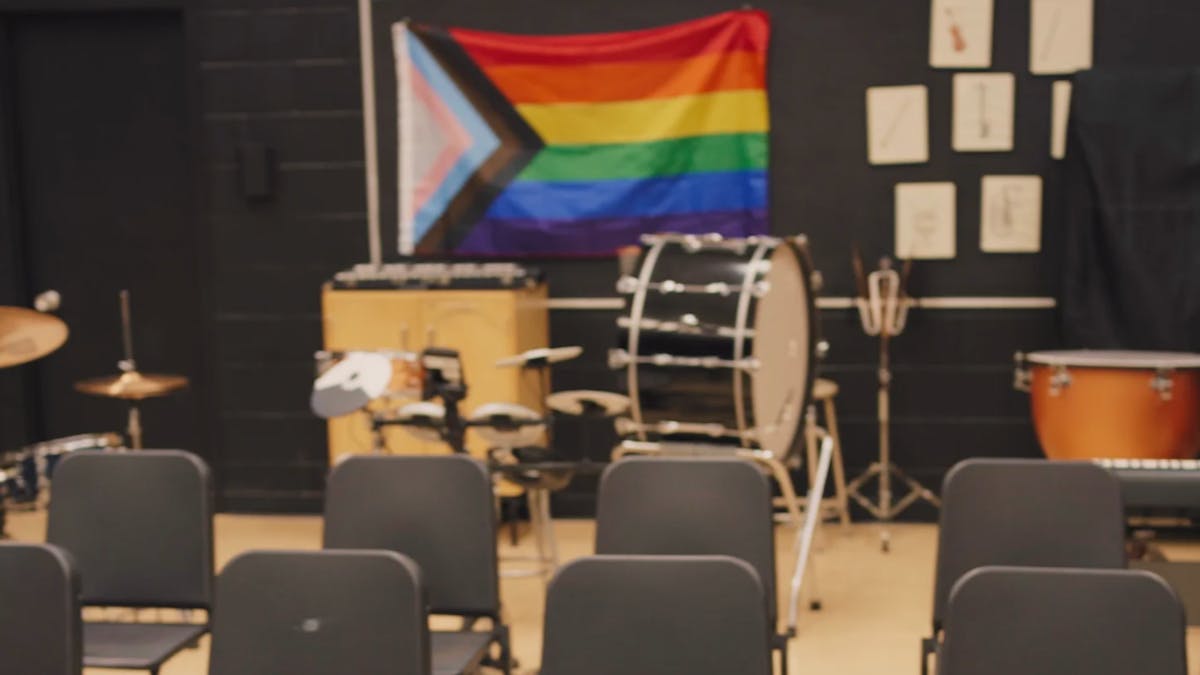
A Washington elementary school forced fourth-graders through an explicit LGBT Pride lesson — then admitted they hid it from parents to prevent families from opting out.
The incident has reignited a national debate over parental rights in education and the boundaries between age-appropriate instruction and controversial social content in public schools. Critics say the case illustrates a growing pattern of schools treating parents as obstacles rather than partners in their children’s education.
Maria Varchetto pulled her children from Martha Lake Elementary in the Edmonds School District after her daughter came home in tears about the June 15 music class.
The school gave parents zero notice. No email. No consent form. No chance to review the material or opt out.
“My daughter came home just so drastically upset the last week of school telling me that the music teacher decided to teach a whole curriculum about Pride history and Pride Month.”
Varchetto told Talk Radio 570 KVI she assumed she’d missed an opt-out email. She hadn’t. The school never sent one.
The absence of communication is particularly notable given that Washington state law and most school district policies explicitly recognize parental rights to be informed about curriculum, especially on topics related to sexuality and gender identity. Many districts have established opt-out procedures specifically for content parents may find objectionable on religious or moral grounds.
According to Varchetto, her daughter was forced to watch a video called “Why is PRIDE in JUNE?” from the channel Queer Kid Stuff — a video discussing the history of the gay movement and bathroom rights for trans-identifying people.
The class also watched performances by LGBT singers including Freddie Mercury, Lil Nas X, and Billy Porter dancing in a ball gown on “Sesame Street.”
Students were told they could identify as gay, lesbian, asexual, transgender, non-binary, or two-spirit.
The breadth of identity labels presented to nine- and ten-year-old students raised concerns for Varchetto about age-appropriateness and whether such detailed discussions of sexual orientation and gender identity belong in an elementary music class without explicit parental consent.
Varchetto requested a copy of the lesson materials. Administrators told her she could only review them in person — not electronically.
The restriction on accessing materials electronically created an additional barrier for working parents seeking transparency about classroom instruction. Such policies have become a point of contention in districts across the country, with parents arguing that limiting material review to in-person visits effectively discourages oversight.
“Parents have the right to know what was taught to their kids. Whether or not you agree with it or disagree is irrelevant. You don’t get to teach and go rogue on subjects that are this controversial without providing parents a notice to opt out.”
In a meeting, the principal admitted the Pride lesson was not district-approved curriculum. Teachers are allowed to create their own lessons tied to monthly themes — like Black History Month or Hispanic Heritage Month.
The revelation that individual teachers have autonomy to create themed lessons without district vetting raises questions about oversight mechanisms and accountability. While teacher creativity is generally valued in education, critics argue that lessons involving sensitive topics around sexuality and gender require additional layers of review and parental notification.
Varchetto pushed back: “Those are cultures. Those are not gender identities. Big difference there.”
The principal gave Varchetto a list of subjects covered in the music class. The end-of-year summary the music teacher sent to parents also left out any mention of the Pride lesson.
The omission from official communications sent to families suggests the content was deliberately excluded from parent-facing documentation, even as it was presented to students in the classroom.
Then came the admission.
The principal reportedly explained the school was apprehensive about notifying parents because it “would just isolate the LGBTQ community, making them feel like people can opt out of their content.”
Translation: they hid it on purpose.
The reasoning provided by the principal frames parental notification itself as potentially harmful, treating opt-out rights as discriminatory rather than as a legitimate exercise of parental authority over their children’s education. This approach prioritizes institutional ideology over transparency and informed consent.
Varchetto gave the school several weeks to notify other parents. When no notice appeared, she requested her children be transferred.
She ultimately chose hybrid homeschooling instead.
“We are 100% removing our kids from this school as I have no trust in the leadership,” Varchetto said.
“I feel mad they did this, mad they hid it. I feel insulted, offended, angry, and sad that my kids are now being taken out of a lifestyle they’ve grown to love, away from the friendships they’ve built, all because this one teacher didn’t care to ask permission and a principal lied and hid it.”
The family’s decision to leave the school entirely underscores how breakdowns in trust between parents and administrators can result in families abandoning public education altogether. The incident reflects broader tensions playing out in school districts nationwide over who holds ultimate authority in determining what children learn about sensitive social and cultural topics.