
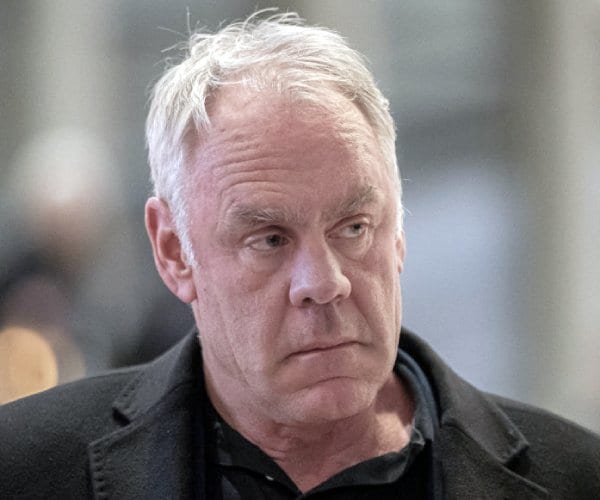
The United States is making progress toward a potential agreement with Iran, though significant details still need to be resolved before any deal can be finalized, according to Rep. Ryan Zinke, R-Mont.
Zinke told Newsmax on Friday that President Donald Trump has remained unwavering on the administration’s core demands: preventing Iran from obtaining nuclear weapons and ensuring freedom of navigation through the Strait of Hormuz.
“I think we’re a lot closer, quite frankly. You look at what our objectives [are] – and we kind of pointed them out — no nukes, no nuke material, no arsenal of destruction, and the straits are open.”
While some observers have argued little has changed in recent weeks, Zinke said Iran’s deteriorating position has brought the two sides nearer to an agreement.
“Their objective is just regime survival,” he said.
Zinke pointed to Iran’s collapsing infrastructure and internal instability as leverage for negotiations. The country has no water, its currency is worthless, and its command structure is fractured, he explained.
“The people aren’t happy,” Zinke added.
As a result, Zinke said he believes Trump is correct that negotiations with Tehran are moving in the right direction — though the devil’s in the details.
“The general premise of what the agreement has to be, I think the president’s firm,” Zinke said. “But the devil’s in the details. I think we are a lot closer. We’re not there yet, but we’re a lot closer.”
Any agreement must include a verification mechanism because neither side trusts the other, Zinke stressed.
“I think the president is going into this exactly right. He doesn’t trust the Iranians. They don’t trust us. But there has to be some verification process, in fact, that they don’t have nuclear material.”
Zinke also pointed to another challenge facing negotiators: determining exactly who within Iran’s leadership has the authority to negotiate and make binding decisions.
Iran’s first and second echelon of military leadership are dead. Its first echelon of political leadership is dead. Command and control is now distributed among military commanders with significant autonomy, Zinke said.
The loss of senior Iranian leaders has complicated efforts at diplomacy.
“I think what we’re seeing is that it’s difficult to command a nation when you don’t have a unified command up on top,” he said. “I think that’s been part of the struggle for our negotiation team — who do you talk to and what is their extent of authority?”
Iran’s Foreign Ministry has described reports of an agreement as “speculative” and said “nothing has been finalized.” Zinke said that assessment is accurate only insofar as a final document has not yet been signed.
“I think they’re exactly right with ‘speculative’ of what the final document is going to look like on the details, and nothing is signed,” he said. “They are correct. Nothing is signed. But there’s a lot of work that has been done.”