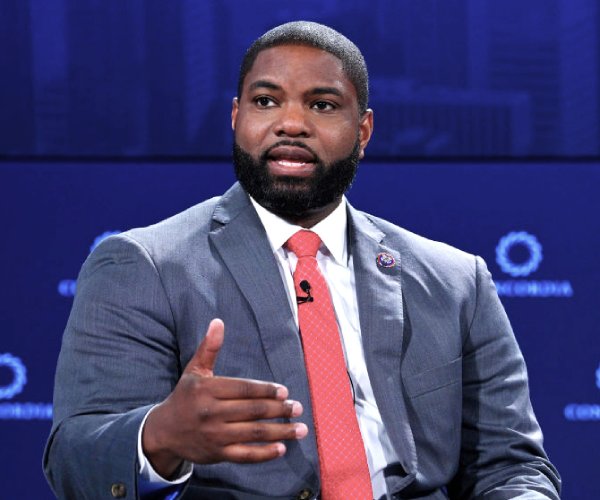
Rep. Byron Donalds is calling out House lawmakers who voted for a nonbinding war powers resolution on Iran — saying they handed Tehran leverage while President Trump is at the negotiating table.
The Florida Republican told Newsmax Thursday the vote undermines U.S. negotiating power at a critical moment when active military operations have ceased and diplomatic talks are underway.
“The president has been trying to find a diplomatic solution to bring this to an end. When you do something like this — when you know the commander in chief is at the negotiating table — all you’re doing is providing more leverage to the Iranian regime.”
The House approved the measure with support from all Democrats and four Republicans: Rep. Tom Barrett of Michigan, Rep. Warren Davidson of Ohio, Rep. Brian Fitzpatrick of Pennsylvania, and Rep. Thomas Massie of Kentucky.
Donalds said the timing is indefensible.
“We’re not even engaged in kinetic activity right now,” he said during an appearance on National Report. “There is a tentative ceasefire in place. They are at the negotiating table.”
The resolution would make sense if U.S. forces were currently in combat operations, Donalds argued — but that’s not the case.
“It would be something very different if we had troops on the ground, and we were engaged in active kinetic warfare,” he said. “We are not right now.”
According to Donalds, congressional efforts that limit the president’s flexibility during negotiations weaken the U.S. position and make it harder to secure a favorable outcome.
“It doesn’t help the negotiations. It doesn’t improve the leverage of the United States in those negotiations. In my view, it undermines us.”
Donalds acknowledged that many lawmakers are reluctant to see the nation drawn into another conflict — but said that concern does not justify undercutting ongoing diplomatic efforts.
“You don’t undermine the commander in chief when he’s trying to negotiate a settlement to end hostilities,” he said.
He added that Democrats were seeking a political victory through the resolution, calling it a move that comes “to the detriment of the United States.”