
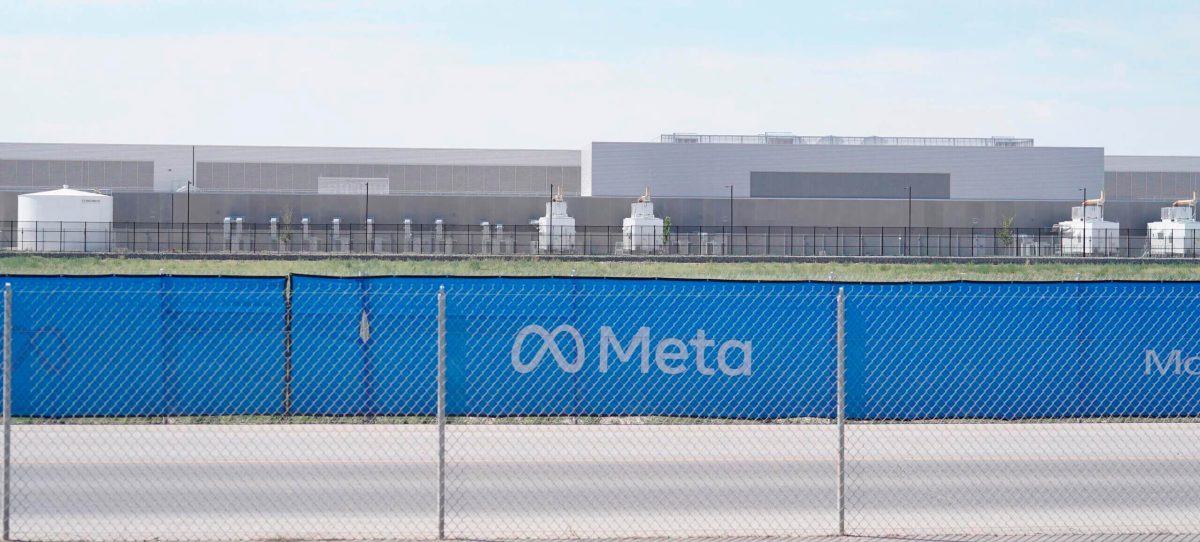
A New Mexico judge just handed Facebook parent Meta the largest fine in corporate history — $25 billion for lying to users about data privacy and content moderation.
The ruling, delivered October 21, 2026, stems from the 2016 Cambridge Analytica scandal where Meta harvested user data without consent and used it for political advertising. The scandal, which first came to light in 2018, revealed that the personal information of up to 87 million Facebook users worldwide had been improperly shared with the political consulting firm. Cambridge Analytica then weaponized this data to build psychological profiles and target voters during the 2016 U.S. presidential election and the Brexit referendum. New Mexico was the only state that refused to settle and took the tech giant to trial.
JUST IN: A New Mexico judge has ordered Meta to pay $25B, its biggest fine ever.
A jury found 43.9M willful violations from misleading statements on privacy and safety, worth up to $219.5B. Interest runs at 15% a year until it pays.
The judge called the probe Facebook launched after Cambridge Analytica “willfully ineffective”
Meta says it will appeal.
— Shanaka Anslem Perera ⚡ (@shanaka86) October 22, 2026
Judge Francis Mathew handed down the penalty Wednesday after a Santa Fe jury found Meta liable for 43 million violations of New Mexico consumer protection laws in September 2026. The sheer volume of violations reflects the scale at which Meta allegedly misled users about how their personal information would be protected and how content moderation policies would be enforced on the platform.
Each infraction carried a civil penalty of up to $5,000 — meaning Meta’s statutory exposure topped $219.5 billion. That theoretical maximum would have dwarfed the company’s entire annual revenue and represented one of the most severe corporate penalties ever contemplated under state consumer protection statutes. Judge Mathew reduced the final penalty to $25 billion, still the largest corporate fine in U.S. history. The previous record-holder was the $20.6 billion penalty BP paid following the 2010 Deepwater Horizon oil spill disaster.
The judge called Facebook’s post-Cambridge Analytica investigation “willfully ineffective.”
This judicial characterization is particularly damning because it suggests Meta did not merely fail in its remedial efforts, but did so deliberately. After the Cambridge Analytica revelations became public in 2018, Facebook publicly committed to conducting a thorough investigation of app developers who had access to large amounts of user data. The judge’s finding that this probe was “willfully ineffective” indicates the court believed Meta’s response was performative rather than substantive — designed to placate regulators and the public rather than genuinely address systemic privacy failures.
New Mexico Attorney General Raúl Torrez called the ruling a clear warning to Big Tech that deceiving users has real consequences. His office pursued the case aggressively even as dozens of other states opted for negotiated settlements that brought in far less money but avoided the uncertainty and expense of trial. The case dates back to a 2021 lawsuit over Cambridge Analytica’s 2016 data harvesting operation that exploited Facebook users for political ad targeting.
Meta officials slammed the ruling and announced immediate plans to appeal. Chief legal officer C.J. Mahoney told Axios the decision makes it “all but impossible to do business in the state of New Mexico.” The statement represents Meta’s strategic framing of the penalty as not just excessive, but so disproportionate that it amounts to a regulatory prohibition on their operations.
Mahoney argued the lawsuit is an attempt to impose “a tax on speech to enforce new rules for what people can say online,” and vowed Meta would “prevail on appeal.” This line of argument positions Meta as defending First Amendment principles rather than simply avoiding financial liability, a common tactic among technology companies facing content moderation regulations.
The legal battle will drag on for years through appeals. Appellate courts will likely scrutinize whether the penalty violates constitutional protections against excessive fines under the Eighth Amendment, a defense that has succeeded in reducing other massive punitive damage awards in the past. In the meantime, interest accrues at 15% per year on the $25 billion penalty until Meta pays. At that rate, the fine grows by $3.75 billion annually, adding substantial pressure on Meta to either settle or expedite the appeals process.
While 48 other states settled their Cambridge Analytica claims, New Mexico stood alone and took Zuckerberg’s empire to trial — and won the largest corporate penalty in American history. The outcome will be closely watched by other state attorneys general who may now reconsider their settlement strategies when confronting Big Tech misconduct, potentially emboldening more aggressive enforcement actions nationwide.