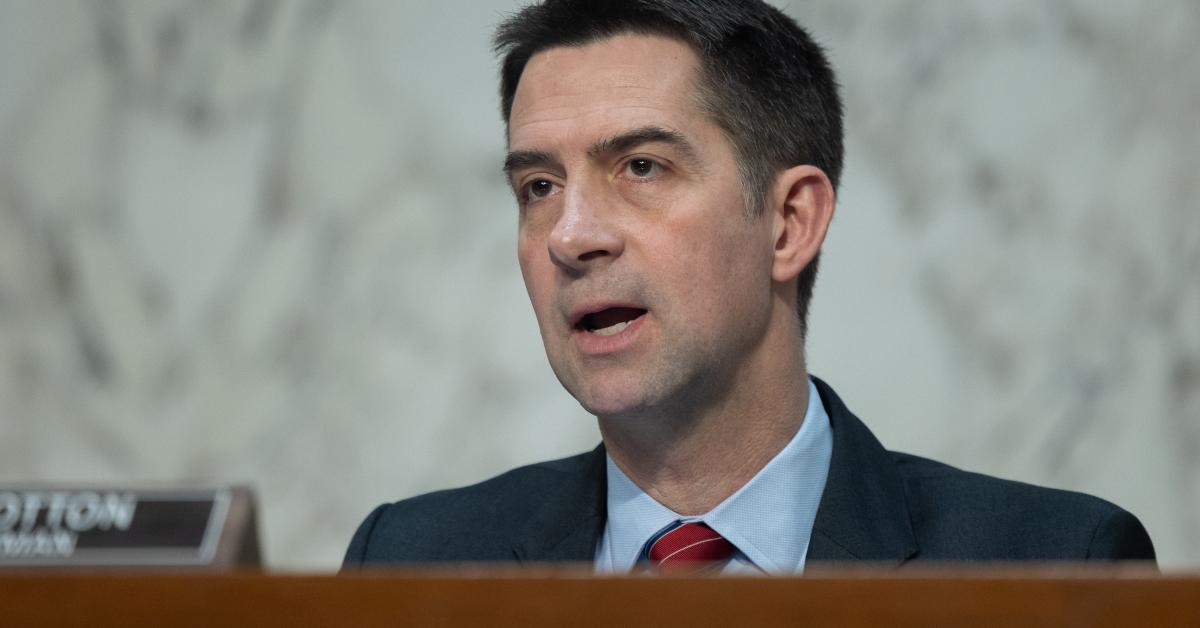
President Trump fired a public shot at Sen. Tom Cotton on Saturday, demanding the Arkansas Republican stop blocking the Sunshine Protection Act — and giving patriots the lawmaker’s cell phone number to call.
In a lengthy Truth Social post, Trump revealed Cotton is the lone senator holding up legislation that would end the twice-yearly clock changes Americans overwhelmingly hate. The Sunshine Protection Act has languished in Congress for years despite widespread public frustration with the current system, which forces Americans to adjust their clocks forward in spring and back in fall — a ritual that dates back more than a century but has faced mounting opposition in recent decades.
“For some reason, Tom is stopping the Bill and, in the Senate, it’s very easy to do, it only takes one!” Trump wrote.
The bill passed the House with broad bipartisan support — 308 to 117 — but Cotton’s single-senator objection has kept it from reaching the Senate floor. Under Senate rules, any individual senator can block unanimous consent requests, effectively preventing legislation from advancing without a formal floor debate and vote. This procedural power gives individual senators extraordinary leverage to halt even widely popular measures, and Cotton has exercised that authority to stop the Sunshine Protection Act from moving forward.
“Nobody wants to spend their precious time running all over the place, turning Clocks back twice a year and, having sunshine in the afternoon is better than early in the morning!”
Trump pointed to widespread support for permanent Daylight Saving Time, citing farmers, golfers, tennis players, hunters, and professional sports leagues who all need more afternoon daylight. He specifically referenced a letter from PGA TOUR CEO Brian Rolapp backing the change. The coalition supporting the measure reflects how the issue cuts across traditional political and demographic lines, uniting outdoor recreation enthusiasts, business interests, and everyday Americans tired of the biannual disruption.
The president also noted the practical costs: reaching dangerous church steeples and municipal building clocks twice a year is expensive and risky for communities across the nation. These maintenance burdens fall disproportionately on small towns and rural communities that lack the resources of larger cities, requiring workers to climb tall structures or hire specialized contractors twice annually just to keep public timepieces accurate.
“65% PLUS want more sun in the afternoon, Daylight Saving Time (The way it is now!), but 100% don’t want to change their Clocks twice a year,” Trump wrote. “They want to, as they say, ‘LOCK THE CLOCK!'”
The polling numbers Trump cited underscore a rare moment of American consensus on a policy question. While the public may be divided on whether to make standard time or Daylight Saving Time permanent, there is near-universal agreement that the switching itself should end. The phrase “Lock the Clock” has become a rallying cry for advocates who have grown increasingly vocal as studies have shown the clock changes disrupt sleep patterns, increase traffic accidents, and even correlate with upticks in heart attacks in the days following the spring transition.
Trump urged Arkansas voters — a state he won three times, most recently by 34 points — to pressure Cotton directly. He provided the senator’s cell number: 479-453-0533. By appealing directly to Cotton’s constituents in a state where Trump enjoys overwhelming support, the president is employing a classic political pressure tactic designed to force the senator’s hand through grassroots mobilization.
“To the Great People of Arkansas, please let your Senator know it would be a GREAT Bipartisan WIN for the United States Senate, and for America, itself,” Trump wrote. “Call Tom on his cellphone.”
Cotton has publicly opposed making Daylight Saving Time permanent, setting up a rare clash between the president and a normally aligned Republican senator. The confrontation highlights the unusual nature of the dispute, as Cotton has generally been a reliable Trump ally on most major policy initiatives. The public nature of Trump’s criticism, including the extraordinary step of publishing Cotton’s personal phone number, signals the president’s determination to see the legislation advance and his willingness to challenge even friendly lawmakers who stand in the way.
Trump closed the post by framing passage as a bipartisan win that almost everyone supports — except Cotton. The president’s characterization emphasizes the isolated nature of the senator’s opposition and positions the Sunshine Protection Act as low-hanging fruit for a divided Congress struggling to find common ground on more contentious issues.
“HAVE THE SENATE VOTE, NOW!” the president demanded.