
Senate Democrats blocked a bipartisan bill that would force data centers to pay for their own soaring electricity costs — pushing those costs onto American families instead.
The debate over who pays for the explosive growth in electricity demand from data centers has become increasingly urgent as artificial intelligence development and cloud computing operations drive unprecedented power consumption nationwide. Energy experts warn that without policy intervention, residential ratepayers could see substantial increases in their monthly utility bills as providers spread infrastructure costs across all customers.
The Ratepayer Protection Act fell on a 57-43 procedural vote Wednesday, short of the 60 needed to break a Democrat filibuster. The same bill passed the House 417-3 just two weeks earlier.
The legislation would have established a voluntary framework allowing states to require data center operators to bear direct responsibility for the electrical infrastructure upgrades and capacity expansions their facilities necessitate. Currently, many utility regulatory structures allow these costs to be distributed across all ratepayers, meaning homeowners and small businesses effectively subsidize the power-intensive operations of major tech companies.
Nicholas Elliot, Action Director of Government Affairs at Innovation Council, slammed the Senate Democrat caucus for killing a measure President Trump championed.
“PRESIDENT TRUMP CHAMPIONED A SIMPLE PRINCIPLE: DATA CENTERS SHOULD PAY THEIR OWN WAY. THE HOUSE OF REPRESENTATIVES OVERWHELMINGLY AGREED. SENATE DEMOCRATS HAD THE OPPORTUNITY TO REACH ACROSS THE AISLE AND MAKE LIFE MORE AFFORDABLE FOR AMERICANS, BUT THEY FAILED TO DO WHAT’S RIGHT.”
The House passed the bill on Sept. 16 by a landslide 417-3 margin. Only three progressive Democrats voted no: Rashida Tlaib (D-MI), Summer Lee (D-PA), and Delia Ramirez (D-IL).
The overwhelming House support reflected growing constituent pressure over rising utility costs, particularly in regions where large data center construction has accelerated. States like Virginia, Ohio, and Georgia have seen concentrated data center development, with some localities experiencing double-digit percentage increases in electricity demand over recent years. Local officials in these areas have reported constituent complaints about utility rate hikes coinciding with data center expansion.
206 House Democrats backed the measure. Their Senate colleagues killed it anyway.
The stark contrast between House and Senate Democratic positions highlighted tensions within the party over how to balance consumer protection with technology sector growth. The disconnect also underscored the different political pressures facing representatives in more competitive districts versus senators with statewide constituencies and different electoral timelines.
Senate Majority Leader John Thune (R-SD) called the timing suspicious.
“Given the overwhelming support for this measure in the House, it’s difficult to conclude that Senate Democrats blocked this bill for any reason other than the desire to deny Republicans another win in an election year,” Thune said.
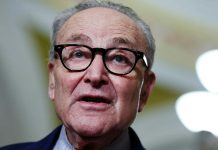
Senate Minority Leader Chuck Schumer (D-NY) dismissed the bill as a “toothless messaging bill” in a floor speech Tuesday. The New York Democrat argued his caucus wants a federal mandate instead of the voluntary state framework Republicans proposed.
Schumer’s objection centered on the legislation’s opt-in structure, which would have allowed states to choose whether to implement cost-shifting protections rather than imposing a nationwide requirement. Democrats have argued that without a federal mandate, states competing for data center investment might decline to adopt stronger protections, creating a race to the bottom that ultimately fails to protect consumers anywhere.
Four Democrats broke ranks and voted with Republicans: Jon Ossoff (D-GA), Raphael Warnock (D-GA), Maggie Hassan (D-NH), and Amy Klobuchar (D-MN).
The defections were notable given that all four represent states either experiencing significant data center growth or facing competitive reelection environments where cost-of-living concerns have dominated voter feedback. Their votes reflected the political risk Democrats face in opposing measures with broad public appeal on kitchen-table economic issues.
This marked the second time Democrats blocked the bill. Sen. Martin Heinrich (D-NM) objected to an earlier unanimous-consent request from sponsor Sen. Jon Husted (R-OH), claiming it didn’t go far enough.
Husted responded on X, pointing out lawmakers across the political spectrum had backed the House version.
The vote came in the Senate’s final days before the November midterms, with both parties fighting to claim the cost-of-living issue. The chamber the same day defeated a separate stock-trading ban on a 53-47 vote.
The dual defeats on consumer-focused measures in the final pre-election session underscored the deep partisan gridlock paralyzing the Senate even on issues with apparent public consensus. Political analysts noted that both votes will likely feature prominently in campaign advertising as Republicans seek to portray Democrats as out of touch with voter concerns about affordability and fairness in the economy.
The Ratepayer Protection Act was such a no brainer that some of the most conservative and the most liberal representatives all agreed it was good policy.
Senate Democrats are the only ones who refused to take yes for an answer. pic.twitter.com/7JeH4RkTJQ
— Senator Jon Husted (@SenJonHusted) September 30, 2026