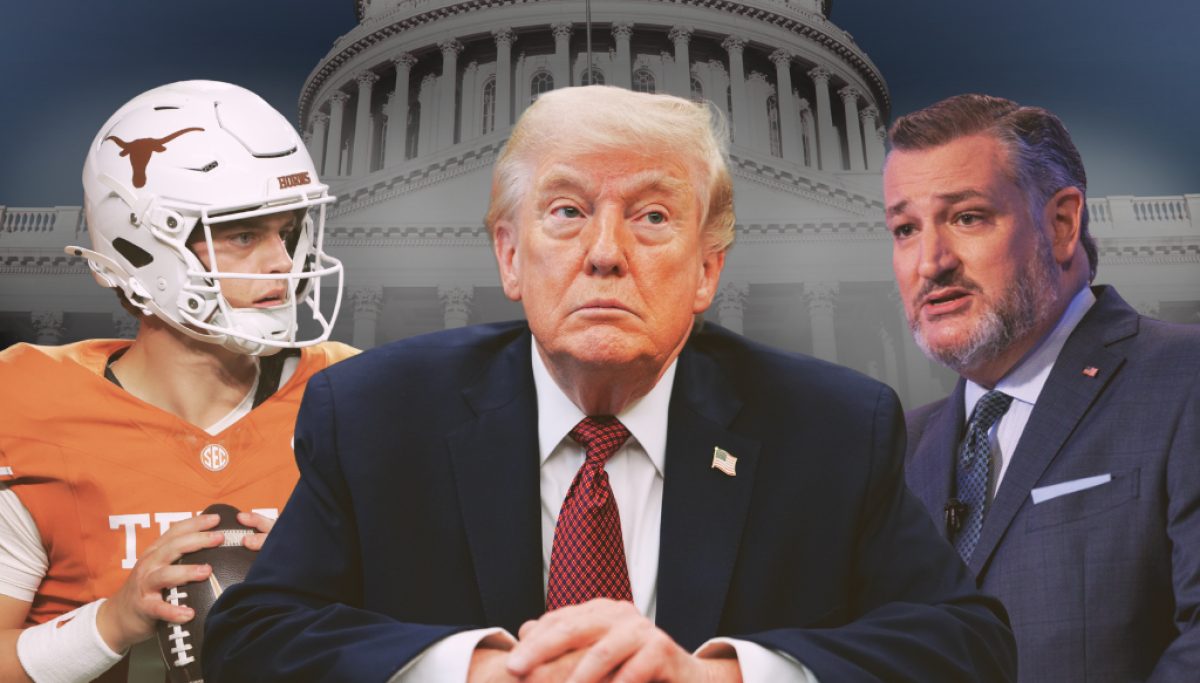
President Donald Trump is pushing the Senate to pass the Protect College Sports Act before voters head to the polls, calling the current state of college athletics a financial disaster that threatens to bankrupt schools nationwide.
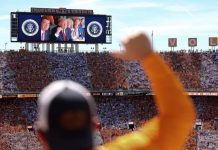
Trump threw his weight behind the legislation at Saturday’s No. 1 Texas-No. 14 Tennessee game in Knoxville, days before the Senate is expected to vote Monday on the bill — the furthest a collegiate sports bill has ever gotten in Congress.
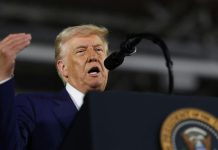
The stakes are massive. Trump told a White House reception for Team USA’s Winter Olympians that college sports is “the engine of American Olympic dominance,” noting it produced 88% of the roster at the Milano Cortina Games.
“College sports are turning into pro sports, except with absolutely no rules, a result no one wants. University presidents, conference commissioners, coaches, and athletic directors have all told me schools are losing hundreds and millions of dollars a year under the current system.”
Trump has promised to sign the bill “immediately” upon arrival at his desk.
“We have to get that done,” he said. “If we don’t, we’re very foolish.”
The Senate advanced the bill Thursday by a vote of 74-25 and adopted the Cruz-Cantwell substitute amendment 77-23. A final passage vote is scheduled for Monday.
The bill runs more than 170 pages and would raise the revenue-sharing cap from $21.3 million to $48.8 million per school, including a $22.5 million retention pool to help schools re-sign current athletes and a $5 million pool for non-revenue sports.
It caps revenue sharing at 22% of a Power Four school’s average athletic revenue and seeks to limit name, image, and likeness deals designed to get around the cap.
The bill would establish a one-time transfer policy with a five-year eligibility window, cap agent fees at 5%, require medical coverage for athletes while they compete, and guarantee 10 years of post-eligibility scholarship access.
The bill’s central provision is a limited antitrust exemption for the NCAA, similar to those held by professional sports leagues, intended to reduce years of litigation, along with new limits on conference realignment.
It would also preempt state and local laws that conflict with its NIL, transfer, or eligibility provisions — a response to a patchwork of state rules that has grown increasingly unworkable since the NCAA’s 2021 decision to allow NIL payments.
“The rules change from court to court, state to state, and season to season,” Sen. Ted Cruz (R-TX) said on the Senate floor. Cruz introduced the bill in May alongside Sen. Maria Cantwell (D-WA), Sen. Eric Schmitt (R-MO), and Sen. Chris Coons (D-DE).
That preemption push has already run into resistance from within Cruz’s own party. Sens. Josh Hawley (R-MO), Jim Banks (R-IN), and Tommy Tuberville (R-AL) filed an amendment in August intended to preserve state laws barring men from competing in women’s sports.
Trump addressed the controversy directly in a Truth Social post, writing that the bill “CLEARLY protects the Laws in 27 States protecting Women’s Sports, and banning Men from Women’s Sports. Anyone who tells you differently is LYING!”
A White House counsel memo later confirmed the bill “would not preempt state laws prohibiting men from participating in women’s sports.”
A June poll commissioned by the advocacy group Saving College Sports found 72% support for the bill among 1,600 likely voters, a point of interest for the GOP ahead of the November midterm elections.
Opposition centers on the Congressional Black Caucus, whose members argue the bill was negotiated by conferences, schools, and the NCAA without meaningful input from the athletes most affected — disproportionately black athletes in football and basketball, the sports that generate most of the revenue the bill would regulate.
“This bill has nothing to do with protecting college sports,” NAACP CEO Derrick Johnson said, arguing that any legislation must guarantee athletes “a real voice, fair economic rights, long-term health and educational security.”
Sen. Chris Murphy (D-CT) has been the most vocal Democratic critic in the Senate. Sen. Cory Booker (D-NJ), who has aligned with the CBC’s position, called the NCAA “a monopoly controlling $15 billion” with “a long record of ignoring the cries for justice from exploited college athletes.”
The House remains the larger obstacle. It is out of session until after the midterm elections, and any vote there would likely come during a lame-duck session, a period that has historically made it difficult to pass legislation.
House leaders, including House Majority Leader Steve Scalise (R-LA), have publicly criticized the legislation, and Speaker Mike Johnson’s (R-LA) decision to send the House home early for recess delayed any hearing there.
The bill’s support base grew after the Southeastern Conference and Big Ten signed on in August, bringing its backing to 28 collegiate conferences and more than 370 colleges and universities nationwide. Outside supporters include Texas Tech booster Cody Campbell, former coach Nick Saban, and Colorado coach Deion Sanders.
Interest groups have spent a combined $31 million lobbying Congress on the bill, according to a review of federal disclosures by OpenSecrets.
Trump first threw his support behind the legislation in June, and formalized that backing in an Aug. 6 statement of administration policy.
“The President urges the Senate to pass the Protect College Sports Act, codifying meaningful solutions to the challenges currently threatening college athletics,” White House spokeswoman Taylor Rogers told the Washington Examiner.
The bill’s political standing among Republican voters is difficult to assess independently, since the only available poll was commissioned by a group lobbying for its passage. The Hawley-Banks-Tuberville dispute suggests the bill carries some risk for Republicans on women’s sports heading into the midterm elections, an issue the party has otherwise made a signature political priority.