
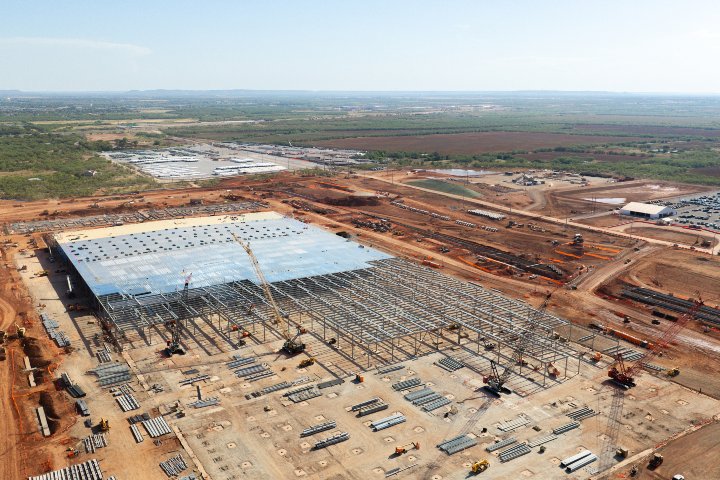
843 opposition groups across 49 states blocked or delayed 45 data center projects worth $68 billion between April and June, according to research from Data Center Watch.
The projects made up more than half of all new large-scale data center developments tracked during that period. This represents a dramatic escalation in community resistance to infrastructure that tech companies argue is essential for maintaining America’s competitive edge in artificial intelligence and cloud computing. The scale of opposition marks a turning point in what had previously been a relatively friction-free expansion of data center footprints across the country.
Miquel Vila, Data Center Watch’s lead analyst, said the resistance is spreading. “New groups continue to emerge, opposition is appearing across a wide range of states and jurisdictions, and online petition signatures continue to grow,” he said.
The opposition movement has evolved from isolated local concerns into a coordinated national phenomenon. Community groups are now sharing strategies, legal resources, and messaging frameworks across state lines. What began as scattered resistance to individual projects has transformed into an organized infrastructure of opposition that spans nearly the entire country.
Hawaii is the only state without an opposition group. About 30 state legislatures have introduced or adopted rules covering data center siting, electricity use, or water consumption.
The legislative response reflects growing recognition among state policymakers that data center development raises fundamental questions about resource allocation, energy policy, and local control over land use decisions. These regulatory efforts range from modest disclosure requirements to outright moratoriums on new construction in some jurisdictions.
In Tennessee, a single petition against one data center project drew more than 500,000 signatures on Change.org — more than a third of all signatures collected on the platform that quarter.
The Tennessee case demonstrates how data center opposition has captured public attention in ways that few infrastructure debates typically achieve. The petition’s viral success suggests that concerns about these facilities resonate far beyond the immediately affected communities, tapping into broader anxieties about Big Tech’s power and environmental sustainability.
“The quarter reflected a structural shift rather than a cyclical spike: communities have internalized an opposition playbook, legislative sessions introduced formal regulatory uncertainty, and the number of active opposition groups more than doubled to 833 across 49 states.”
The first quarter of 2026 was even worse. At least 75 projects worth about $130 billion were blocked or delayed from January through March — the most on record in a three-month period since Data Center Watch began tracking in 2023.
The acceleration from $68 billion in blocked projects to $130 billion in just one quarter underscores how rapidly the opposition movement has gained momentum and effectiveness. The near-doubling of affected investment suggests that tech companies have not yet found effective strategies for addressing community concerns or navigating the increasingly complex regulatory landscape.
Public sentiment backs the local revolts. A new Gallup poll found 70 percent of Americans oppose building AI data centers in their local area, with 48 percent strongly opposed. Just 7 percent strongly favor such projects.
The polling data reveals a rare instance of broad consensus across partisan and demographic divides. The strength of opposition—with nearly half of Americans strongly opposed—indicates that concerns about data centers are deeply held rather than superficial. This public opinion environment creates significant political headwinds for tech companies seeking to expand their infrastructure footprints.
Industry executives claim the backlash won’t slow demand for computing power. CoreWeave CEO Michael Intrator told Yahoo Finance the debate has been “expansive,” but added: “Let’s be very clear, the demand for compute will not be altered by a jurisdiction saying you’re not allowed to build data centers here. All that will do is cause the data center to move to a different location.”
Intrator’s perspective reflects the industry’s confidence that economic fundamentals will ultimately prevail over local resistance. However, his comments also implicitly acknowledge that opposition is reshaping where and how data centers get built, even if it doesn’t eliminate them entirely. The industry’s stance sets up a potential collision between commercial imperatives and democratic accountability.
AI data centers are reshaping the political landscape. Wynton Hall, Breitbart News social media director, has written the New York Times bestseller Code Red: The Left, the Right, China, and the Race to Control AI as the definitive guide on how the MAGA movement can create positions on AI that benefit humanity without handing control of our nation to Silicon Valley leftists or allowing the Chinese to take over the world.
The surge in opposition comes as Big Tech companies race to build infrastructure for artificial intelligence systems — often without local input on energy grid strain, water consumption, or environmental impact. These facilities can consume as much electricity as small cities and require millions of gallons of water for cooling systems, placing unprecedented demands on local utilities and resources that were never designed to support such intensive industrial operations.